
心理健康护士工作场所人际冲突、情绪耗竭与心理困扰的网络分析:一项横断面调查
Network analysis of interpersonal conflict, emotional exhaustion and psychological distress among mental health nurses in the workplace: a cross-sectional survey.
作者信息
Qiu Fangxinrui, Li Yuan, Zhou Chunfen, Sun Yidan, Li Jie, Tang Jiao
机构信息
International Medical College of Chongqing Medical University, Chongqing, China.
Department of Nursing, West China Second University Hospital/West China School of Nursing, Sichuan University, Chengdu, China.
出版信息
Front Public Health. 2025 May 30;13:1559351. doi: 10.3389/fpubh.2025.1559351. eCollection 2025.
BACKGROUND
Mental health nurses (MHNs) frequently engage in intense interpersonal interactions and encounter various forms of conflict with patients, colleagues, and their families. These conflicts can disrupt workplace harmony and significantly affect nurses' mental wellbeing. This study aims to analyze how workplace interpersonal conflicts affect nurses' emotional exhaustion and psychological distress through structural network analysis.
METHODS
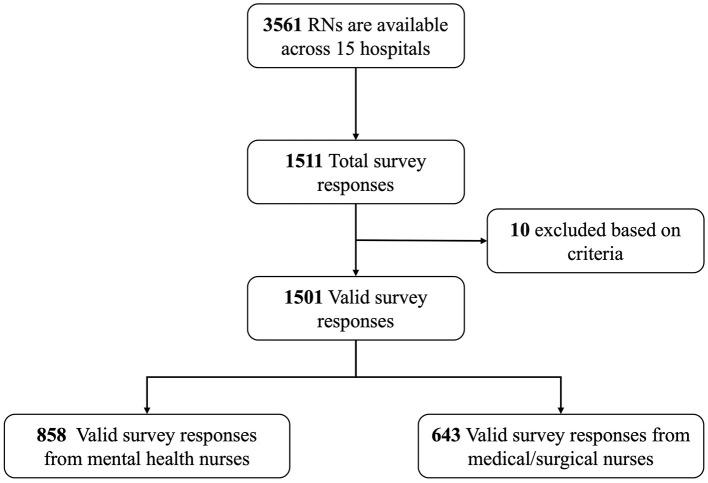
A cross-sectional descriptive correlational survey was conducted using the Customer Interpersonal Injustice Scale, Interpersonal Conflict at Work Scale, Bi-directional Work-Family Conflict Scale, Maslach Burnout Inventory (emotional exhaustion sub-scale), and the 6-item Kessler Psychological Distress Scale. The survey was completed by 858 MHNs and 643 non-MHNs across six comprehensive hospitals and nine psychiatric hospitals from western China.
RESULTS
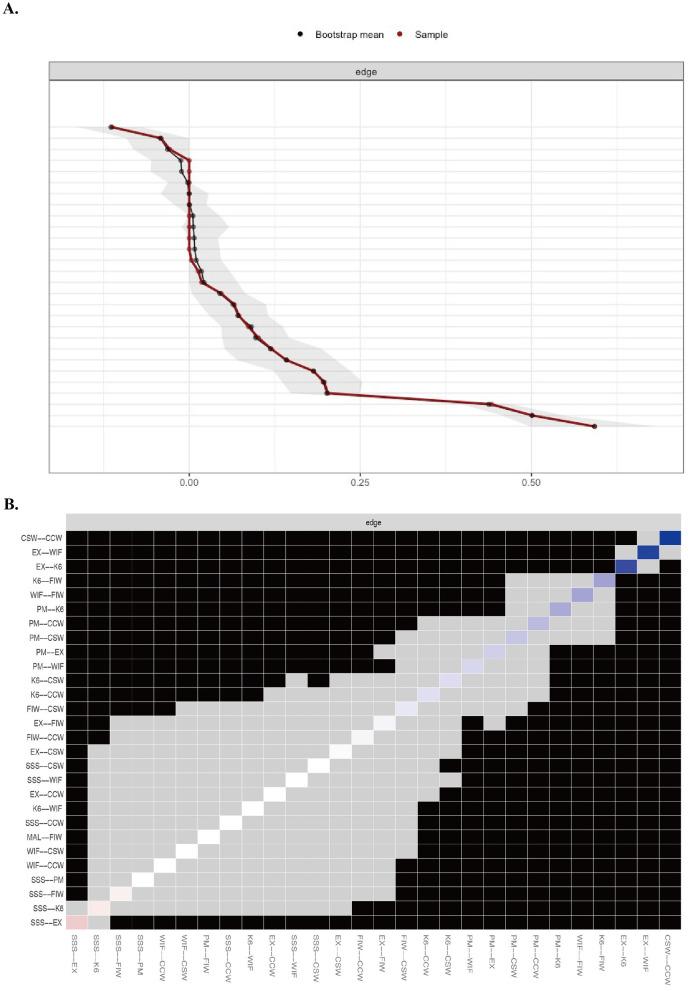
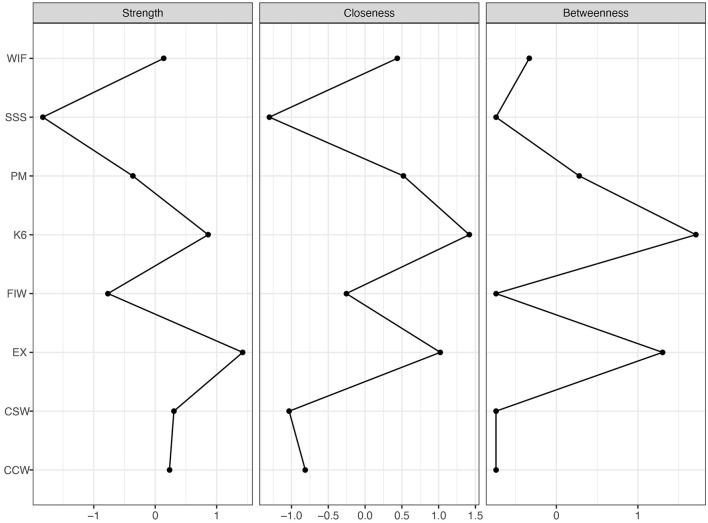
5.1% of all participants reported severe distress. Emotional exhaustion and psychological distress were associated with lower subjective social status, more severe conflicts with patients and supervisors, and bidirectional work-family conflict. Key risk factors for severe psychological distress included being an MHN, patient mistreatment, and bidirectional work-family conflict, while higher subjective social status was a protective factor. Network analysis showed no significant differences in conflict structures between MHNs and non-MHNs. Within the network, the work-to-family conflict most significantly impacted emotional exhaustion, while emotional exhaustion had the greatest influence on psychological distress.
CONCLUSION
This study revealed that MHNs experienced a higher rate of severe psychological distress than non-MHNs, with emotional exhaustion and psychological distress closely associated with subjective social status and interpersonal conflict. Given that work-to-family conflict and emotional exhaustion were key nodes in the network, targeted interventions are urgently needed to alleviate psychological distress.
背景
心理健康护士(MHNs)经常参与激烈的人际互动,并与患者、同事及其家人遭遇各种形式的冲突。这些冲突会破坏工作场所的和谐,并显著影响护士的心理健康。本研究旨在通过结构网络分析,剖析工作场所人际冲突如何影响护士的情绪耗竭和心理困扰。
方法
采用客户人际不公正量表、工作场所人际冲突量表、双向工作-家庭冲突量表、马氏倦怠量表(情绪耗竭子量表)和6项凯斯勒心理困扰量表进行横断面描述性相关调查。来自中国西部六家综合医院和九家精神病医院的858名心理健康护士和643名非心理健康护士完成了该调查。
结果
所有参与者中有5.1%报告有严重困扰。情绪耗竭和心理困扰与较低的主观社会地位、与患者和上级的更严重冲突以及双向工作-家庭冲突相关。严重心理困扰的关键风险因素包括是心理健康护士、患者虐待和双向工作-家庭冲突,而较高的主观社会地位是一个保护因素。网络分析表明,心理健康护士和非心理健康护士在冲突结构上没有显著差异。在网络中,工作对家庭的冲突对情绪耗竭的影响最为显著,而情绪耗竭对心理困扰的影响最大。
结论
本研究表明,心理健康护士经历严重心理困扰的比例高于非心理健康护士,情绪耗竭和心理困扰与主观社会地位和人际冲突密切相关。鉴于工作对家庭的冲突和情绪耗竭是网络中的关键节点,迫切需要有针对性的干预措施来缓解心理困扰。


 Zotero 插件