
加纳某地区医院接受产前护理的孕妇贫血的知识、态度、行为及预测因素:一项横断面研究
Knowledge, Attitudes, Practices, and Predictors of Anaemia Among Pregnant Women Attending Antenatal Care at a District Hospital in Ghana: A Cross-Sectional Study.
作者信息
Duneeh Richard Vikpebah, Tetteh Hansen Benjamin, Klugah Mercy Adzo, Jibrim Memunatu, Agblom Richard Otu, Kwadzokpui Precious Kwablah, Ablordey Kenneth
机构信息
Department of Medical Laboratory Sciences, School of Allied Health Sciences, University of Health and Allied Sciences, Ho, Ghana.
Department of Medical Diagnostics, College of Health Sciences, Kwame Nkrumah University of Science and Technology, Kumasi, Ghana.
出版信息
Anemia. 2025 Jun 5;2025:7333987. doi: 10.1155/anem/7333987. eCollection 2025.
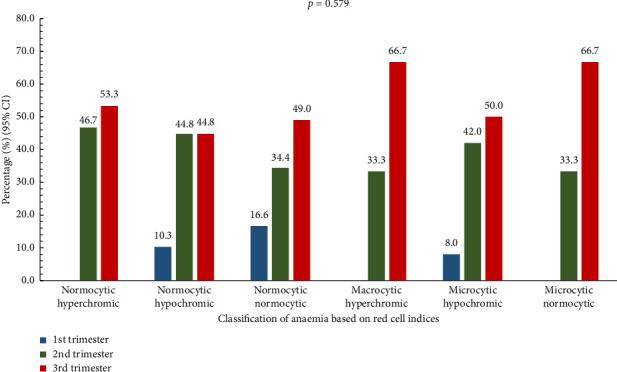
Anaemia during pregnancy is a major public health concern in both advanced and less-developed countries, including Ghana. The prevalence of anaemia in Ghana seriously affects the country's social and economic development. This study, therefore, assessed anaemia in pregnant women attending the Catholic Hospital in the Battor District, Ghana. A cross-sectional study using a convenient sampling method was conducted from November 2021 to January 2022 among four hundred (400) pregnant women receiving antenatal care at the Catholic Hospital, Battor, in the Volta Region. Sociodemographic (age, marital status, level of education, occupation and religion), knowledge, attitudes, and practices were collected with the aid of a structured questionnaire, and the gestation periods and the number of antenatal (ANC) visits were obtained from the antenatal booklets. Blood samples (3 mL) were collected to determine their anaemia status. SPSS software version 26 and GraphPad Prism 6 were used for the statistical analysis. A value less than 0.050 was considered statistically significant at a 95% confidence interval. Our study found that the prevalence of anaemia among the antenatal attendants was 295 (73.8%). Severe anaemia was highest in the second trimester (60.0%). Pregnant women in their third trimester recorded the highest prevalence of both macrocytic hyperchromic and microcytic hypochromic anaemia (66.7%, 50.0%). The study found that the majority of the pregnant women had satisfactory knowledge of anaemia (38.3%), with only 5.3% having excellent knowledge. Hairdressers had 69% lower odds for anaemia as compared to participants with other occupations (aOR; 0.31, 95% CI; 0.12-0.82, = 0.018) whiles 196 (66.4%) of married women were anaemic. Anaemia remains highly prevalent among pregnant women, with notable variations across trimesters and occupations. Unexpected trends, such as lower odds of anaemia among hairdressers and higher prevalence among married women, highlight the need for further studies into occupational and socio-cultural influences on maternal health.
孕期贫血是包括加纳在内的发达国家和欠发达国家都面临的一个重大公共卫生问题。加纳的贫血患病率严重影响了该国的社会和经济发展。因此,本研究对加纳巴托尔区天主教医院的孕妇贫血情况进行了评估。2021年11月至2022年1月,在沃尔特地区巴托尔天主教医院接受产前护理的400名孕妇中,采用方便抽样法进行了一项横断面研究。借助结构化问卷收集社会人口学信息(年龄、婚姻状况、教育程度、职业和宗教信仰)、知识、态度和行为习惯,并从产前手册中获取妊娠期和产前检查(ANC)次数。采集3毫升血样以确定她们的贫血状况。使用SPSS软件26版和GraphPad Prism 6进行统计分析。在95%置信区间,p值小于0.050被认为具有统计学意义。我们的研究发现,产前检查人群中的贫血患病率为295人(73.8%)。重度贫血在孕中期最高(60.0%)。孕晚期孕妇的大细胞高色素性贫血和小细胞低色素性贫血患病率均最高(分别为66.7%和50.0%)。研究发现,大多数孕妇对贫血有一定了解(38.3%),只有5.3%的孕妇有充分了解。与从事其他职业的参与者相比,美发师患贫血的几率低69%(调整后比值比;0.31,95%置信区间;0.12 - 0.82,p = 0.018),而196名(66.4%)已婚妇女患有贫血。贫血在孕妇中仍然非常普遍,在不同孕期和职业之间存在显著差异。美发师患贫血几率较低以及已婚妇女患病率较高等意外趋势,凸显了进一步研究职业和社会文化对孕产妇健康影响的必要性。


 Zotero 插件