
不匹配无关供者外周血干细胞移植后基于移植后环磷酰胺的移植物抗宿主病预防
Post-Transplant Cyclophosphamide-Based Graft-Versus-Host Disease Prophylaxis After Mismatched Unrelated Donor Peripheral Blood Stem Cell Transplantation.
作者信息
Al Malki Monzr M, Bo-Subait Stephanie, Logan Brent, Olson Janelle, Kou Jianqun, Smith Sarah, Leckrone Erin, Wu Juan, Stefanski Heather E, Auletta Jeffery J, Spellman Stephen R, Malmberg Craig, Askar Medhat, Cusatis Rachel, Shaffer Brian C, Modi Dipenkumar, Khimani Farhad, Gooptu Mahasweta, Hamadani Mehdi, Madbouly Abeer, Maiers Martin, Fingerson Stephanie, Cook Rachel, Ballen Karen, Loren Alison, Larkin Karilyn, Arai Sally, Qayed Muna, Choi Sung Won, Broglie Larisa, Shaw Bronwen E, Devine Steven Michael, Jimenez Jimenez Antonio Martin
机构信息
City of Hope National Medical Center, Duarte, CA.
CIBMTR (Center for International Blood and Marrow Transplant Research), NMDP, Minneapolis, MN.
出版信息
J Clin Oncol. 2025 Jun 16:JCO2500856. doi: 10.1200/JCO-25-00856.
PURPOSE
Allogeneic hematopoietic stem cell transplantation (HSCT) is a curative treatment for advanced hematologic malignancies. HSCT using human leukocyte antigen (HLA)-mismatched donors is historically associated with inferior survival. Patients from underrepresented racial and ethnic groups more frequently rely on HLA-mismatched donors. We hypothesized that post-transplant cyclophosphamide (PTCy) based graft versus host disease (GVHD) prophylaxis would improve outcomes for HSCT recipients using peripheral blood stem cells (PBSCs) from HLA-mismatched unrelated donors (MMUDs) by reducing the risk of GVHD.
METHODS
This phase II, nonrandomized, multicenter trial assessed PBSCs in the setting of a GVHD prophylaxis regimen of cyclophosphamide, tacrolimus, and mycophenolate mofetil in two adult strata: myeloablative conditioning (MAC) and reduced-intensity or nonmyeloablative (RIC/NMA) conditioning before HSCT from a MMUD. The primary objective was to estimate 1 year overall survival (OS) for each stratum. Key secondary end points included incidences of acute and chronic GVHD.
RESULTS
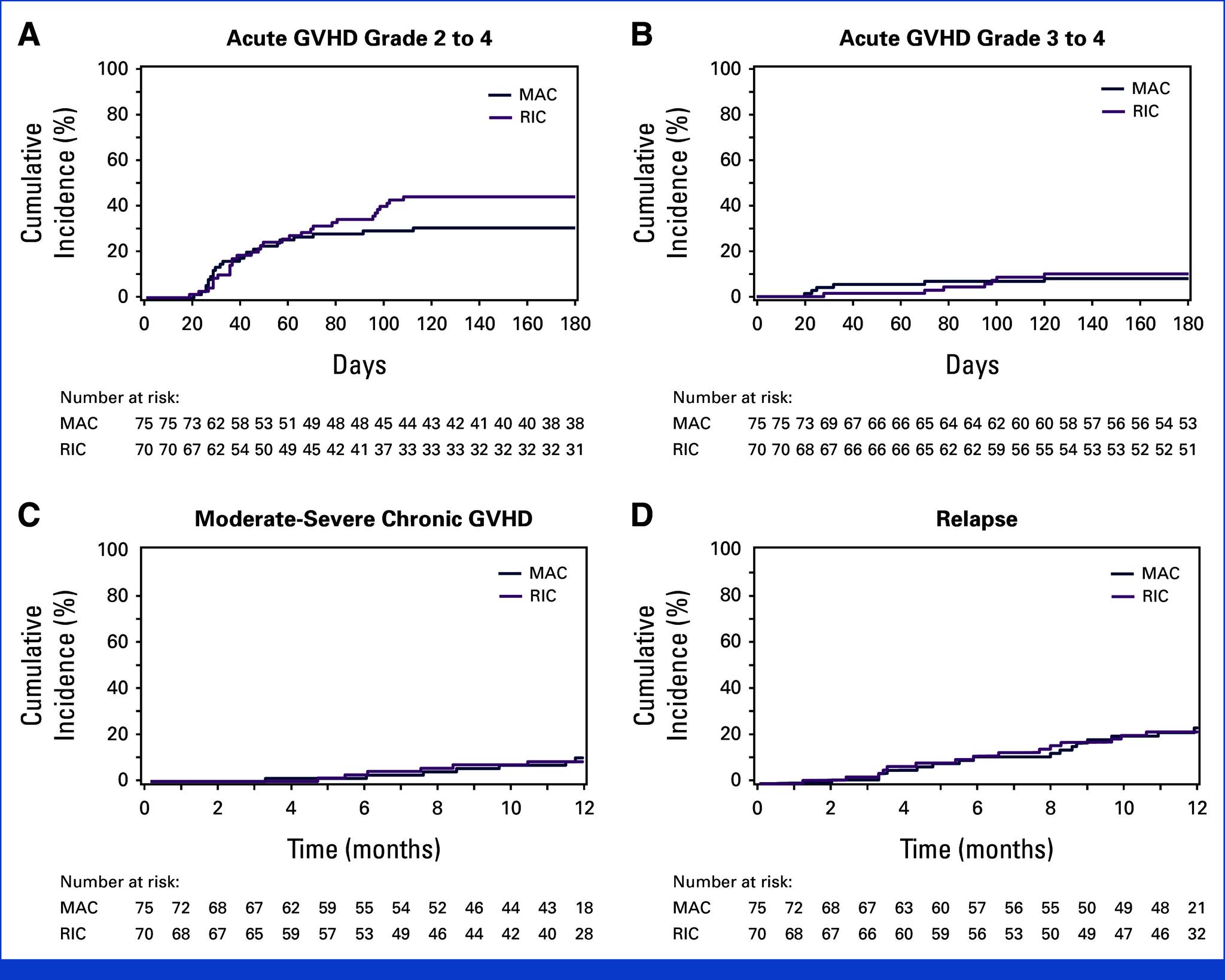
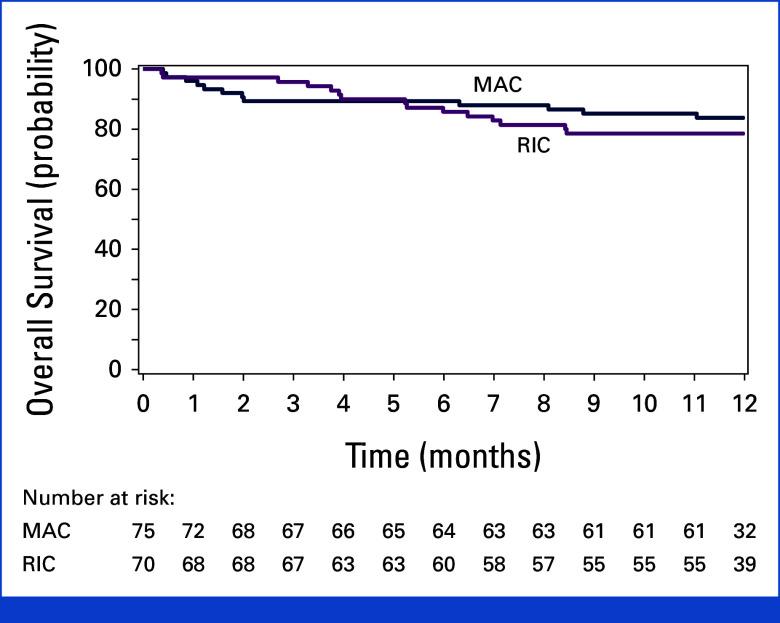
A total of 145 patients enrolled, with 59% self-identifying within an underrepresented group. The 1 year OS was 83.8% (95% CI, 73.1% to 90.4%) for MAC and 78.6% (95% CI, 67% to 86.5%) for RIC/NMA. Incidences of grades III to IV acute GVHD at 6 months were 8% (95% CI, 3.2 to 15.6) for MAC and 10% (95% CI, 4.4 to 18.4) for RIC/NMA. Moderate/severe chronic GVHD at 1 year was 10.3% (95% CI, 4.4 to 18.9) for MAC and 8.6% (95% CI, 3.5 to 16.6) for RIC/NMA. 32% of patients whose donors matched at fewer than seven of eight HLA alleles had similar OS compared with those with donor matched at seven of eight alleles.
CONCLUSION
PTCy-based GVHD prophylaxis after MMUD HSCT with PBSC grafts results in favorable 1 year OS. Using MMUDs expands donor availability to all patients regardless of ancestry (ACCESS; ClinicalTrials.gov identifier: NCT04904588).
目的
异基因造血干细胞移植(HSCT)是晚期血液系统恶性肿瘤的一种治愈性治疗方法。使用人类白细胞抗原(HLA)不匹配供者的HSCT在历史上与较差的生存率相关。来自代表性不足的种族和族裔群体的患者更频繁地依赖HLA不匹配的供者。我们假设基于移植后环磷酰胺(PTCy)的移植物抗宿主病(GVHD)预防措施可通过降低GVHD风险,改善使用来自HLA不匹配无关供者(MMUDs)的外周血干细胞(PBSCs)进行HSCT的受者的结局。
方法
这项II期、非随机、多中心试验在两个成人分层中评估了在环磷酰胺、他克莫司和霉酚酸酯的GVHD预防方案背景下的PBSCs:清髓性预处理(MAC)以及在接受来自MMUD的HSCT之前的减低强度或非清髓性(RIC/NMA)预处理。主要目标是估计每个分层的1年总生存率(OS)。关键次要终点包括急性和慢性GVHD的发生率。
结果
共纳入145例患者,其中59%自我认定属于代表性不足的群体。MAC组的1年OS为83.8%(95%CI,73.1%至90.4%),RIC/NMA组为78.6%(95%CI,67%至86.5%)。6个月时III至IV级急性GVHD的发生率,MAC组为8%(95%CI,3.2至15.6),RIC/NMA组为10%(95%CI,4.4至18.4)。1年时中度/重度慢性GVHD,MAC组为10.3%(95%CI,4.4至18.9),RIC/NMA组为8.6%(95%CI,3.5至16.6)。供者与8个HLA等位基因中少于7个匹配的患者中,32%的患者的OS与供者与8个等位基因中7个匹配的患者相似。
结论
MMUD HSCT联合PBSC移植物后基于PTCy的GVHD预防可带来良好的1年OS。使用MMUD可扩大所有患者的供者来源,无论其血统如何(ACCESS;ClinicalTrials.gov标识符:NCT0490第4588号)。

 Zotero 插件