
微小RNA-29a-5p可减轻急性缺血性脑卒中机械再灌注后的出血性转化并改善预后。
MicroRNA-29a-5p attenuates hemorrhagic transformation and improves outcomes after mechanical reperfusion for acute ischemic stroke.
作者信息
Li Chang-Luo, Zhuang Jin-Kun, Liu Zhong, Huang Zhong-Run, Xiang Chun, Chen Qian-Yu, Chen Ze-Xin, Shi Zhong-Song
机构信息
Department of Neurosurgery (C-LL, J-KZ, Z-RH, CX, Z-SS), Sun Yat-sen Memorial Hospital, Sun Yat-sen University, Guangzhou, China.
RNA Biomedical Institute (C-LL, J-KZ, ZL, Z-RH, Q-YC, Z-XC, Z-SS), Sun Yat-sen Memorial Hospital, Sun Yat-sen University, Guangzhou, China.
出版信息
Noncoding RNA Res. 2025 May 28;14:96-106. doi: 10.1016/j.ncrna.2025.05.016. eCollection 2025 Oct.
BACKGROUND
Hemorrhage transformation (HT) following endovascular reperfusion treatment is associated with worse clinical outcomes in acute ischemic stroke patients. MicroRNA (miR) modulates several aspects of cerebral ischemia-reperfusion injury, including blood-brain barrier (BBB) integrity, inflammation, oxidative stress, and apoptosis, significantly impacting cerebral recovery and function. This study investigated the role of astrocytic miR-29a-5p in HT in the transient middle cerebral artery occlusion (MCAO) model and oxygen-glucose deprivation reoxygenation (OGD/R) model of astrocytes.
METHODS
MiR-29a-5p expression in the OGD/R astrocyte model was assessed. The astrocyte injury, the expression of A1 and A2 phenotypes of reactive astrocytes, and the regulation of miR-29a-5p target genes were evaluated after the miR-29a-5p intervention. A mechanical reperfusion-induced HT model was established in hyperglycemic rats using 5-h MCAO following reperfusion at 6 h. MiR-29a-5p agomir was administered intravenously before reperfusion. Infarct volume, HT, BBB damage, neurological score, the expression of miR-29a-5p, and its target genes were evaluated.
RESULTS
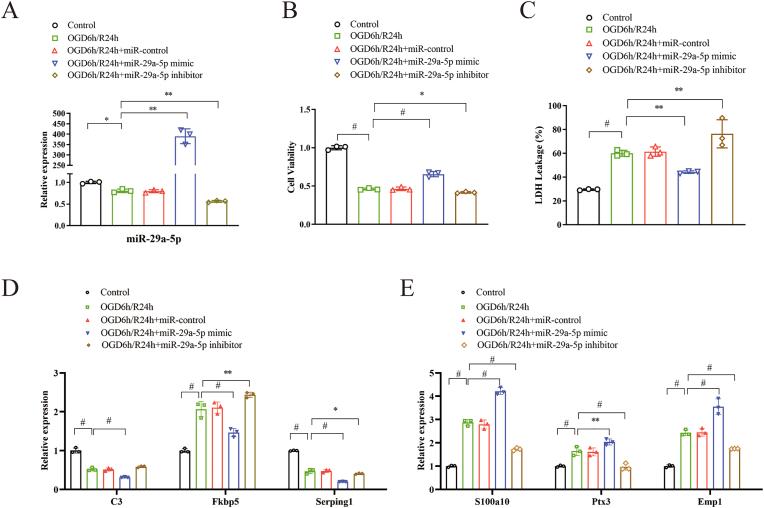
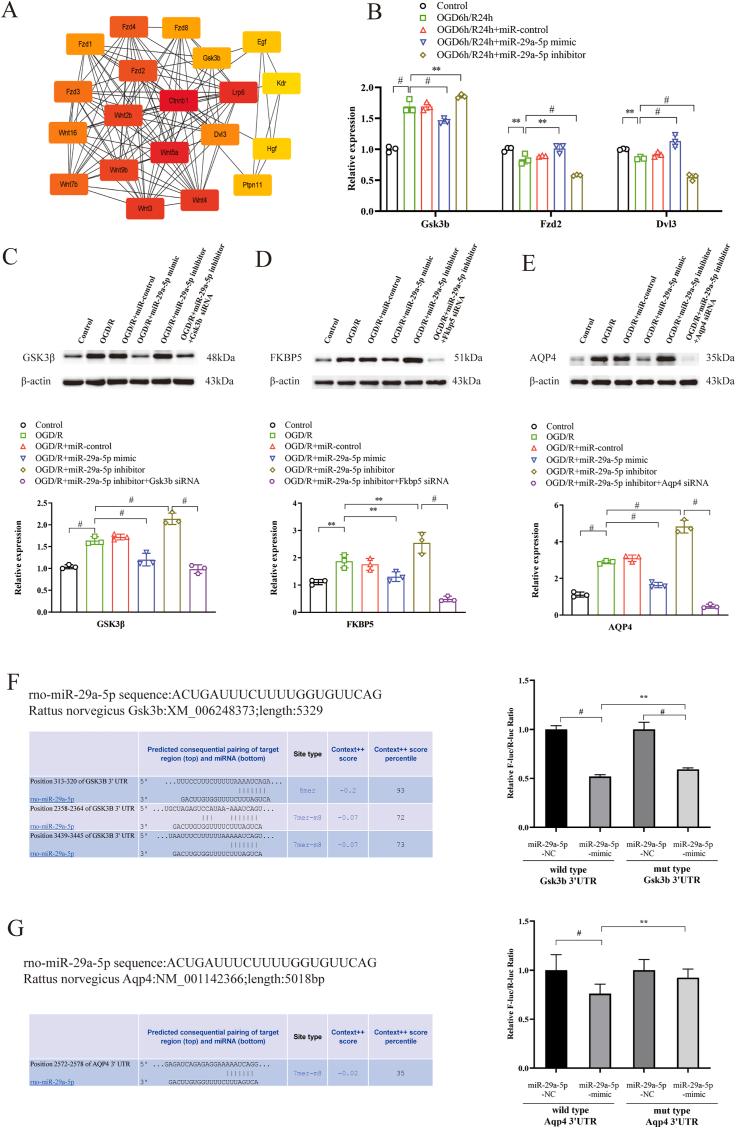
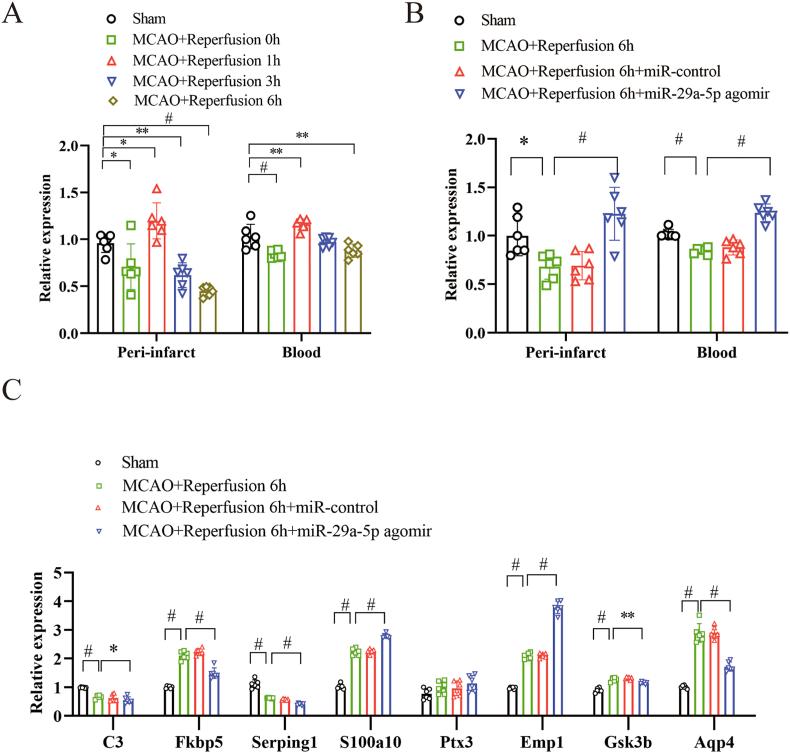
MiR-29a-5p expression decreased in OGD/R-treated astrocytes and the peri-infarction tissue and blood of the MCAO model. Elevating miR-29a-5p levels reduced astrocyte injury, suppressed neurotoxic A1 astrocyte markers (C3, Fkbp5, and Serping1), while enhanced neuroprotective A2 astrocyte markers (S100a10 and Emp1) in the OGD/R and MCAO models. Intravenous administration of miR-29a-5p agomir increased the expression of miR-29a-5p and reduced infarct volume, reperfusion-induced HT, and BBB breakdown after ischemia, improving neurological outcomes in the MCAO model. Overexpression of miR-29a-5p effectively suppressed the expression of its direct target genes, glycogen synthase kinase 3 beta and aquaporin 4 in the OGD/R and MCAO models.
CONCLUSIONS
MiR-29a-5p alleviates astrocyte injury and regulates A1 and A2 astrocyte markers, glycogen synthase kinase 3 beta, and aquaporin 4 in astrocytes subjected to ischemia-reperfusion injury. Astrocytic miR-29a-5p may be a protective target for reducing HT and improving outcomes following mechanical reperfusion in acute ischemic stroke.
背景
血管内再灌注治疗后出血转化(HT)与急性缺血性脑卒中患者较差的临床预后相关。微小RNA(miR)调节脑缺血再灌注损伤的多个方面,包括血脑屏障(BBB)完整性、炎症、氧化应激和细胞凋亡,对脑恢复和功能有显著影响。本研究在短暂性大脑中动脉闭塞(MCAO)模型和星形胶质细胞氧糖剥夺复氧(OGD/R)模型中研究了星形胶质细胞miR-29a-5p在HT中的作用。
方法
评估OGD/R星形胶质细胞模型中miR-29a-5p的表达。在miR-29a-5p干预后,评估星形胶质细胞损伤、反应性星形胶质细胞A1和A2表型的表达以及miR-29a-5p靶基因的调控。在高血糖大鼠中,通过5小时MCAO并在6小时后再灌注建立机械再灌注诱导的HT模型。在再灌注前静脉注射miR-29a-5p激动剂。评估梗死体积、HT、BBB损伤、神经功能评分、miR-29a-5p及其靶基因的表达。
结果
在OGD/R处理的星形胶质细胞以及MCAO模型的梗死周围组织和血液中,miR-29a-5p表达降低。在OGD/R和MCAO模型中,提高miR-29a-5p水平可减轻星形胶质细胞损伤,抑制神经毒性A1星形胶质细胞标志物(C3、Fkbp5和Serping1),同时增强神经保护性A2星形胶质细胞标志物(S100a10和Emp1)。静脉注射miR-29a-5p激动剂可增加miR-29a-5p的表达,并减少梗死体积、再灌注诱导的HT和缺血后的BBB破坏,改善MCAO模型的神经功能结局。在OGD/R和MCAO模型中,miR-29a-5p的过表达有效抑制了其直接靶基因糖原合酶激酶3β和水通道蛋白4的表达。
结论
miR-29a-5p可减轻星形胶质细胞损伤,并调节缺血再灌注损伤星形胶质细胞中的A1和A2星形胶质细胞标志物、糖原合酶激酶3β和水通道蛋白4。星形胶质细胞miR-29a-5p可能是减少HT并改善急性缺血性脑卒中机械再灌注后结局的保护性靶点。

 Zotero 插件