
用于监测物理、生理和体液信号的电纺纳米纤维基复合材料的最新进展
Recent Progress of Electrospun Nanofiber-Based Composite Materials for Monitoring Physical, Physiological, and Body Fluid Signals.
作者信息
Guo Fang, Ren Zheng, Wang Shanchi, Xie Yu, Pan Jialin, Huang Jianying, Zhu Tianxue, Cheng Si, Lai Yuekun
机构信息
College of Textile and Clothing Engineering, National Engineering Laboratory for Modern Silk, Soochow University, Suzhou, 215123, People's Republic of China.
College of Chemical Engineering, Fuzhou University, Fuzhou, 350116, People's Republic of China.
出版信息
Nanomicro Lett. 2025 Jun 18;17(1):302. doi: 10.1007/s40820-025-01804-2.
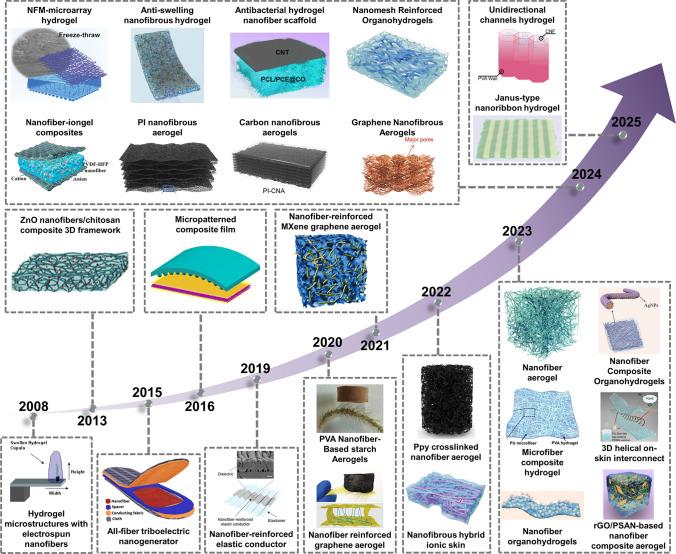
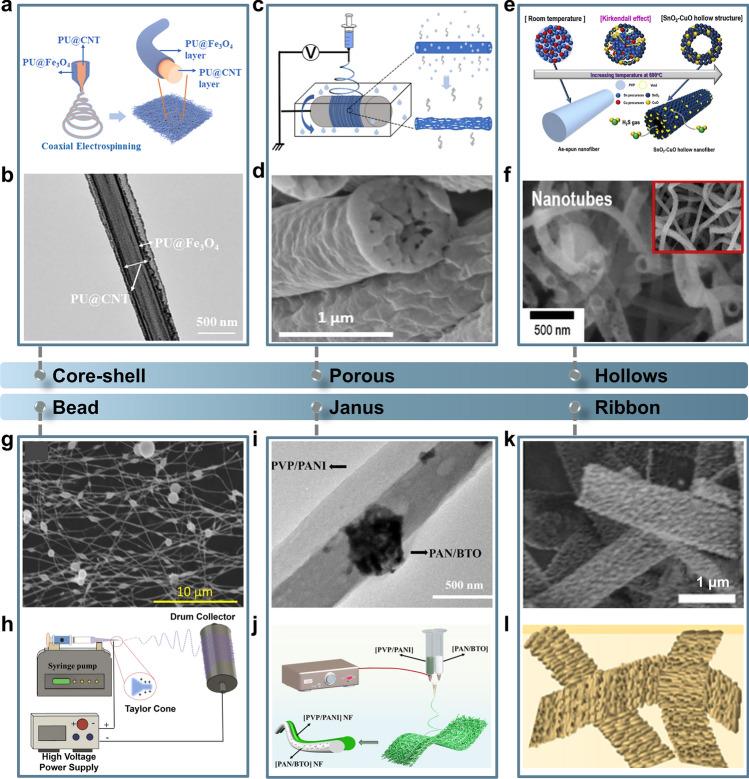
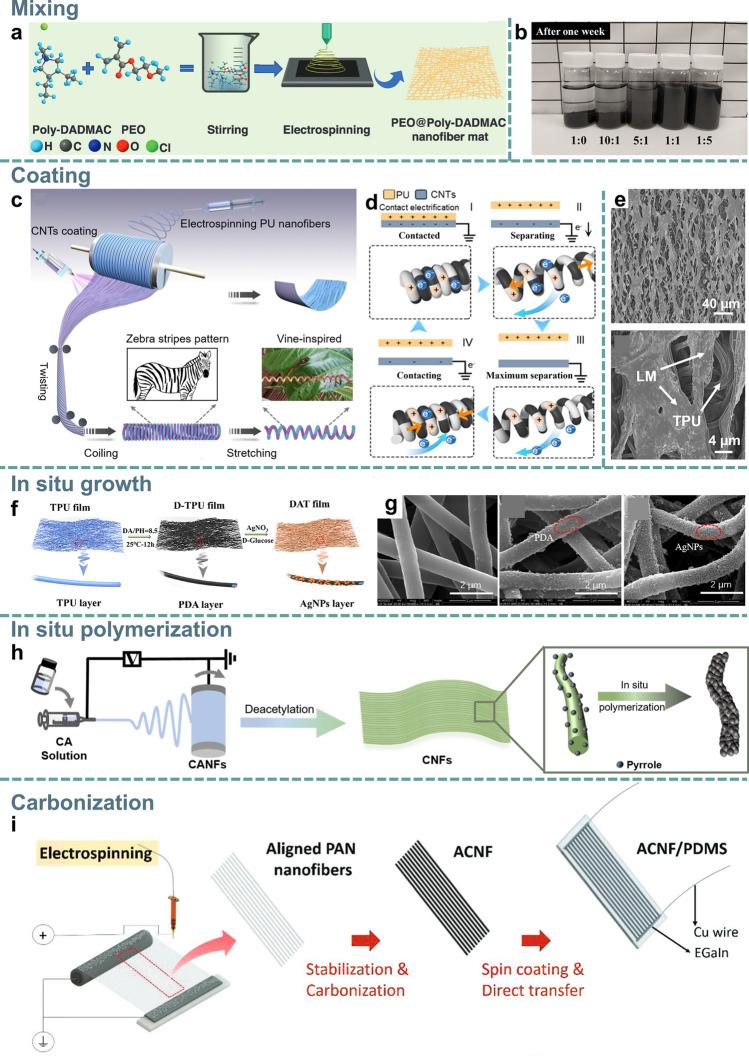
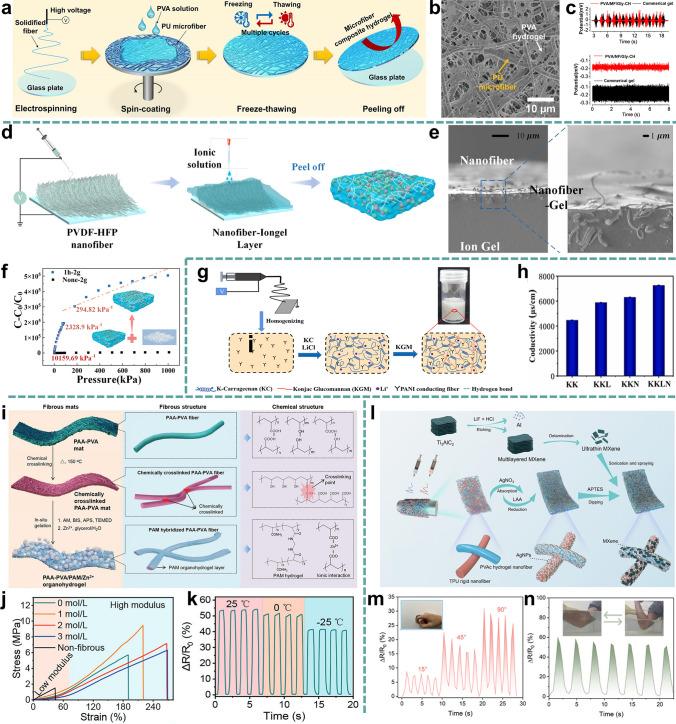
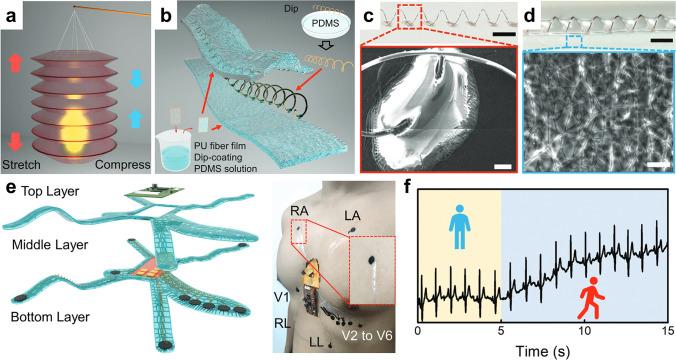
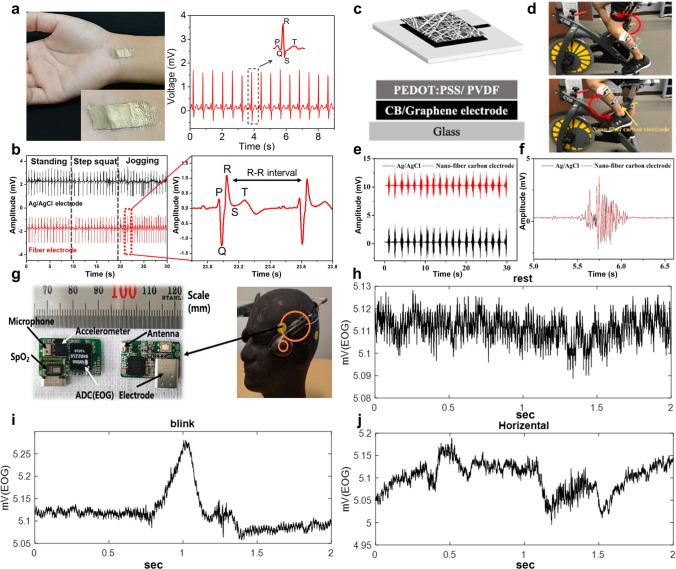
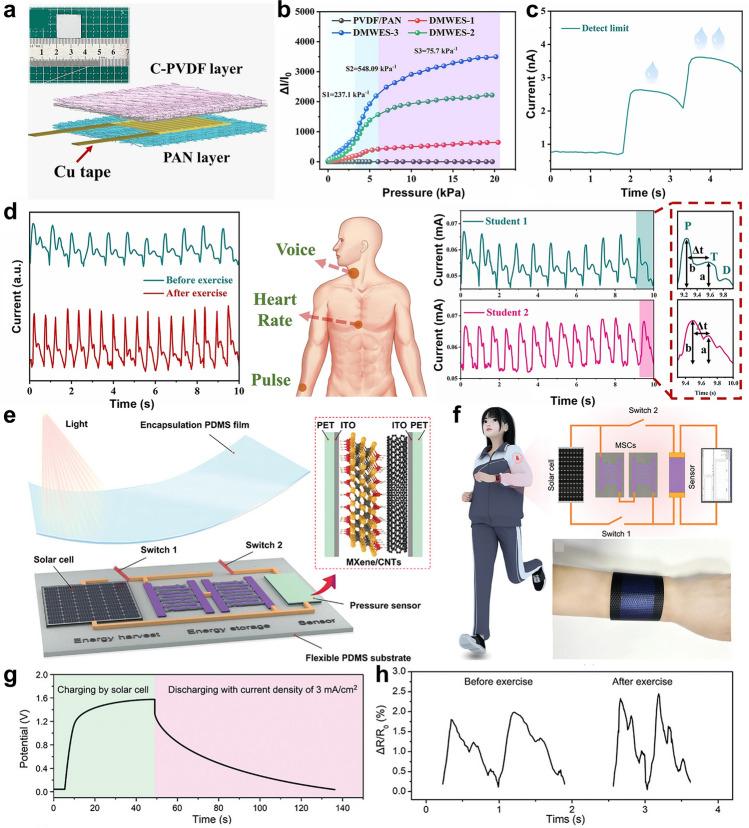
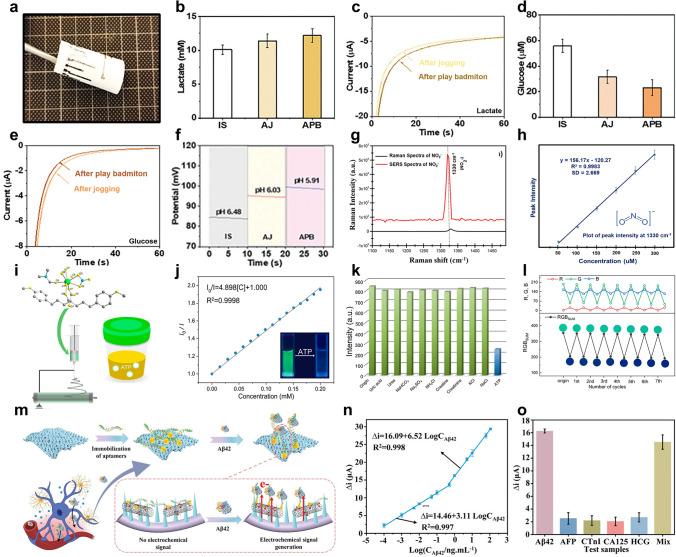
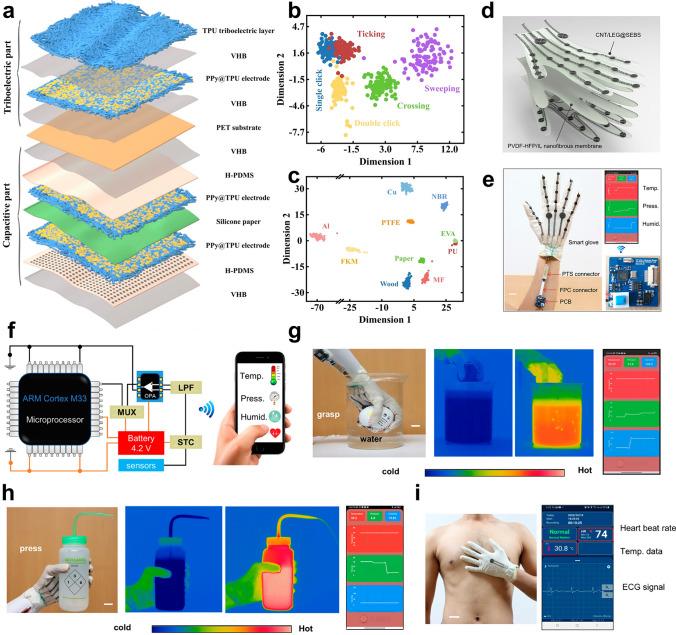
Flexible electronic skin (E-skin) sensors offer innovative solutions for detecting human body signals, enabling human-machine interactions and advancing the development of intelligent robotics. Electrospun nanofibers are particularly well-suited for E-skin applications due to their exceptional mechanical properties, tunable breathability, and lightweight nature. Nanofiber-based composite materials consist of three-dimensional structures that integrate one-dimensional polymer nanofibers with other functional materials, enabling efficient signal conversion and positioning them as an ideal platform for next-generation intelligent electronics. Here, this review begins with an overview of electrospinning technology, including far-field electrospinning, near-field electrospinning, and melt electrospinning. It also discusses the diverse morphologies of electrospun nanofibers, such as core-shell, porous, hollow, bead, Janus, and ribbon structure, as well as strategies for incorporating functional materials to enhance nanofiber performance. Following this, the article provides a detailed introduction to electrospun nanofiber-based composite materials (i.e., nanofiber/hydrogel, nanofiber/aerogel, nanofiber/metal), emphasizing their recent advancements in monitoring physical, physiological, body fluid, and multi-signal in human signal detection. Meanwhile, the review explores the development of multimodal sensors capable of responding to diverse stimuli, focusing on innovative strategies for decoupling multiple signals and their state-of-the-art advancements. Finally, current challenges are analyzed, while future prospects for electrospun nanofiber-based composite sensors are outlined. This review aims to advance the design and application of next-generation flexible electronics, fostering breakthroughs in multifunctional sensing and health monitoring technologies.
柔性电子皮肤(E-skin)传感器为检测人体信号提供了创新解决方案,实现了人机交互,并推动了智能机器人技术的发展。由于其卓越的机械性能、可调的透气性和轻质特性,电纺纳米纤维特别适合用于电子皮肤应用。基于纳米纤维的复合材料由三维结构组成,该结构将一维聚合物纳米纤维与其他功能材料整合在一起,实现了高效的信号转换,并使其成为下一代智能电子的理想平台。在此,本综述首先概述了电纺技术,包括远场电纺、近场电纺和熔体电纺。还讨论了电纺纳米纤维的多种形态,如核壳、多孔、中空、珠状、双面和带状结构,以及引入功能材料以提高纳米纤维性能的策略。在此之后,文章详细介绍了基于电纺纳米纤维的复合材料(即纳米纤维/水凝胶、纳米纤维/气凝胶、纳米纤维/金属),强调了它们在人体信号检测中监测物理、生理、体液和多信号方面的最新进展。同时,该综述探讨了能够响应多种刺激的多模态传感器的发展,重点关注解耦多个信号的创新策略及其最新进展。最后,分析了当前面临的挑战,同时概述了基于电纺纳米纤维的复合传感器的未来前景。本综述旨在推动下一代柔性电子产品的设计和应用,促进多功能传感和健康监测技术的突破。





 Zotero 插件