
两个商业克隆品种叶片中冷诱导的生化变化。 (原文句子不完整,推测补充完整后的翻译)
Cold-induced biochemical changes in leaves of two commercial clones of .
作者信息
Basile Patricia, Wallace Federico, Olivaro Cristina, De Palma Nicolás, Borsani Omar, Fett-Neto Arthur
机构信息
Espacio de Biología Vegetal del Noreste, CENUR Noreste, Universidad de la República, Tacuarembó, Uruguay.
Espacio de Ciencia y Tecnología Química, CENUR Noreste, Universidad de la República, Tacuarembó, Uruguay.
出版信息
Front Mol Biosci. 2025 Jun 4;12:1584132. doi: 10.3389/fmolb.2025.1584132. eCollection 2025.
INTRODUCTION
Cold weather poses a significant challenge to the growth of crops and subtropical tree species like . Exposure of plants to stressful temperatures generates changes in their physiology resulting from modifications in gene expression and extensive metabolic reorganization. A direct comparison of several biochemical changes under cold exposure of leaf tissues of and clones was carried out.
METHODS
Leaf discs of and were initially maintained for 24 h at 25°C and then 4 days at 6°C to induce cold stress. Sampling was conducted at 0 h (control condition), 2 and 4 days. Several biochemical parameters were measured, and an untargeted metabolomics approach based on ultra-high performance liquid chromatography (UHPLC) coupled to linear ion trap mass spectrometry fingerprinting was carried out.
RESULTS
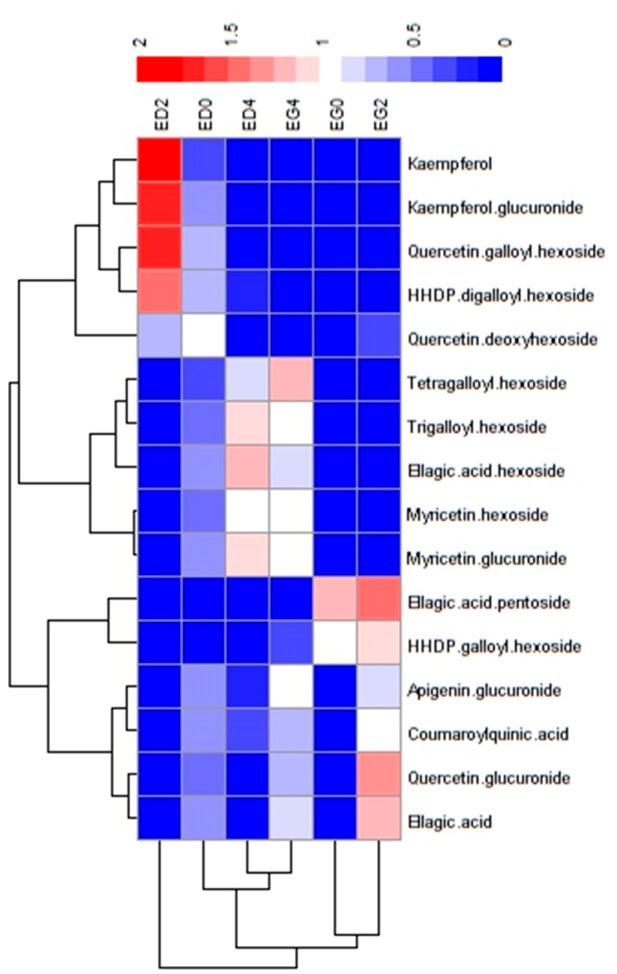
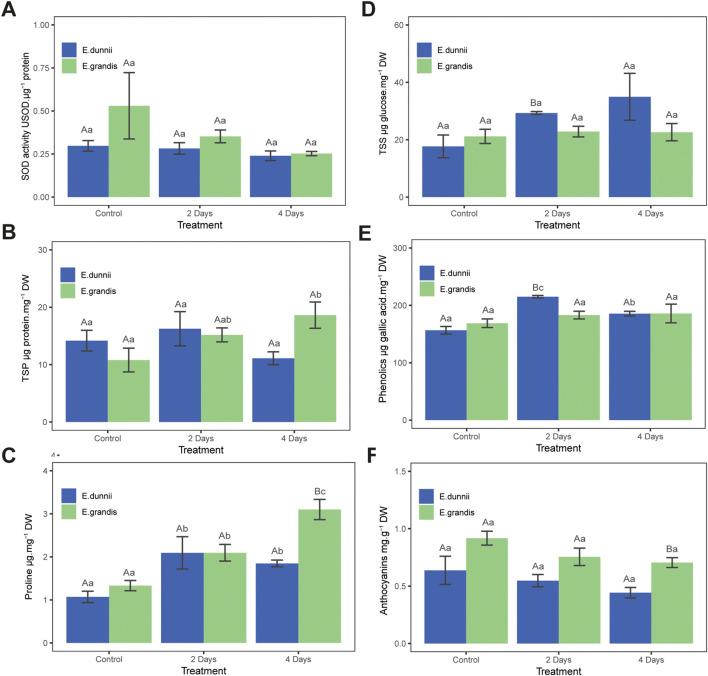
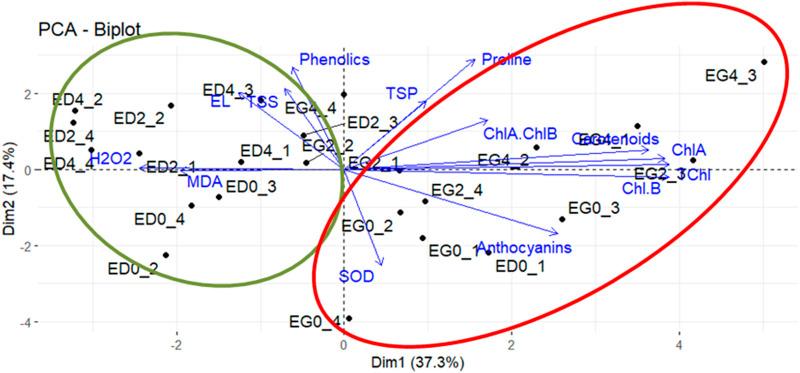
Results indicated distinct cold tolerance strategies in and . initiated protective mechanism activation after a 2-day exposure period with the accumulation of sugars and phenolic compounds, whereas did so after 4 days, accumulating proline and anthocyanins. PLS-DA based on UHPLC-MS fingerprints revealed a clear species-specific effect across the metabolome. This effect was greater than the differences between cold temperatures. Additionally, this methodology allowed the putative identification of 16 phenolic marker compounds with high discriminant potential to differentiate the cold response in these two species.
引言
寒冷天气对农作物和亚热带树种等的生长构成重大挑战。植物暴露于胁迫温度下会因基因表达的改变和广泛的代谢重组而导致其生理变化。对[具体树种1]和[具体树种2]克隆体叶片组织冷暴露下的几种生化变化进行了直接比较。
方法
[具体树种1]和[具体树种2]的叶盘最初在25°C下保持24小时,然后在6°C下保持4天以诱导冷胁迫。在0小时(对照条件)、2天和4天进行采样。测量了几个生化参数,并基于超高效液相色谱(UHPLC)与线性离子阱质谱指纹图谱联用的非靶向代谢组学方法进行了研究。
结果
结果表明[具体树种1]和[具体树种2]具有不同的耐寒策略。[具体树种1]在暴露2天后启动保护机制激活,伴随着糖类和酚类化合物的积累,而[具体树种2]在4天后才这样做,积累脯氨酸和花青素。基于UHPLC-MS指纹图谱的PLS-DA揭示了整个代谢组中明显的物种特异性效应。这种效应大于低温之间的差异。此外,该方法能够推定鉴定出16种具有高判别潜力的酚类标记化合物,以区分这两个物种的冷响应。


 Zotero 插件