
伯纳特立克次体的致病性和毒力:聚焦于Q热
Pathogenicity and Virulence of Coxiella burnetii: Focus on Q fever.
作者信息
Mezouar Soraya, Desnues Benoit, Bechah Yassina, Bardin Nathalie, Devaux Christian, Mege Jean-Louis
机构信息
Centre National de la Recherche Scientifique, Établissement Français du Sang, Anthropologie Bio-Culturelle, Droit, Éthique et Santé, Aix-Marseille University, Marseille, France.
Faculty of Medical and Paramedical Sciences, Aix-Marseille University, HIPE Human Lab, Marseille, France.
出版信息
Virulence. 2025 Dec;16(1):2495842. doi: 10.1080/21505594.2025.2495842. Epub 2025 Jun 19.
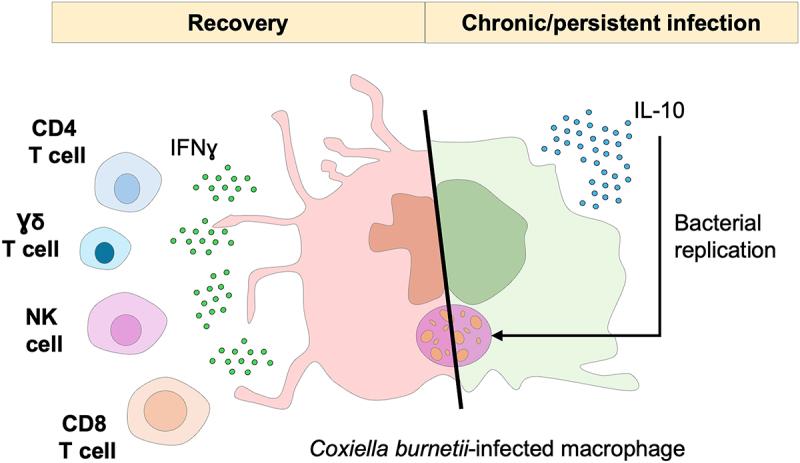
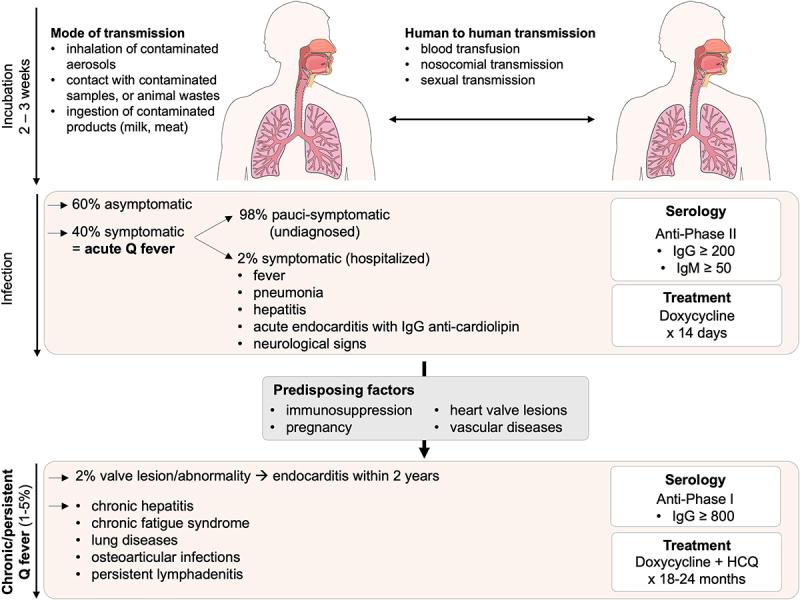
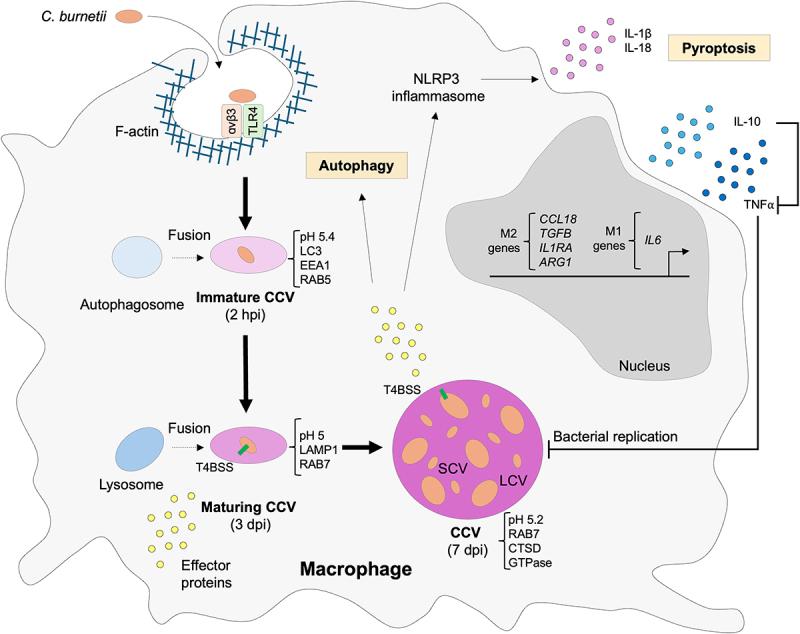
is responsible for Q fever, a zoonosis that mainly manifests as a mild acute infection and may persist in specific individuals causing severe complications, including endocarditis and vascular infections. Transmission mainly occurs through the inhalation of aerosols, underlining bacterial resistance to environmental stress. is an intracellular gram-negative pathogen that can infect and survive in monocytes and macrophages and replicate within acidic compartments. expresses several virulence factors, including lipopolysaccharide and a type IV secretion system, which are involved in hijacking several functions of the immune system and controlling cell death. This review summarizes research on infection from clinical presentation of Q fever to bacterial and host factors of virulence. It compiles immunological data associated with bacterial cure or persistence and discusses a potential link between macrophage interaction and immune dysregulation of Q fever.
[病原体名称] 是Q热的病原体,Q热是一种人畜共患病,主要表现为轻度急性感染,在特定个体中可能持续存在并导致严重并发症,包括心内膜炎和血管感染。传播主要通过气溶胶吸入发生,这突出了该细菌对环境压力的抗性。[病原体名称] 是一种细胞内革兰氏阴性病原体,可感染单核细胞和巨噬细胞并在其中存活,并在酸性区室中复制。[病原体名称] 表达多种毒力因子,包括脂多糖和IV型分泌系统,这些毒力因子参与劫持免疫系统的多种功能并控制细胞死亡。本综述总结了从Q热的临床表现到细菌和宿主毒力因子等方面关于[病原体名称] 感染的研究。它汇编了与细菌治愈或持续存在相关的免疫学数据,并讨论了巨噬细胞相互作用与Q热免疫失调之间的潜在联系。

 Zotero 插件