
间充质干细胞衍生的细胞外囊泡在非酒精性脂肪性肝病中的治疗潜力:一项对临床前证据的系统评价和荟萃分析
Therapeutic potential of mesenchymal stem cell-derived extracellular vesicle in nonalcoholic fatty liver disease: a systematic review and meta-analysis of preclinical evidence.
作者信息
Dai Qiangqiang, Zhu Di, Du Xiaoming, Tan Hao, Chen Qiu
机构信息
Hospital of Chengdu University of Traditional Chinese Medicine, Chengdu, China.
出版信息
Lipids Health Dis. 2025 Jun 19;24(1):217. doi: 10.1186/s12944-025-02635-1.
OBJECTIVE
Nonalcoholic fatty liver disease (NAFLD) is a global chronic health challenge, demanding the development of innovative therapeutic strategies. Mesenchymal stromal cell-derived extracellular vesicles (MSC-EVs) have emerged as a promising therapeutic approach for NAFLD; however, current evidence is limited to preclinical studies. This systematic review and meta-analysis assessed the therapeutic efficacy of MSC-EVs in rodent models of NAFLD and its progressive form, nonalcoholic steatohepatitis (NASH). By synthesizing preclinical data, we aim to establish a robust evidence base that can guide future clinical trials and optimize MSC-EV-based therapies.
METHODS
Comprehensive searches of the PubMed, Web of Science, Embase, CNKI, Wanfang, and VIP databases identified eligible animal studies. Methodological quality was assessed via the SYRCLE risk-of-bias tool. The meta-analyses were conducted following Cochrane Handbook guidelines via Stata 18.0.
RESULTS
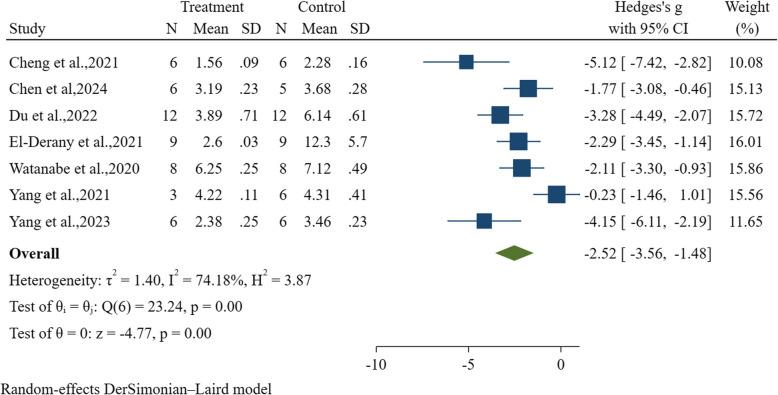
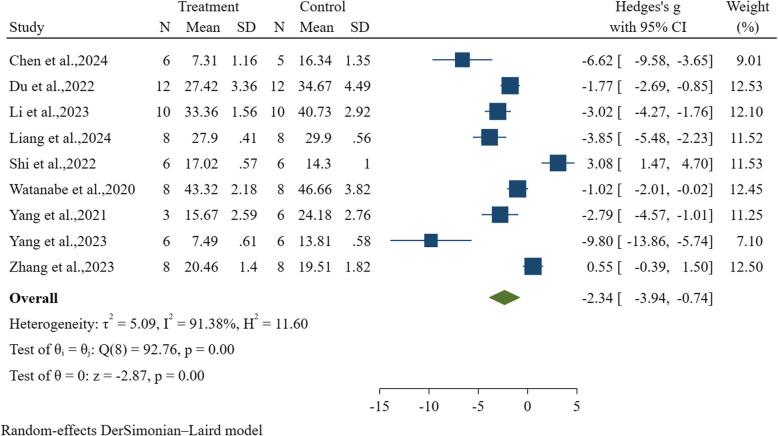
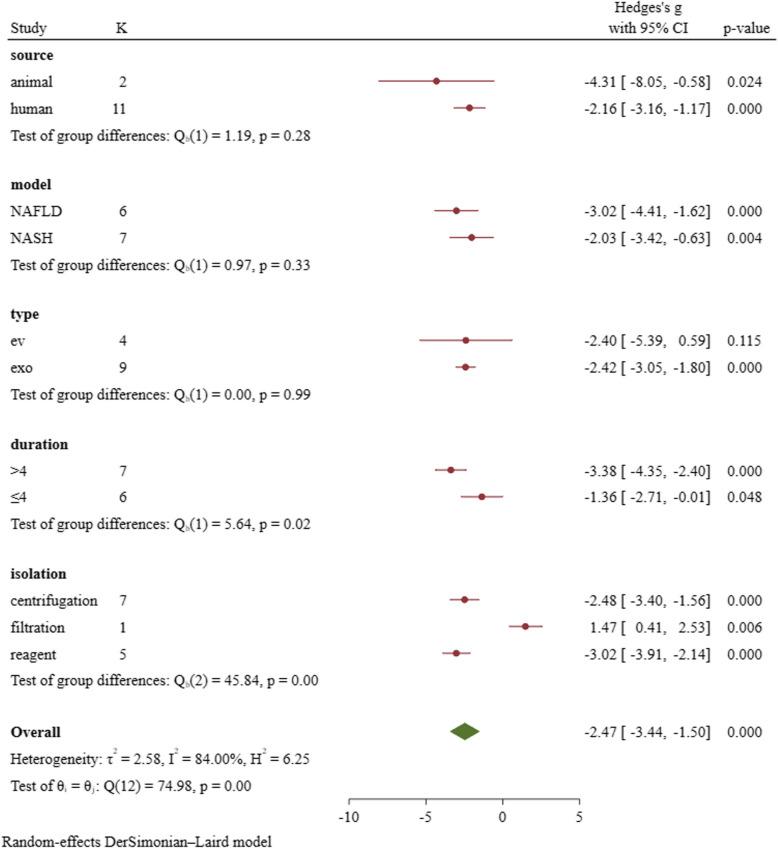
MSC-EVs led to significant reductions in key metabolic parameters, including AST (SMD = -2.79, 95% CI [-3.64, -1.94], p< 0.01), ALT (SMD = -2.47, 95% CI [-3.44, -1.50], p < 0.01), TG (SMD = -1.86, 95% CI [-2.98, -0.73], P < 0.01), liver TG (SMD = -4.02, 95% CI [-5.84, -2.20], p < 0.01), TC (SMD = -2.52, 95% CI [-3.56, -1.48], p < 0.01), liver TC (SMD = -5.28, 95% CI [-7.71, -2.84], p < 0.01), NAS score(SMD = -3.56, 95% CI [-5.04, -2.09], P < 0.01), FBG SMD = -1.89, 95% CI [-2.94, -0.83], p < 0.01), and body weight (SMD = -2.34, 95% CI [-3.94, -0.74], p < 0.01). Additionally, MSC-EVs improved the level of inflammatory cytokines (TNF-α and IL-6) and oxidative stress markers (SOD and MDA). These effects surpass those reported in previous MSC-EVs studies targeting liver disease, particularly regarding unassessed lipid parameters and oxidative stress indicators.
CONCLUSION
MSC-EVs show promising potential for treating NAFLD/NASH, with substantial evidence supporting their therapeutic and reparative effects. Our findings directly inform clinical trial design by identifying optimal parameters-such as human-derived EVs, treatment durations longer than four weeks, and exosome preparations obtained via differential ultracentrifugation-to maximize therapeutic efficacy. These findings warrant further clinical investigation to facilitate the clinical translation of MSC-EVs as a therapeutic option for NAFLD/NASH.
目的
非酒精性脂肪性肝病(NAFLD)是一项全球性的慢性健康挑战,需要开发创新的治疗策略。间充质基质细胞衍生的细胞外囊泡(MSC-EVs)已成为一种有前景的NAFLD治疗方法;然而,目前的证据仅限于临床前研究。本系统评价和荟萃分析评估了MSC-EVs在NAFLD及其进展形式非酒精性脂肪性肝炎(NASH)啮齿动物模型中的治疗效果。通过综合临床前数据,我们旨在建立一个可靠的证据基础,以指导未来的临床试验并优化基于MSC-EV的治疗方法。
方法
全面检索PubMed、Web of Science、Embase、中国知网、万方和维普数据库,以确定符合条件的动物研究。通过SYRCLE偏倚风险工具评估方法学质量。根据Cochrane手册指南,使用Stata 18.0进行荟萃分析。
结果
MSC-EVs可显著降低关键代谢参数,包括谷草转氨酶(SMD=-2.79,95%CI[-3.64,-1.94],p<0.01)、谷丙转氨酶(SMD=-2.47,95%CI[-3.44,-1.50],p<0.01)、甘油三酯(SMD=-1.86,95%CI[-2.98,-0.73],P<0.01)、肝脏甘油三酯(SMD=-4.02,95%CI[-5.84,-2.20],p<0.01)、总胆固醇(SMD=-2.52,95%CI[-3.56,-1.48],p<0.01)、肝脏总胆固醇(SMD=-5.28,95%CI[-7.71,-2.84],p<0.01)、NAS评分(SMD=-3.56,95%CI[-5.04,-2.09],P<0.01)、空腹血糖(SMD=-1.89,95%CI[-2.94,-0.83],p<0.01)和体重(SMD=-2.34,95%CI[-3.94,-0.74],p<0.01)。此外,MSC-EVs还改善了炎性细胞因子(TNF-α和IL-6)水平以及氧化应激标志物(SOD和MDA)。这些效果超过了先前针对肝病的MSC-EVs研究报告的效果,特别是在未评估的脂质参数和氧化应激指标方面。
结论
MSC-EVs在治疗NAFLD/NASH方面显示出有前景的潜力,有大量证据支持其治疗和修复作用。我们的研究结果通过确定最佳参数,如人源细胞外囊泡、超过四周的治疗持续时间以及通过差速超速离心获得的外泌体制剂,直接为临床试验设计提供了参考,以最大限度地提高治疗效果。这些发现值得进一步的临床研究,以促进将MSC-EVs作为NAFLD/NASH的一种治疗选择进行临床转化。









 Zotero 插件