
加拿大格拉斯尼罗斯第一民族儿童汞暴露与过早死亡:一项回顾性研究。
Childhood mercury exposure and early death in Grassy Narrows First Nation, Canada: a retrospective study.
作者信息
Mergler Donna, Philibert Aline, Fillion Myriam, Silva Judy Da
机构信息
Centre de recherche interdisciplinaire sur le bien-être, la santé, la société et l'environnement (CINBIOSE), Université du Québec à Montréal, Succ. Centreville, Montréal, Québec, CP 8888, H3C 3P8, Canada.
Département Science et Technologie, Université TÉLUQ, 5800 Saint- Denis St, Montréal, Québec, H2S 3L4, Canada.
出版信息
Environ Health. 2025 Jun 23;24(1):39. doi: 10.1186/s12940-025-01190-7.
BACKGROUND
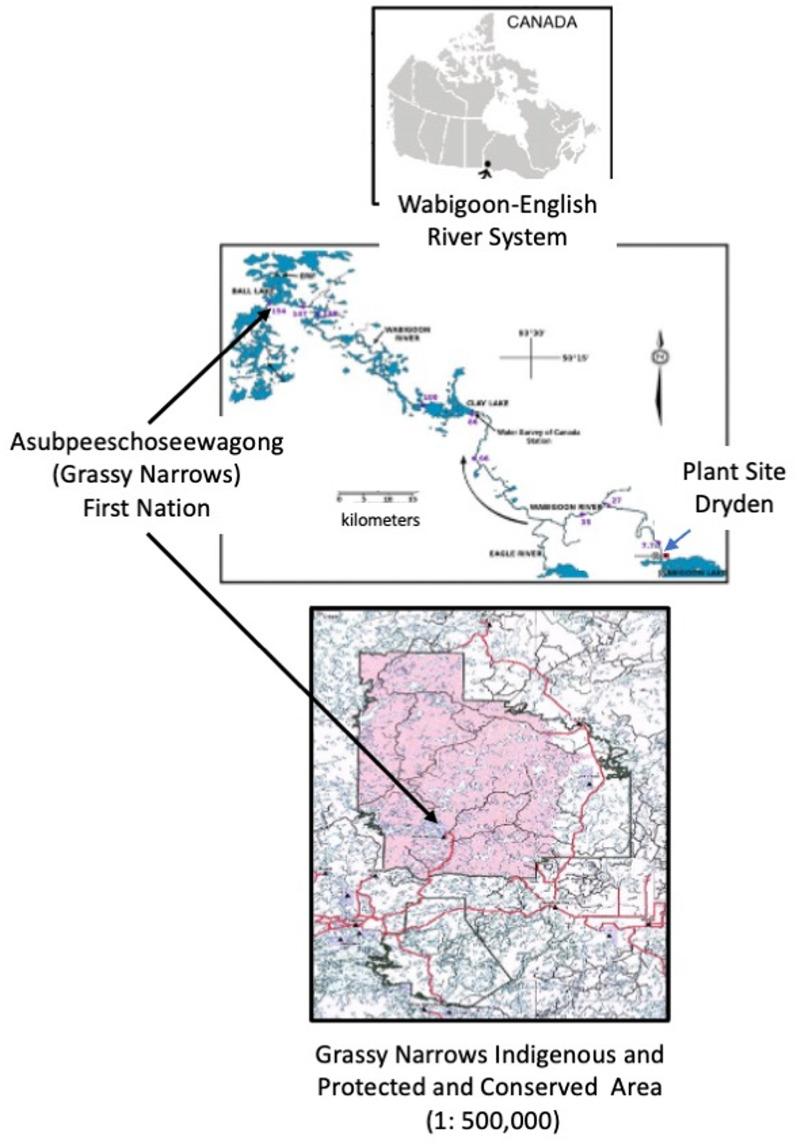
In 1962, a chloralkali plant began discharging mercury (Hg) into the Wabigoon-English River system, contaminating the territorial waters of Grassy Narrows First Nation, whose traditions, livelihood and diet centered on fish. Data from 1970 to 1997 government Hg biomonitoring programs were repatriated by Grassy Narrows. Our researcher-community partnership carried out secondary analyses to examine the association between childhood Hg exposure (between 5 and 15y) and survival to July 1, 2024.
METHODS
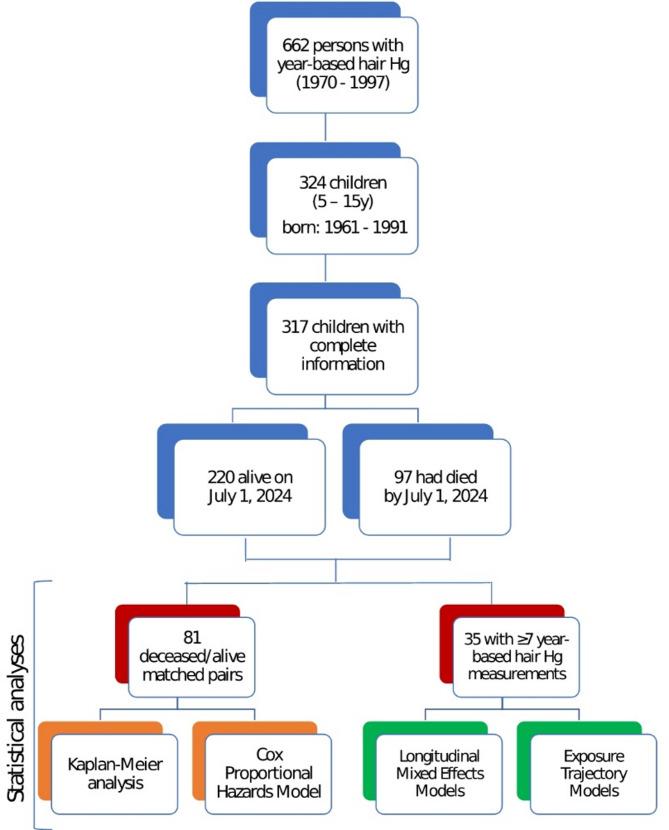
Information from the governmental biomonitoring programs and from Grassy Narrows Registry of Band members were used to create a retrospective year-based equivalent hair Hg (HHg) database, with dates of birth, sampling and death (N = 317). Apparent cause of death was reported by community members. Different approaches were used to minimize potential unmeasured confounders in examining the relation between Hg exposure and early death: (i) matched pairs (deceased/alive; same sex, year of birth (± 1) (n = 81) pairs for dissymmetry analysis, Kaplan-Meier survival analysis and Cox proportional hazards regression models (ii) Longitudinal Mixed Effects Models (LMEM) with individuals who had at least 7 year-based HHg measurements (n = 35), and (iii) trajectory techniques modelling exposure.
RESULTS
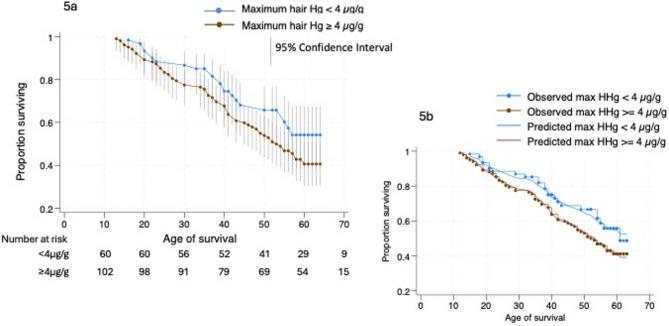
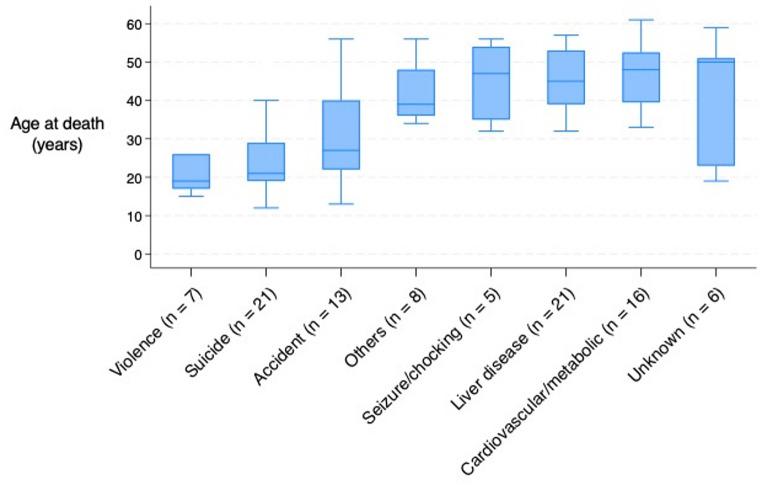
HHg measurements (n = 1031) were available for 167 boys and 150 girls. Mean age at sampling was 10.5 y (SD: 2.9); 44.2% had HHg ≥ 4 µg/g at least once. By July 1, 2024, 97 individuals (30.6%) had died (median age: 39 years (IQR: 24-49)). The Cox Hazard Ratio for HHg ≥ 4 µg/g at least once was 1.96 [1.18-3.28]. LMEM showed that HHg was 1.46 µg/g higher over the sampling period for the deceased compared to the living. Significant associations (p ≤ 0.001) were also observed for early death with respect to HHg trajectory summary scores (OR: 1.14 to 1.24; SE ≤ 0.78). Reported suicide, liver disease and cardiovascular/metabolic conditions made up 60% of all deaths.
CONCLUSIONS
Early mortality in Grassy Narrows First Nation is higher than other First Nations and the non-Indigenous populations in Canada. Convergent findings from different approaches and statistical techniques support an association between childhood Hg exposure and early death. Morbidity and mortality in this community require follow-up.
背景
1962年,一家氯碱厂开始向瓦比贡 - 英吉利河水系排放汞(Hg),污染了青草窄道第一民族的领海,该民族的传统、生计和饮食都以鱼类为中心。青草窄道获取了1970年至1997年政府汞生物监测项目的数据。我们的研究人员与社区的合作进行了二次分析,以研究儿童期汞暴露(5至15岁之间)与到2024年7月1日的生存情况之间的关联。
方法
利用政府生物监测项目和青草窄道部落成员登记处的信息,创建了一个基于年份的回顾性等效发汞(HHg)数据库,其中包含出生日期、采样日期和死亡日期(N = 317)。社区成员报告了明显的死亡原因。在研究汞暴露与早逝之间的关系时,采用了不同方法以尽量减少潜在的未测量混杂因素:(i)匹配对(死亡/存活;同性,出生年份(±1)(n = 81)对,用于不对称分析、Kaplan - Meier生存分析和Cox比例风险回归模型);(ii)对至少有7次基于年份的HHg测量值的个体采用纵向混合效应模型(LMEM)(n = 35);(iii)对暴露进行轨迹技术建模。
结果
有167名男孩和150名女孩的HHg测量值(n = 1031)可用。采样时的平均年龄为10.5岁(标准差:2.9);44.2%的人至少有一次HHg≥4μg/g。到2024年7月1日,97人(30.6%)已经死亡(中位年龄:39岁(四分位距:24 - 49))。至少有一次HHg≥4μg/g的Cox风险比为1.96 [1.18 - 3.28]。LMEM显示,与存活者相比,死者在采样期间的HHg高1.46μg/g。对于早逝与HHg轨迹汇总分数也观察到显著关联(p≤0.001)(比值比:1.14至1.24;标准误≤0.78)。报告的自杀、肝病和心血管/代谢疾病占所有死亡的60%。
结论
青草窄道第一民族的早期死亡率高于加拿大其他第一民族和非原住民人口。不同方法和统计技术得出的一致结果支持儿童期汞暴露与早逝之间存在关联。该社区的发病率和死亡率需要后续跟踪。



 Zotero 插件