
杨梅素通过调控细胞凋亡、自噬和干性对Huh7及Hep3B来源的肝癌干细胞的抗癌潜力
Anticancer Potential of Myricetin against Huh7- and Hep3B-Derived Liver Cancer Stem Cells through the Regulation of Apoptosis, Autophagy, and Stemness.
作者信息
Kwon Mikyoung, Jung Hye Jin
机构信息
Department of AI Biomedical Engineering, Graduate School, Sun Moon University, Asan 31460, Republic of Korea.
Department of Pharmaceutical Engineering and Biotechnology, Sun Moon University, Asan 31460, Republic of Korea.
出版信息
Biomol Ther (Seoul). 2025 Jul 1;33(4):636-651. doi: 10.4062/biomolther.2025.044. Epub 2025 Jun 23.
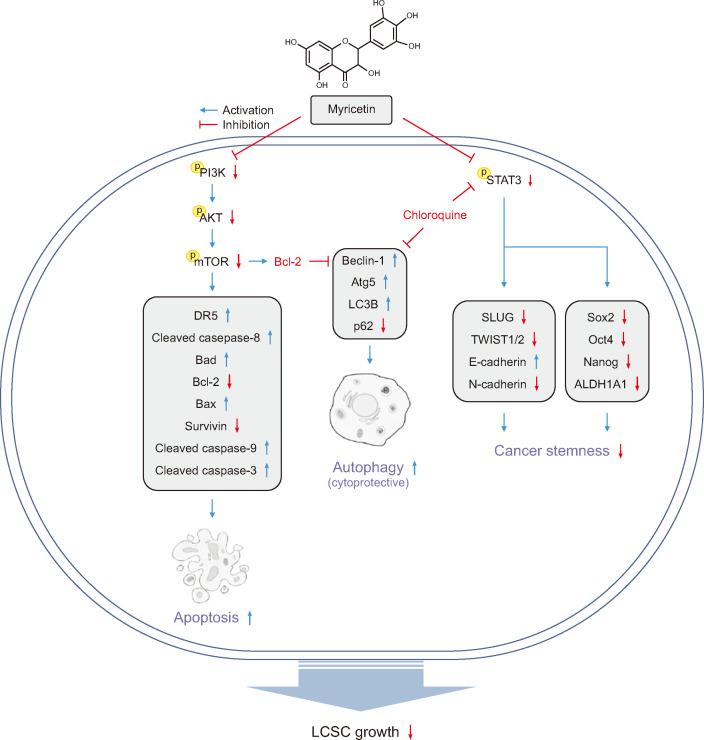
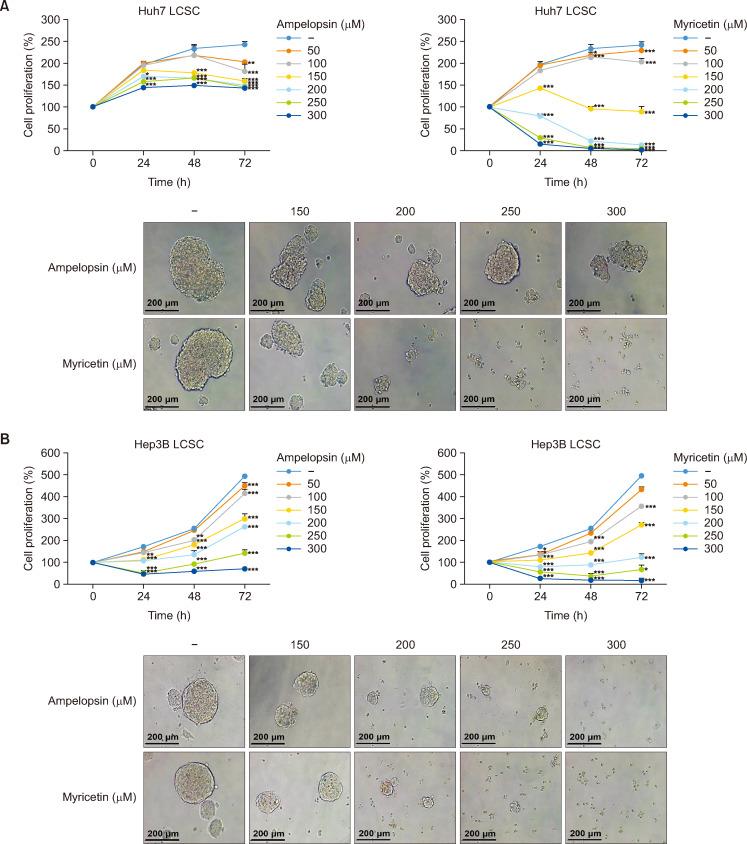
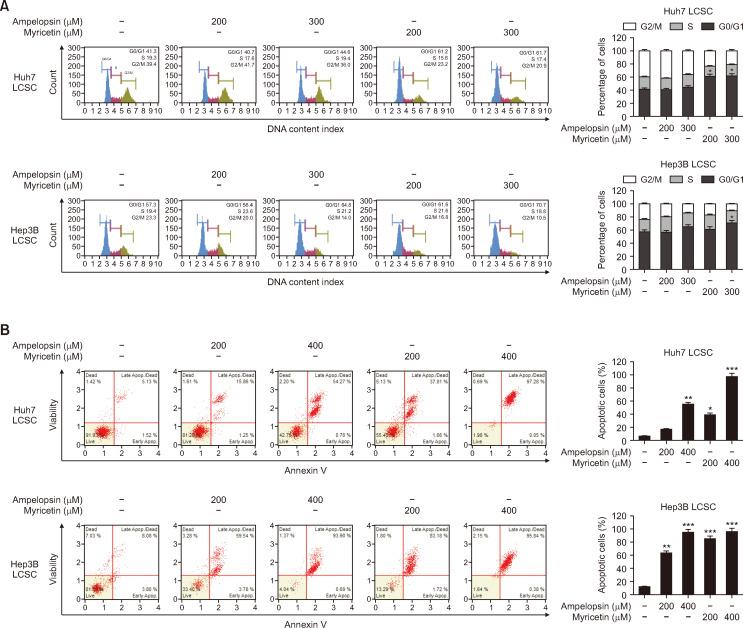
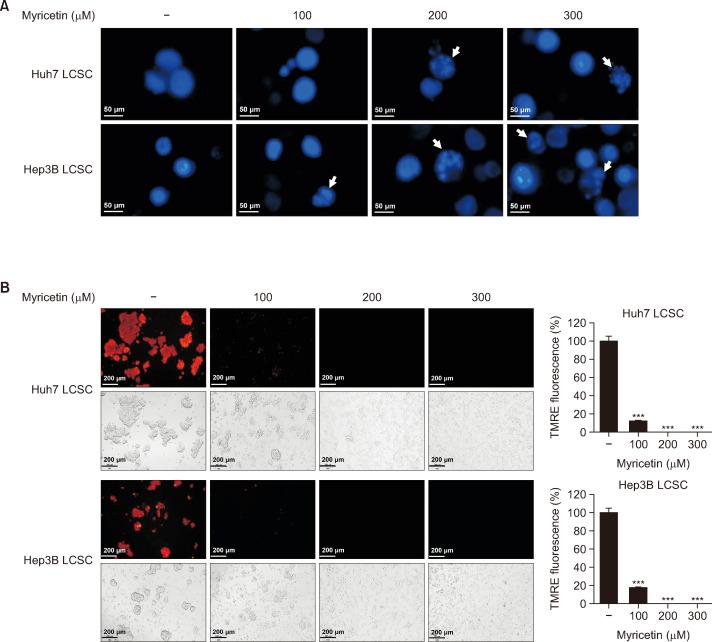
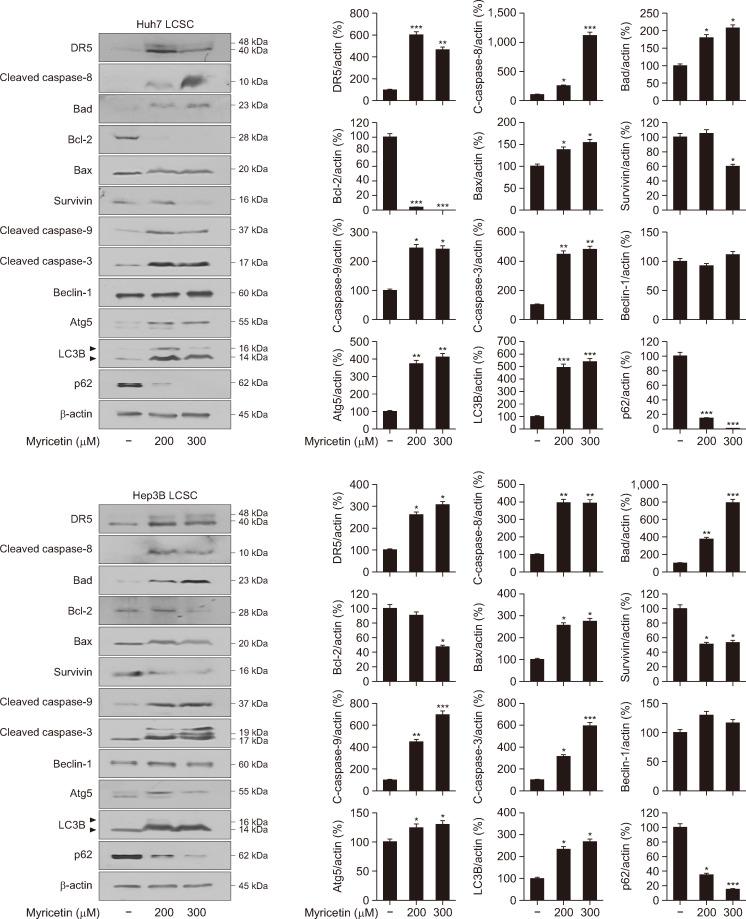
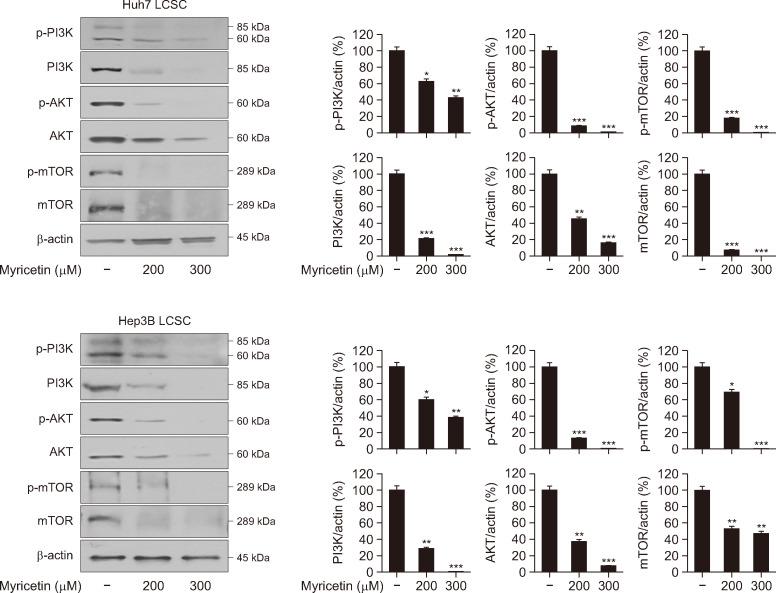
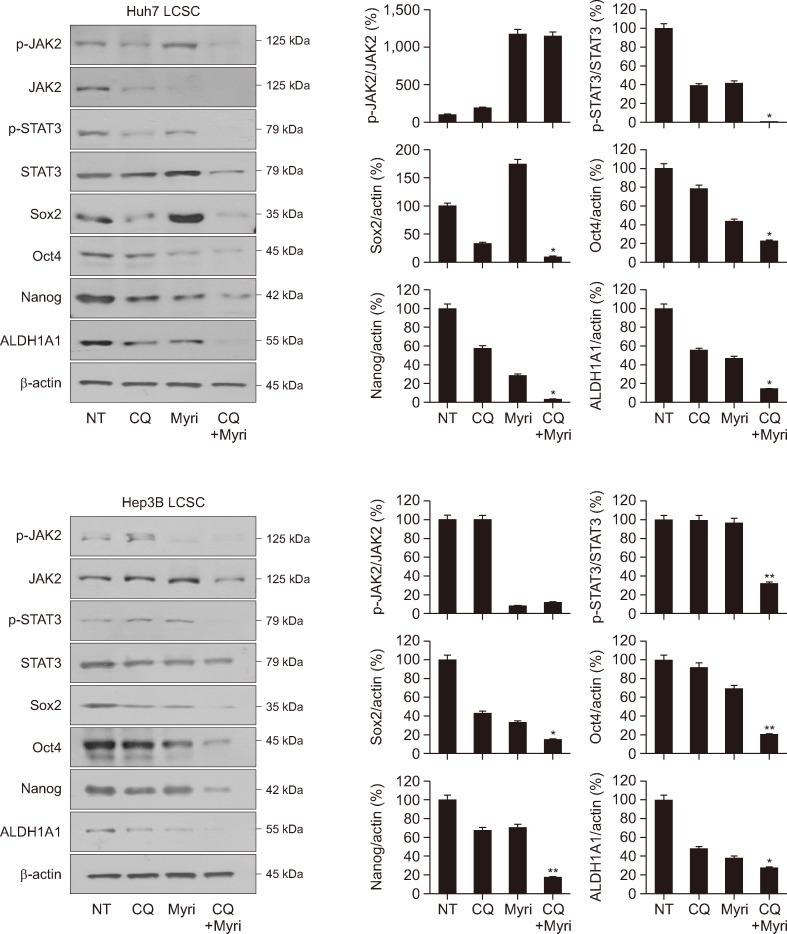
Liver cancer stem cells (LCSCs) play a significant role in the development, metastasis, treatment resistance, and recurrence of hepatocellular carcinoma (HCC). Targeting LCSCs offers a novel strategy to overcome treatment resistance in HCC. Myricetin, a flavonol from the flavonoid family, is known for its diverse biological activities, including anticancer effects. However, its potential for eradicating LCSCs had not been thoroughly investigated prior to this study. This study evaluated the effects of myricetin on LCSCs derived from Huh7 and Hep3B cell lines both and . LCSCs were treated with myricetin to assess cell proliferation, cell cycle arrest, apoptosis induction, autophagy regulation, stemness and EMT marker expression, and tumor growth suppression using a chicken embryo CAM model. Additionally, the combination therapy of myricetin with chloroquine, an autophagy inhibitor, was explored. Myricetin significantly inhibited the proliferation of Huh7- and Hep3B-derived LCSCs and suppressed tumor growth in the CAM model. It induced cell cycle arrest at the G0/G1 phase and triggered apoptosis through intrinsic and extrinsic pathways. Myricetin also stimulated autophagy by inhibiting the PI3K/AKT/mTOR pathway, reduced the expression of stemness markers, including Sox2, Oct4, Nanog, and ALDH1A1, and suppressed EMT. Combining myricetin with chloroquine enhanced apoptotic effects and further downregulated stemness markers by inhibiting STAT3 activation, demonstrating greater efficacy than myricetin alone. The findings establish myricetin, either as a standalone treatment or in combination with chloroquine, as a promising therapeutic candidate for targeting LCSC growth and overcoming chemotherapy resistance in HCC.
肝癌干细胞(LCSCs)在肝细胞癌(HCC)的发生、转移、治疗抵抗和复发中起着重要作用。靶向LCSCs为克服HCC的治疗抵抗提供了一种新策略。杨梅素是黄酮类家族中的一种黄酮醇,以其多种生物活性(包括抗癌作用)而闻名。然而,在本研究之前,其根除LCSCs的潜力尚未得到充分研究。本研究评估了杨梅素对源自Huh7和Hep3B细胞系的LCSCs的影响。用杨梅素处理LCSCs,以评估细胞增殖、细胞周期阻滞、凋亡诱导、自噬调节、干性和上皮-间质转化(EMT)标志物表达,并使用鸡胚绒毛尿囊膜(CAM)模型评估肿瘤生长抑制。此外,还探索了杨梅素与自噬抑制剂氯喹的联合治疗。杨梅素显著抑制源自Huh7和Hep3B的LCSCs的增殖,并在CAM模型中抑制肿瘤生长。它诱导细胞周期阻滞在G0/G1期,并通过内源性和外源性途径触发凋亡。杨梅素还通过抑制PI3K/AKT/mTOR途径刺激自噬,降低包括Sox2、Oct4、Nanog和ALDH1A1在内的干性标志物的表达,并抑制EMT。将杨梅素与氯喹联合使用可增强凋亡作用,并通过抑制STAT3激活进一步下调干性标志物,显示出比单独使用杨梅素更高的疗效。这些发现确立了杨梅素无论是作为单一治疗还是与氯喹联合使用,都是靶向LCSC生长和克服HCC化疗耐药性的有前景的治疗候选药物。



 Zotero 插件