
音乐疗法治疗焦虑症:一项多层次荟萃分析的系统评价
Music therapy for the treatment of anxiety: a systematic review with multilevel meta-analyses.
作者信息
de Witte Martina, Aalbers Sonja, Vink Annemieke, Friederichs Stijn, Knapen Anne, Pelgrim Thomas, Lampit Amit, Baker Felicity A, van Hooren Susan
机构信息
Creative Arts and Music Therapy Research Unit, Faculty of Fine Arts and Music, The University of Melbourne, Melbourne, Australia.
Department Arts Therapies, Academy of Health and Welfare, NHL Stenden University of Applied Sciences, Rengerslaan 8-10, 8917 DD, Leeuwarden, the Netherlands.
出版信息
EClinicalMedicine. 2025 Jun 9;84:103293. doi: 10.1016/j.eclinm.2025.103293. eCollection 2025 Jun.
BACKGROUND
A considerable number of published clinical trials have examined the anxiety-reducing effects of music therapy interventions across several settings, including mental health care, medical environments, and work- and study-related contexts. Music therapy involves personally tailored music interventions that are designed and implemented by qualified music therapists to meet the specific health needs of individual patients.
METHODS
To summarise this evidence base, we conducted a linear restricted maximum likelihood multilevel meta-analysis searching multiple electronic databases (CINAHL, Cochran Central Register of Controlled Trials, PubMed, Embase, PsycInfo, Web of Science core collection), from inception to 12th February 2025. The primary measure was the effects of music therapy on 7 psychological anxiety outcomes and physiological outcomes. The secondary measures were outcome, study, sample, or intervention design factors that moderate the effects of music therapy interventions. Meta-analyses were performed on 93 effect sizes (ES) from 51 studies to assess the magnitude of effects of music therapy targeting anxiety outcomes, and to compare effects across key intervention and study design factors. PROSPERO registration (CRD42024495801).
FINDINGS
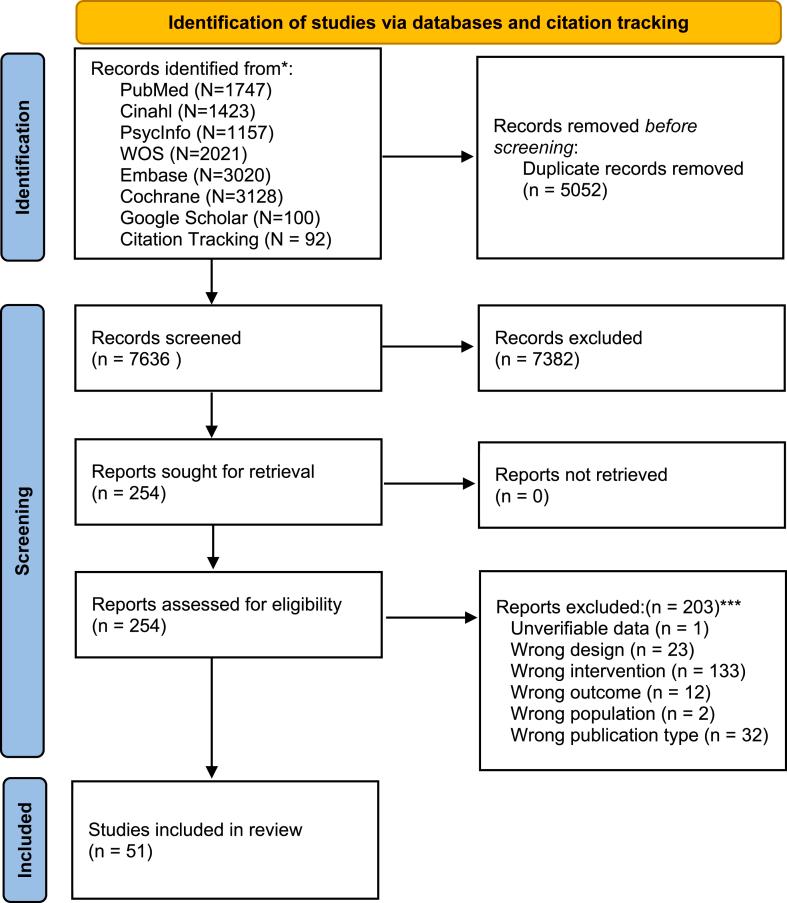
Of the 10,210 identified records, 6147 records were screened and 51 articles meeting the research criteria were included. Results showed an overall medium effect of music therapy across all anxiety outcomes ( = 0.357, [0.201, 0.514]; 51 trials, 93 ES), of which a medium effect was found in participants' self-reported anxiety ( = 0.410, [0.236, 0.585]; 50 trials, 61 ES) and a small non-significant effect in physiological outcomes ( = 0.153 [-0.153, 0.400]; 13 trials, 32 ES). Subgroup analyses showed significant larger effects for receptive and combination of active and receptive interventions when compared with active interventions.
INTERPRETATION
The findings suggest that music therapy, particularly receptive methods or combinations of receptive and active approaches, offer effective, flexible, and scalable interventions for reducing anxiety symptoms, offering psychological benefits that enhance patient autonomy and quality of life, though its impact on physiological outcomes and long-term effects requires further research.
FUNDING
This work was supported by a McKenzie Postdoctoral Fellowship from the University of Melbourne (MdW), and NHL Stenden University of Applied Sciences through internal postdoctoral research funding (SA).
背景
大量已发表的临床试验研究了音乐疗法干预在多种环境下的抗焦虑效果,包括心理健康护理、医疗环境以及与工作和学习相关的情境。音乐疗法涉及由合格的音乐治疗师设计和实施的个性化音乐干预措施,以满足个体患者的特定健康需求。
方法
为了总结这一证据基础,我们进行了线性受限最大似然多层荟萃分析,检索了多个电子数据库(CINAHL、Cochrane对照试验中央注册库、PubMed、Embase、PsycInfo、科学网核心合集),检索时间从建库至2025年2月12日。主要指标是音乐疗法对7种心理焦虑结果和生理结果的影响。次要指标是调节音乐疗法干预效果的结果、研究、样本或干预设计因素。对来自51项研究的93个效应量进行荟萃分析,以评估针对焦虑结果的音乐疗法的效应大小,并比较关键干预和研究设计因素的效应。PROSPERO注册编号(CRD42024495801)。
结果
在检索到的10210条记录中,筛选出6147条记录,纳入了51篇符合研究标准的文章。结果显示,音乐疗法对所有焦虑结果总体有中等效应( = 0.357,[0.201, 0.514];51项试验,93个效应量),其中在参与者自我报告的焦虑方面有中等效应( = 0.410,[0.236, 0.585];50项试验,61个效应量),在生理结果方面有较小的非显著效应( = 0.153 [-0.153, 0.400];13项试验,32个效应量)。亚组分析表明,与主动干预相比,接受性干预以及主动与接受性相结合的干预有显著更大的效应。
解读
研究结果表明,音乐疗法,尤其是接受性方法或接受性与主动方法的组合,为减轻焦虑症状提供了有效、灵活且可扩展的干预措施,带来了增强患者自主性和生活质量的心理益处,不过其对生理结果和长期影响还需要进一步研究。
资金支持
这项工作得到了墨尔本大学的麦肯齐博士后奖学金(MdW)以及NHL斯滕德应用科学大学的内部博士后研究资金(SA)的支持。
 Zotero 插件