
利用实时空气质量监测和症状评估评估家庭环境暴露对过敏性鼻炎的影响:观察性可行性研究。
Assessing the Impact of Home Environmental Exposures on Allergic Rhinitis Using Real-Time Air Quality Monitoring and Symptom Assessment: Observational Feasibility Study.
作者信息
Cavalier Aero, Dick Anthony I, Johnson Ii Vickie, Cramer Emily, Eldeirawi Kamal, Pinto Jayant, Nyenhuis Sharmilee M, Lee Victoria S
机构信息
Section of Allergy, Immunology, and Pulmonology, Department of Pediatrics, University of Chicago, Chicago, IL, United States.
Department of Otolaryngology, University of Illinois Chicago, Chicago, IL, United States.
出版信息
JMIR Form Res. 2025 Jun 23;9:e73215. doi: 10.2196/73215.
BACKGROUND
Rhinitis is the most common sinonasal condition and poses a significant cost burden. Rhinitis symptom control is associated with exposure to environmental triggers (eg, aeroallergens, pollutants, and irritants). While people spend much of their time at home, studies examining the association of rhinitis symptoms with home environmental exposures, especially in low-income, urban, and racial or ethnic minorities, are limited. Frequently, 3 types of surveys are used in ecological momentary assessment (EMA): a survey conducted at a predetermined rate, an event-triggered survey, and a follow-up survey to gauge behavioral changes in response to the event.
OBJECTIVE
This study aims to determine the feasibility and usability of daily and triggered EMA paired with an indoor air quality monitor to collect exposure and rhinitis symptom data.
METHODS
Participants were recruited from the Allergy and Ear, Nose, and Throat clinics at 2 academic centers. Participants had to have a rhinitis diagnosis with active symptoms, be 18 years of age or older, self-identify as a racial or ethnic minority, live in the city of Chicago, be able to read and speak English, and have a smartphone. Participants received the Awair Omni air quality monitor to measure volatile organic compounds, particulate matter, and humidity. EMA data were collected using a personal smartphone using the PiLR Health app. Participants were sent daily scheduled surveys, random check-in surveys, and air quality event-triggered survey EMA notifications to assess rhinitis symptoms, environmental exposures, and mitigation strategies for 14 days. After the 14-day data collection period, participants completed the acceptability, appropriateness, and feasibility survey items. Feasibility metrics captured included recruitment and retention, demographics, rhinitis symptoms, and the usability of the PiLR Health App and Awair Omni. Barriers and challenges were identified and captured by the study staff. Descriptive statistics were performed using Excel (Microsoft Corp).
RESULTS
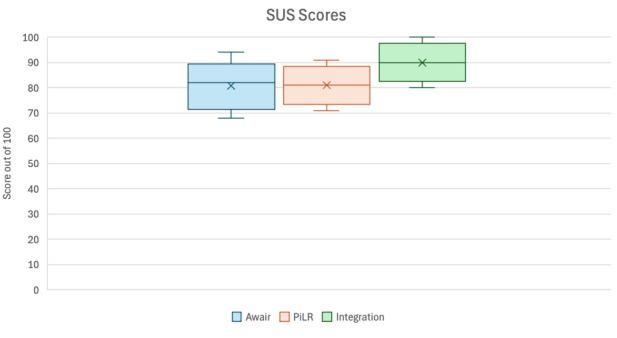
A total of 24 participants were approached, 15 participants consented and 12 participants completed the study. Participants received an average of 62.42 (SD 14.26) total surveys during their study period, and of those surveys, an average of 36.83 (SD 22.18; 59%) surveys were completed. All 12 participants met the threshold for successful home air monitoring (11 days of continuous environmental data assessment). The usability of study components and integration into the overall study was high (usability scale≥68), indicating participants considered each of the devices to be usable. Participant feedback on the study was positive; yet, they did identify areas for improvement including getting air quality data in real time, providing more detailed instructions for device setup, and doing more check-ins.
CONCLUSIONS
A real-time assessment of home environmental exposures and subjective rhinitis symptoms was feasible to conduct. This study will support the development of targeted interventions to address disparities in sinonasal disease care and outcomes.
背景
鼻炎是最常见的鼻窦疾病,带来了巨大的成本负担。鼻炎症状的控制与接触环境触发因素(如空气过敏原、污染物和刺激物)有关。虽然人们大部分时间都待在家里,但研究鼻炎症状与家庭环境暴露之间关系的研究有限,尤其是在低收入、城市以及种族或族裔少数群体中。在生态瞬时评估(EMA)中,通常使用三种类型的调查:以预定频率进行的调查、事件触发调查以及用于评估对事件的行为变化的后续调查。
目的
本研究旨在确定每日和触发式EMA与室内空气质量监测仪相结合收集暴露和鼻炎症状数据的可行性和可用性。
方法
从两个学术中心的过敏与耳鼻喉科诊所招募参与者。参与者必须患有鼻炎且有活跃症状,年龄在18岁及以上,自我认定为种族或族裔少数群体,居住在芝加哥市,能够阅读和说英语,并且拥有智能手机。参与者收到Awair Omni空气质量监测仪,以测量挥发性有机化合物、颗粒物和湿度。使用个人智能手机通过PiLR Health应用程序收集EMA数据。向参与者发送每日预定调查、随机签到调查以及空气质量事件触发调查的EMA通知,以评估鼻炎症状、环境暴露和缓解策略,为期14天。在为期14天的数据收集期结束后,参与者完成可接受性、适宜性和可行性调查项目。捕获的可行性指标包括招募和留存情况、人口统计学、鼻炎症状以及PiLR Health应用程序和Awair Omni的可用性。研究人员识别并记录了障碍和挑战。使用Excel(微软公司)进行描述性统计。
结果
共接触了24名参与者,15名参与者同意参与,12名参与者完成了研究。参与者在研究期间平均共收到62.42份(标准差14.26)调查,其中平均36.83份(标准差22.18;59%)调查被完成。所有12名参与者均达到成功进行家庭空气监测的阈值(连续11天的环境数据评估)。研究组件的可用性以及与整体研究的整合度较高(可用性量表≥68),表明参与者认为每个设备都可用。参与者对该研究的反馈是积极的;然而,他们确实指出了需要改进的方面,包括实时获取空气质量数据、提供更详细的设备设置说明以及增加签到次数。
结论
对家庭环境暴露和主观鼻炎症状进行实时评估是可行的。本研究将支持制定有针对性的干预措施,以解决鼻窦疾病护理和治疗结果方面的差异。

 Zotero 插件