
基于光学生物传感器的多重病原体检测研究进展
Research Progress on Multiplexed Pathogen Detection Using Optical Biosensors.
作者信息
Wu Yue, Xu Xing, Zhu Yinchu, Wan Jiaxin, Wang Xingbo, Zhou Xin, Li Xiangjun, Zhou Weidong
机构信息
State Key Laboratory for Quality and Safety of Agro-Products, Institute of Animal Husbandry and Veterinary Science, Zhejiang Academy of Agricultural Sciences, Hangzhou 310021, China.
College of Biological and Environmental Science, Zhejiang Wanli University, Ningbo 315100, China.
出版信息
Biosensors (Basel). 2025 Jun 12;15(6):378. doi: 10.3390/bios15060378.
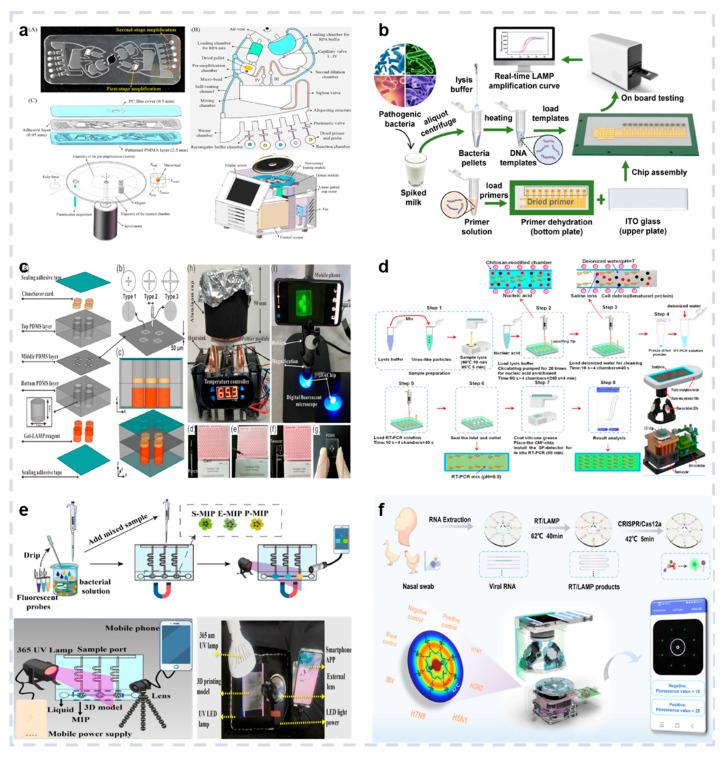
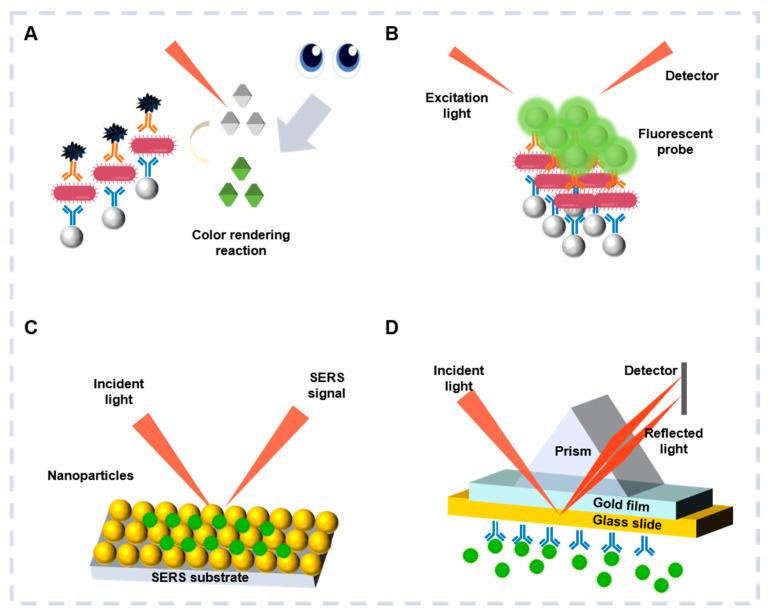
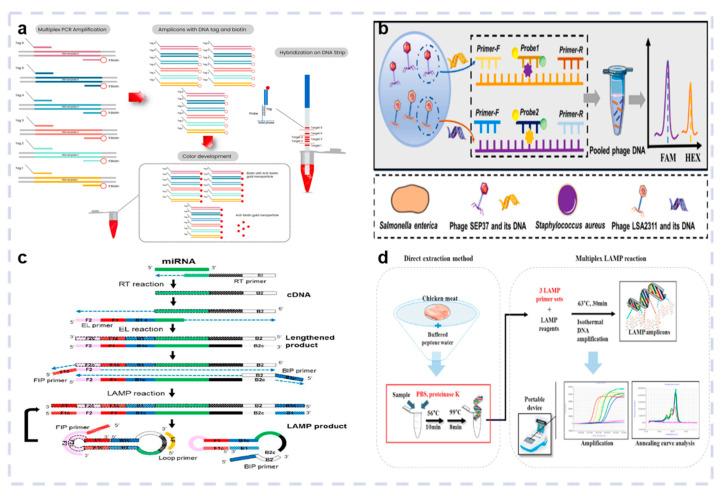
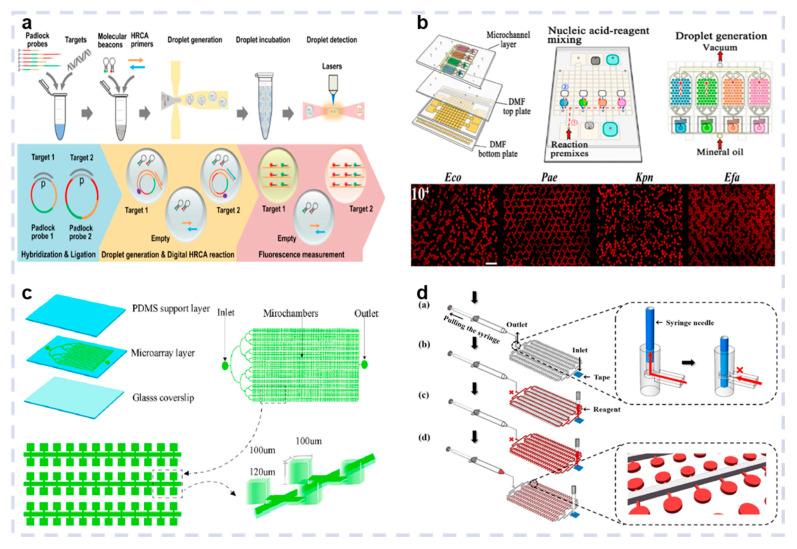
The rapid and precise identification of multiple pathogens is critical for ensuring food safety, controlling epidemics, diagnosing diseases, and monitoring the environment. However, traditional detection methods are hindered by complex workflows, the need for skilled operators, and reliance on sophisticated equipment, making them unsuitable for rapid, on-site testing. Optical biosensors, known for their rapid analysis, portability, high sensitivity, and multiplexing capabilities, offer a promising solution for simultaneous multi-pathogenic identification. This paper explores recent advancements in the utilization of optical biosensors for multiple pathogenic detection. First, it provides an overview of key sensing principles, focusing on colorimetric, fluorescence-based, surface-enhanced Raman scattering (SERS), and surface plasmon resonance (SPR) techniques, as well as their applications in pathogenic detection. Then, the research progress and practical applications of optical biosensors for multiplex pathogenic detection are discussed in detail from three perspectives: microfluidic devices, nucleic acid amplification technology (NAAT), and nanomaterials. Finally, the challenges presented by optical biosensing technologies in multi-pathogen detection are discussed, along with future prospects and potential innovations in the field.
快速、准确地鉴定多种病原体对于确保食品安全、控制疫情、诊断疾病以及监测环境至关重要。然而,传统检测方法存在工作流程复杂、需要熟练操作人员以及依赖精密设备等问题,使其不适用于快速现场检测。光学生物传感器以其快速分析、便携性、高灵敏度和多重检测能力而闻名,为同时进行多种病原体鉴定提供了一个有前景的解决方案。本文探讨了光学生物传感器在多种病原体检测应用方面的最新进展。首先,概述了关键传感原理,重点介绍比色法、基于荧光的方法、表面增强拉曼散射(SERS)和表面等离子体共振(SPR)技术及其在病原体检测中的应用。然后,从微流控装置、核酸扩增技术(NAAT)和纳米材料三个角度详细讨论了光学生物传感器在多重病原体检测方面的研究进展和实际应用。最后,讨论了光学生物传感技术在多病原体检测中面临的挑战,以及该领域的未来前景和潜在创新。



 Zotero 插件