
慢性肝损伤评分是严重酒精相关性烧伤预后的更优指标。
Chronic liver injury scores are superior prognostic indicators of outcomes in severe alcohol-related burns.
作者信息
Tamulevicius Martynas, Dastagir Nadjib, Dastagir Khaled, Vogt Peter M, Bucher Florian
机构信息
Department of Plastic, Aesthetic, Hand and Reconstructive Surgery, Hannover Medical School, Carl-Neuberg-Strasse 1, 30625, Hannover, Germany.
出版信息
Sci Rep. 2025 Jun 25;15(1):20282. doi: 10.1038/s41598-025-07499-0.
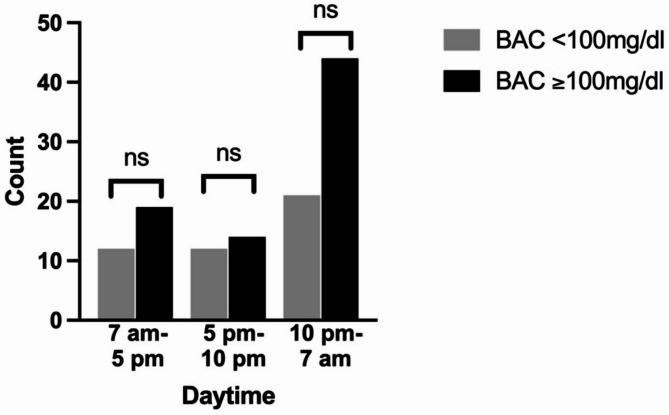
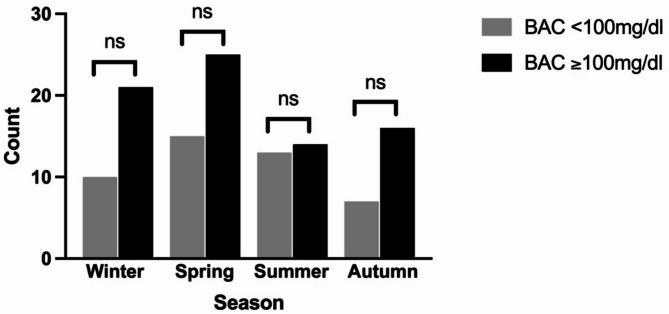
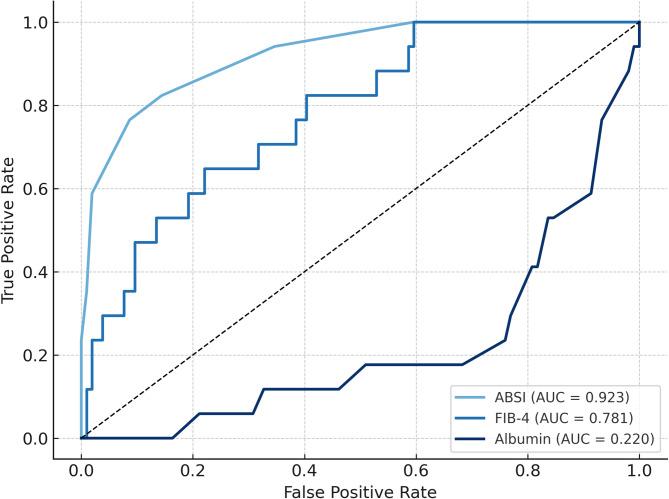
Acute and chronic alcohol abuse are common among burn patients and may be associated with chronic liver injury, a potential factor influencing outcomes. This study evaluates the predictive power of the blood alcohol concentration (BAC) and non-invasive liver fibrosis scores and their applicability in burn patients. A retrospective analysis was conducted on patients admitted to a high-volume supraregional burn center in Northern Germany between 2007 and 2024. Patients were categorized based on their BAC at admission: low (< 100 mg/dL) vs. high (≥ 100 mg/dL). Data collected included demographics, comorbidities, and outcomes. Non-invasive liver fibrosis markers such as the Fibrosis-4 (FIB-4) score, aspartate transaminase-to-platelet ratio index (APRI) and non-alcoholic fatty liver disease (NAFLD) fibrosis score were applied to both groups. Among 121 large-surface burn patients (mean total body surface area: 16.4%), no significant differences were observed between BAC groups in demographics, comorbidities, or ICU admission rates. The serum ethanol concentration showed no significant predictive value for mortality (AUC = 0.515). In contrast, the FIB-4 score (AUC = 0.781) and APRI (AUC = 0.736) demonstrated strong prognostic accuracy. In multivariate analysis, the Abbreviated Burn Severity Index (OR = 2.42; p = 0.001), serum albumin (OR = 0.29; p = 0.016), and FIB-4 score (OR = 1.50; p = 0.033) emerged as independent predictors of mortality. Propensity score matching analysis confirmed that BAC was not associated with increased mortality after adjustment for burn depth and extent. Non-invasive liver fibrosis markers, such as FIB-4 score, provide valuable prognostic insights in burn patients, independent of acute alcohol intoxication and should be considered a routine screening tool for large surface burn patients. Incorporating chronic liver dysfunction into existing burn severity models may enhance risk stratification and outcome prediction.
急性和慢性酒精滥用在烧伤患者中很常见,可能与慢性肝损伤有关,而慢性肝损伤是影响预后的一个潜在因素。本研究评估了血液酒精浓度(BAC)和非侵入性肝纤维化评分的预测能力及其在烧伤患者中的适用性。对2007年至2024年期间入住德国北部一家大型区域烧伤中心的患者进行了回顾性分析。根据入院时的BAC将患者分类:低(<100mg/dL)与高(≥100mg/dL)。收集的数据包括人口统计学、合并症和预后。将非侵入性肝纤维化标志物,如纤维化-4(FIB-4)评分、天冬氨酸转氨酶与血小板比值指数(APRI)和非酒精性脂肪性肝病(NAFLD)纤维化评分应用于两组。在121例大面积烧伤患者(平均总体表面积:16.4%)中,BAC组在人口统计学、合并症或ICU入院率方面未观察到显著差异。血清乙醇浓度对死亡率无显著预测价值(AUC = 0.515)。相比之下,FIB-4评分(AUC = 0.781)和APRI(AUC = 0.736)显示出很强的预后准确性。在多变量分析中,简化烧伤严重程度指数(OR = 2.42;p = 0.001)、血清白蛋白(OR = 0.29;p = 0.016)和FIB-4评分(OR = 1.50;p = 0.033)成为死亡率的独立预测因素。倾向评分匹配分析证实,在调整烧伤深度和范围后,BAC与死亡率增加无关。非侵入性肝纤维化标志物,如FIB-4评分,在烧伤患者中提供了有价值的预后见解,独立于急性酒精中毒,应被视为大面积烧伤患者的常规筛查工具。将慢性肝功能障碍纳入现有的烧伤严重程度模型可能会增强风险分层和预后预测。



 Zotero 插件