
血栓炎症生物标志物是非小细胞肺癌患者疾病进展的早期预测指标。
Thromboinflammatory Biomarkers Are Early Predictors of Disease Progression in Non-Small Cell Lung Cancer Patients.
作者信息
Gomez-Rosas Patricia, Tartari Carmen Julia, Russo Laura, Bolognini Silvia, Ticozzi Chiara, Romeo Debora, Schieppati Francesca, Barcella Luca, Falanga Anna, Marchetti Marina
机构信息
Immunohematology and Transfusion Medicine, Hospital Papa Giovanni XXIII, 24127 Bergamo, Italy.
Cardiovascular Research Institute Maastricht (CARIM), Maastricht University Medical Center (MUMC+), 6229 ER Maastricht, The Netherlands.
出版信息
Cancers (Basel). 2025 Jun 10;17(12):1932. doi: 10.3390/cancers17121932.
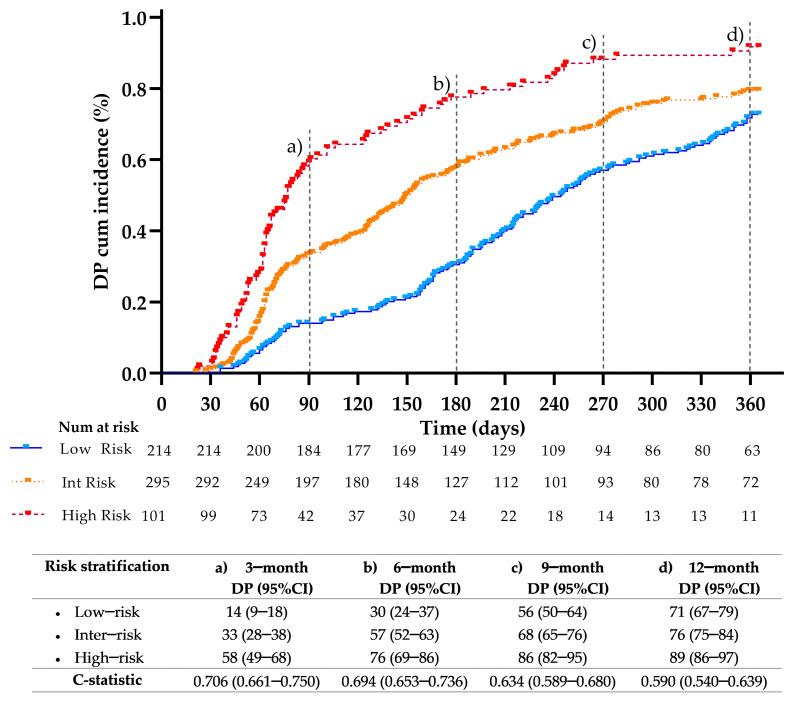
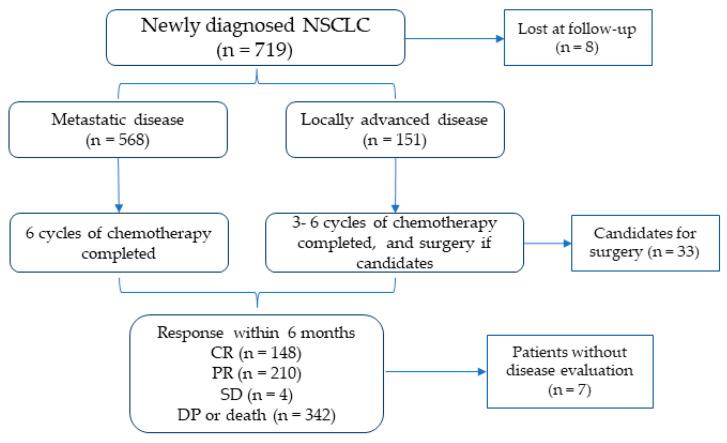
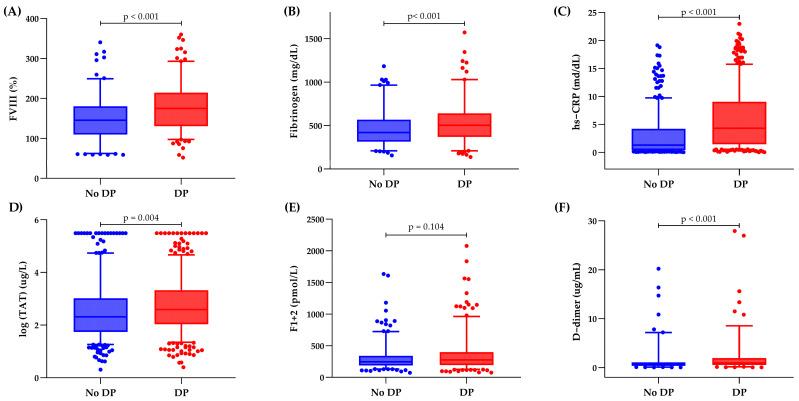
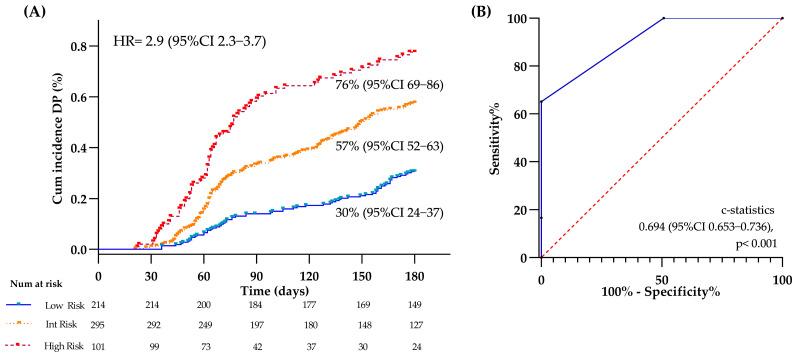
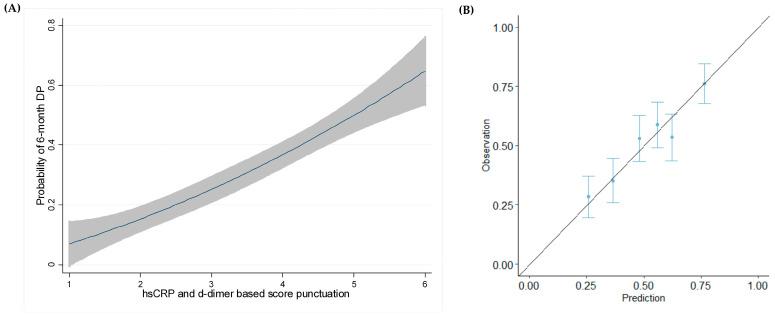
(1) Background: The hemostatic system and tumor biology display a tight and reciprocal interaction where clotting products enhance tumor growth and dissemination, and the tumor, in turn, triggers a hypercoagulable and inflammatory state. Evaluating circulating biomarkers related to thrombo-inflammatory may provide a promising tool for predicting tumor outcomes, especially in non-small cell lung cancer (NSCLC) characterized by unfavorable outcomes. (2) Aim: In a prospective cohort of NSCLC patients, we evaluated whether thromboinflammatory biomarkers could predict early disease progression (DP) during the first 6 months of first-line anticancer treatment. (3) Methods: 719 newly diagnosed advanced-stage NSCLC patients were included. Complete blood cell count, high-sensitivity C-reactive protein (hs-CRP), FVIII, fibrinogen, D-dimer, thrombin-antithrombin (TAT) complexes, and prothrombin fragment1+2(F1+2) were tested in blood samples collected before starting chemotherapy. DP was gathered during follow-up. (4) Results: The 6-month cumulative incidence rate for DP was 49%. Univariable Cox regression analysis identified metastatic status, BMI, hemoglobin, leukocytes, hs-CRP, FVIII, fibrinogen, TAT, and D-dimer as significant predictors of DP. In a multivariable analysis that included all previously significant variables, only hs-CRP and D-Dimer levels remained strongly associated with DP. The two variables were used to establish a risk stratification model that significantly identified patients at high risk of DP at 6 months (HR 2.9; 95% CI, 2.3-3.7), which can be applied to 3, 9, and 12 months. (5) Conclusions: Our model easily and precisely estimates early DP during chemotherapy. If externally validated, this model can significantly enhance the allocation of medical resources in managing advanced NSCLC, ensuring that patients receive the most effective care possible.
(1) 背景:止血系统与肿瘤生物学表现出紧密且相互的作用,凝血产物可促进肿瘤生长和扩散,而肿瘤反过来又引发高凝和炎症状态。评估与血栓炎症相关的循环生物标志物可能为预测肿瘤预后提供一种有前景的工具,尤其是在预后不佳的非小细胞肺癌(NSCLC)中。(2) 目的:在一组NSCLC患者的前瞻性队列中,我们评估了血栓炎症生物标志物是否能预测一线抗癌治疗前6个月内的早期疾病进展(DP)。(3) 方法:纳入719例新诊断的晚期NSCLC患者。在开始化疗前采集的血样中检测全血细胞计数、高敏C反应蛋白(hs-CRP)、FVIII、纤维蛋白原、D-二聚体、凝血酶-抗凝血酶(TAT)复合物和凝血酶原片段1+2(F1+2)。随访期间收集DP情况。(4) 结果:DP的6个月累积发病率为49%。单变量Cox回归分析确定转移状态、BMI、血红蛋白、白细胞、hs-CRP、FVIII、纤维蛋白原、TAT和D-二聚体为DP的显著预测因素。在包含所有先前显著变量的多变量分析中,只有hs-CRP和D-二聚体水平仍与DP密切相关。这两个变量用于建立一个风险分层模型,该模型能显著识别出6个月时DP高风险的患者(HR 2.9;95%CI,2.3 - 3.7),该模型可应用于3个月、9个月和12个月。(5) 结论:我们的模型能轻松且精确地估计化疗期间的早期DP。如果经过外部验证,该模型可显著改善晚期NSCLC管理中的医疗资源分配,确保患者获得最有效的治疗。
 Zotero 插件