
一项探索神经退行性疾病和神经创伤中肠-脑轴的最新综合综述:对治疗策略的启示
An Updated and Comprehensive Review Exploring the Gut-Brain Axis in Neurodegenerative Disorders and Neurotraumas: Implications for Therapeutic Strategies.
作者信息
Hasan Ahmed, Scuderi Sarah Adriana, Capra Anna Paola, Giosa Domenico, Bonomo Andrea, Ardizzone Alessio, Esposito Emanuela
机构信息
Department of Chemical, Biological, Pharmaceutical and Environmental Sciences, University of Messina, 98166 Messina, Italy.
Center of Neuroscience, School of Advanced Studies, University of Camerino, 62032 Camerino, Italy.
出版信息
Brain Sci. 2025 Jun 18;15(6):654. doi: 10.3390/brainsci15060654.
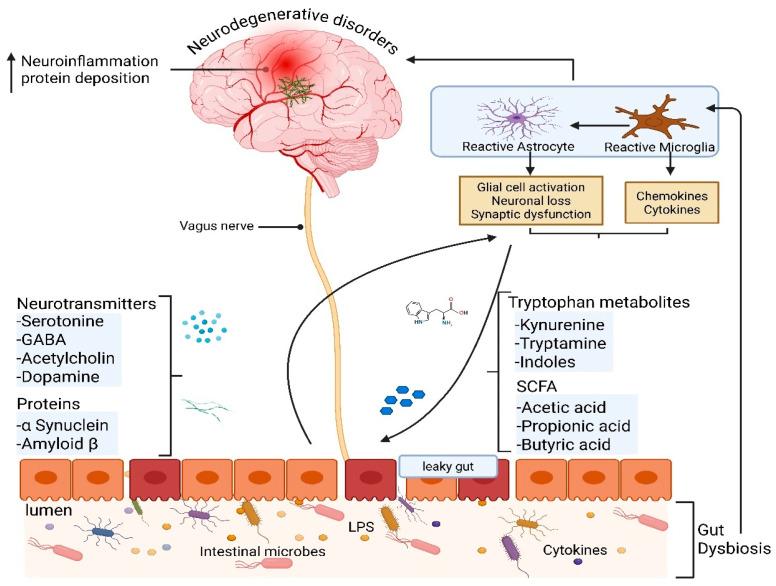
The gut-brain axis (GBA) refers to the biochemical bidirectional communication between the central nervous system (CNS) and the gastrointestinal tract, linking brain and gut functions. It comprises a complex network of interactions involving the endocrine, immune, autonomic, and enteric nervous systems. The balance of this bidirectional pathway depends on the composition of the gut microbiome and its metabolites. While the causes of neurodegenerative diseases (NDDs) vary, the gut microbiome plays a crucial role in their development and prognosis. NDDs are often associated with an inflammation-related gut microbiome. However, restoring balance to the gut microbiome and reducing inflammation may have therapeutic benefits. In particular, introducing short-chain fatty acid-producing bacteria, key metabolites that support gut homeostasis, can help counteract the inflammatory microbiome. This strong pathological link between the gut and NDDs underscores the gut-brain axis (GBA) as a promising target for therapeutic intervention. This review, by scrutinizing the more recent original research articles published in PubMed (MEDLINE) database, emphasizes the emerging notion that GBA is an equally important pathological marker for neurological movement disorders, particularly in Alzheimer's disease, Parkinson's disease, multiple sclerosis, amyotrophic lateral sclerosis, Huntington's disease and neurotraumatic disorders such as traumatic brain injury and spinal cord injury. Additionally, the GBA presents a promising therapeutic target for managing these diseases.
肠-脑轴(GBA)是指中枢神经系统(CNS)与胃肠道之间的生化双向通信,连接着大脑和肠道功能。它由一个复杂的相互作用网络组成,涉及内分泌、免疫、自主和肠神经系统。这条双向通路的平衡取决于肠道微生物群及其代谢产物的组成。虽然神经退行性疾病(NDDs)的病因各不相同,但肠道微生物群在其发展和预后中起着关键作用。NDDs通常与炎症相关的肠道微生物群有关。然而,恢复肠道微生物群的平衡并减轻炎症可能具有治疗益处。特别是引入产生短链脂肪酸的细菌,这些支持肠道稳态的关键代谢产物,有助于对抗炎症性微生物群。肠道与NDDs之间这种紧密病理联系凸显了肠-脑轴(GBA)作为治疗干预的一个有前景的靶点。本综述通过仔细研究在PubMed(MEDLINE)数据库中发表的最新原创研究文章,强调了一个新出现的观点,即GBA对于神经运动障碍同样是重要病理标志物,尤其是在阿尔茨海默病、帕金森病、多发性硬化症、肌萎缩侧索硬化症、亨廷顿舞蹈症以及诸如创伤性脑损伤和脊髓损伤等神经创伤性疾病中。此外,GBA为管理这些疾病提供了一个有前景的治疗靶点。
 Zotero 插件