
修饰脂质颗粒识别:动脉粥样硬化与癌症之间的联系?
Modified Lipid Particle Recognition: A Link Between Atherosclerosis and Cancer?
作者信息
Hall Amy E, Jade Dhananjay, Shaik Faheem, Homer-Vanniasinkam Shervanthi, Muench Stephen P, Harrison Michael A, Ponnambalam Sreenivasan
机构信息
School of Molecular & Cellular Biology, University of Leeds, Leeds LS2 9JT, UK.
School of Biomedical Sciences, University of Leeds, Leeds LS2 9JT, UK.
出版信息
Biology (Basel). 2025 Jun 11;14(6):675. doi: 10.3390/biology14060675.
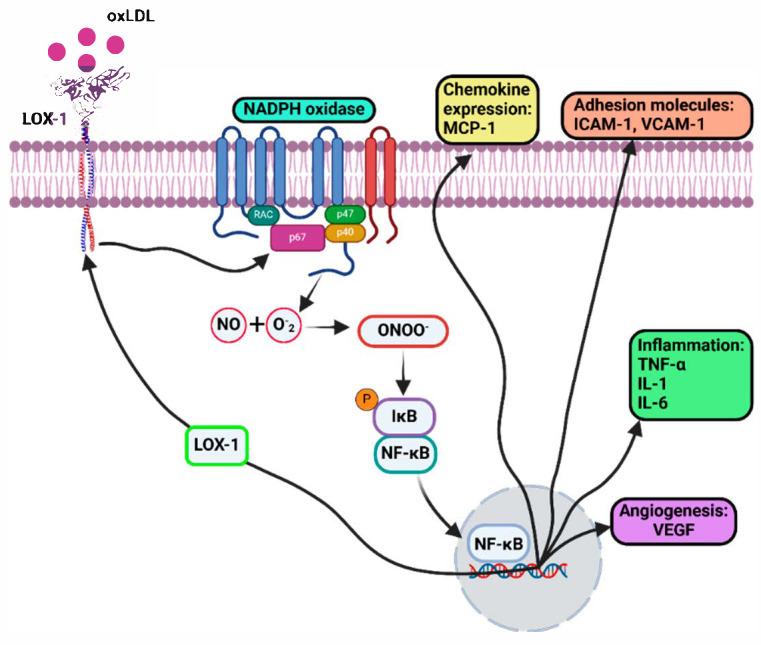
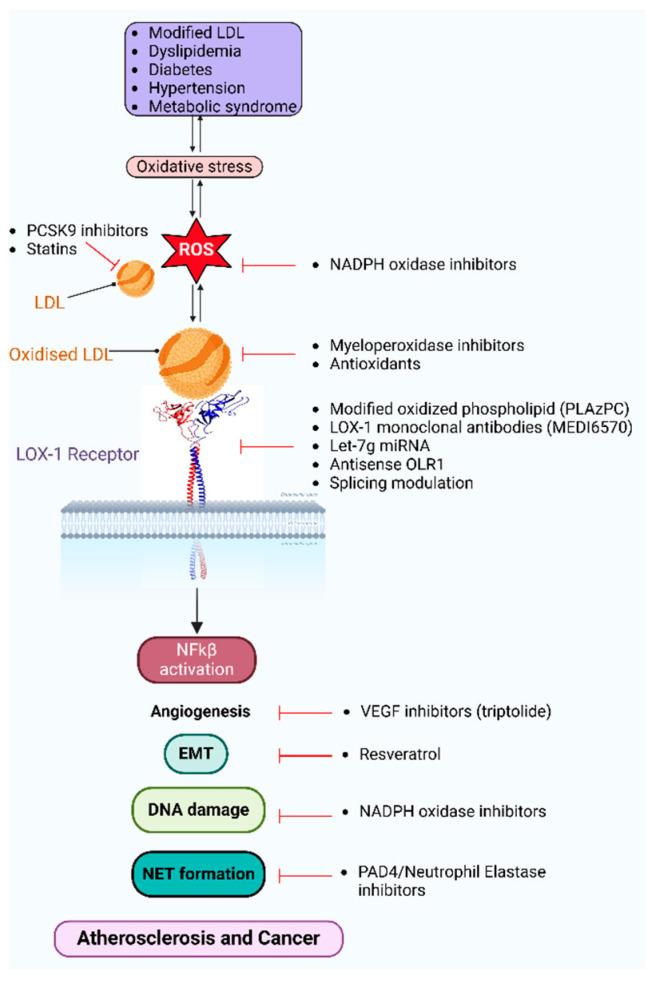
Cardiovascular disease and cancer are major global causes of mortality. Dysfunctional lipid metabolism causes atherosclerosis, a driving force in arterial disease leading to heart attacks and strokes. In this review, we focus on emerging evidence for links between atherosclerosis and cancer. In atherosclerosis, modified and oxidized lipid particles promote plaque initiation and progression, with wider effects on cell and tissue responses. Oxidized and modified lipid particles bind to scavenger receptors (SRs) and promote intracellular signaling and pro-inflammatory responses. Increasing evidence points to SR-mediated activation and signaling promoting cancer cell growth and spread. In particular, the lectin-like oxidized low-density lipoprotein (LOX-1) scavenger receptor activates NF-κB-regulated signal transduction pathways which modulate different cellular responses. LOX-1-regulated signaling events are implicated in both atherosclerosis and cancer, depending on the cell type. LOX-1 signaling modulates cell proliferation, epithelial-mesenchymal transition, neutrophil recruitment and apoptosis. Elevated LOX-1 levels are linked to poor prognosis in arterial disease and prostate, colorectal and lung cancers. Inhibition of LOX-1 function could thus provide new therapeutic strategies for targeting both atherosclerosis and cancer.
心血管疾病和癌症是全球主要的死亡原因。脂质代谢功能障碍会导致动脉粥样硬化,这是引发心脏病发作和中风的动脉疾病的一个驱动因素。在本综述中,我们聚焦于动脉粥样硬化与癌症之间联系的新证据。在动脉粥样硬化中,修饰和氧化的脂质颗粒会促进斑块的形成和发展,对细胞和组织反应产生更广泛的影响。氧化和修饰的脂质颗粒与清道夫受体(SRs)结合,促进细胞内信号传导和促炎反应。越来越多的证据表明,SR介导的激活和信号传导会促进癌细胞的生长和扩散。特别是,凝集素样氧化低密度脂蛋白(LOX-1)清道夫受体会激活NF-κB调节的信号转导通路,该通路可调节不同的细胞反应。取决于细胞类型,LOX-1调节的信号事件与动脉粥样硬化和癌症均有关联。LOX-1信号传导调节细胞增殖、上皮-间质转化、中性粒细胞募集和细胞凋亡。LOX-1水平升高与动脉疾病以及前列腺癌、结直肠癌和肺癌的不良预后相关。因此,抑制LOX-1功能可能为针对动脉粥样硬化和癌症提供新的治疗策略。


 Zotero 插件