
雄激素性脱发中的祖细胞动力学:来自空间分辨转录组学的见解
Progenitor Cell Dynamics in Androgenetic Alopecia: Insights from Spatially Resolved Transcriptomics.
作者信息
Charoensuksira Sasin, Surinlert Piyaporn, Krajarng Aungkana, Nualsanit Thararat, Payuhakrit Witchuda, Panpinyaporn Pimchanok, Khumsri Wilunplus, Thanasarnaksorn Wilai, Suwanchinda Atchima, Hongeng Suradej, Ponnikorn Saranyoo
机构信息
Division of Dermatology, Chulabhorn International College of Medicine, Thammasat University, Pathum Thani 12120, Thailand.
Chulabhorn International College of Medicine, Thammasat University, Pathum Thani 12120, Thailand.
出版信息
Int J Mol Sci. 2025 Jun 17;26(12):5792. doi: 10.3390/ijms26125792.
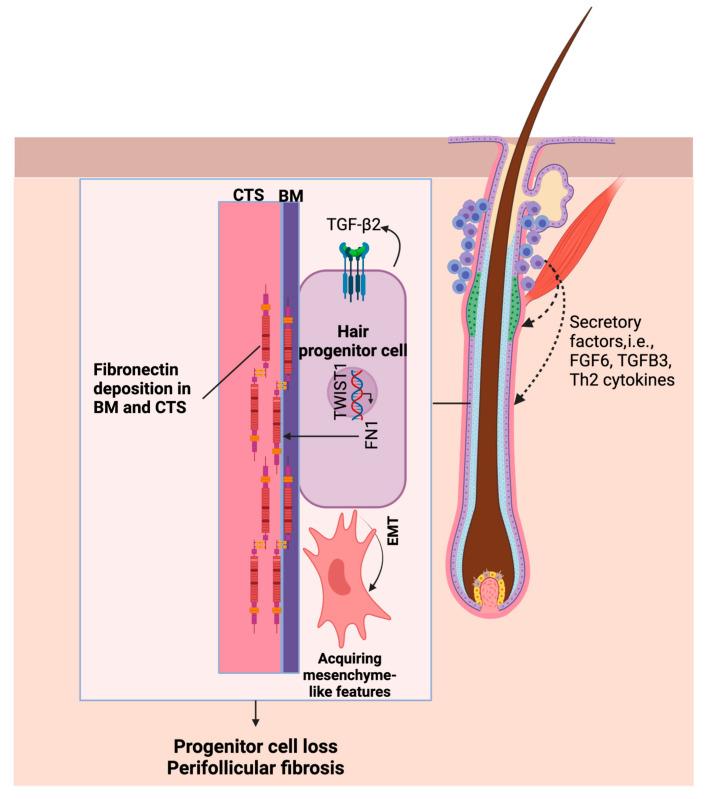
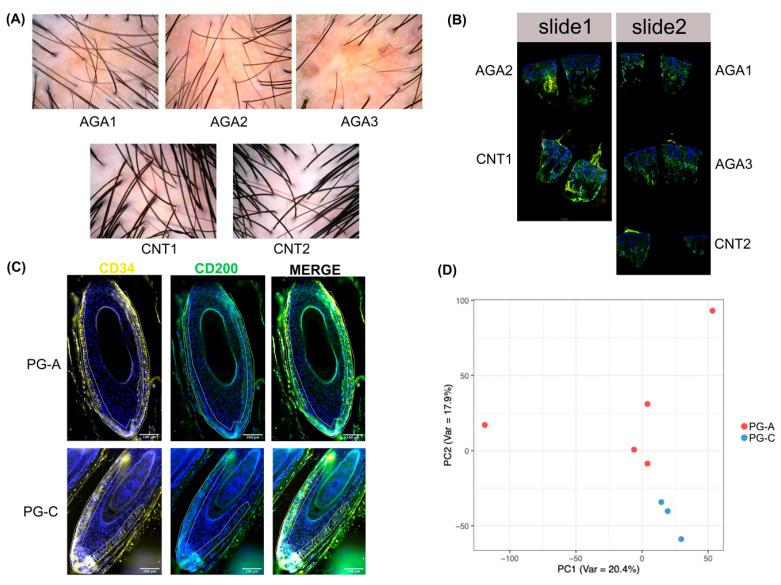
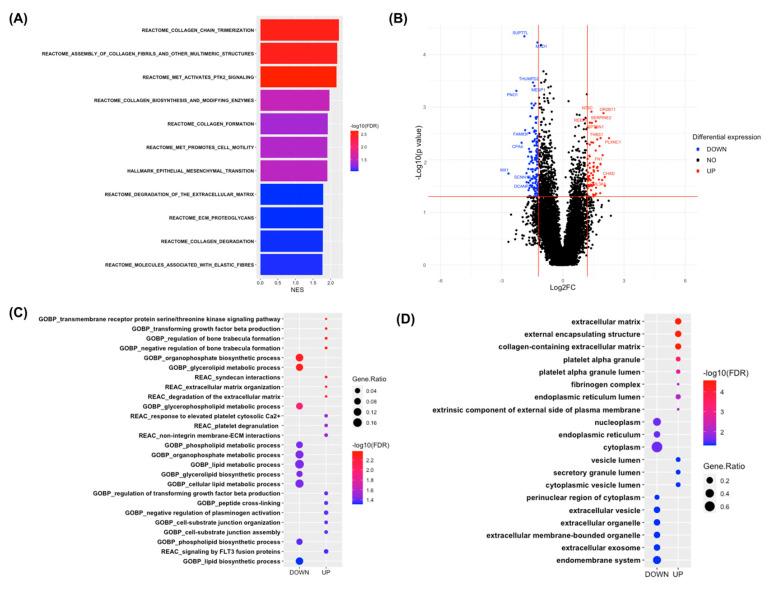
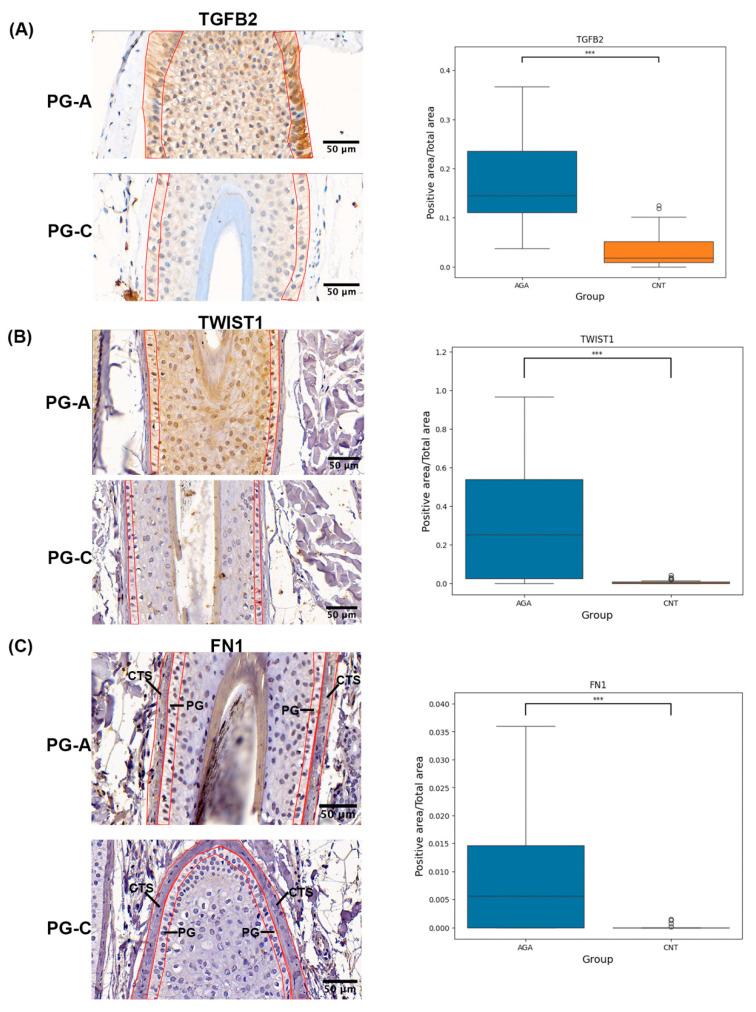
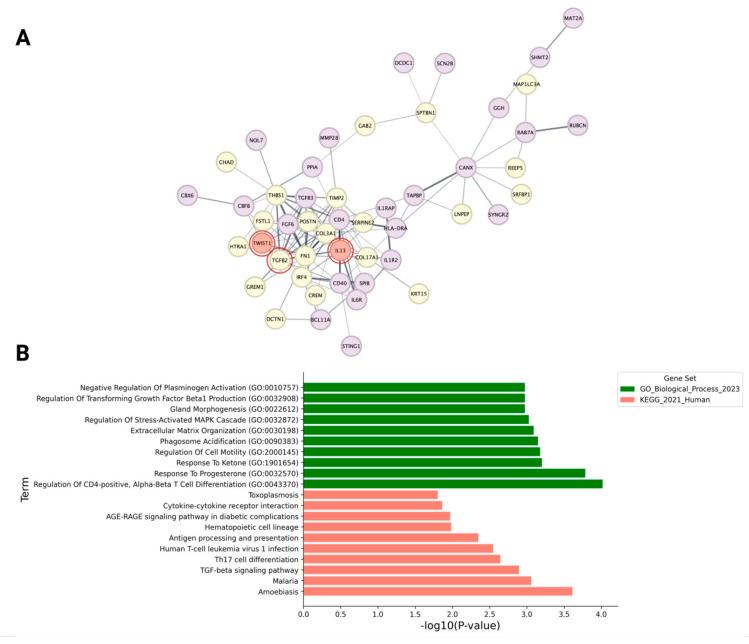
Androgenetic alopecia (AGA) is marked by the progressive miniaturization of hair follicles (HFs) and hair thinning, driven by a decline in the progenitor cells critical for hair regeneration. Despite this, the mechanisms responsible for progenitor cell depletion remain largely unclear. To investigate transcriptional alterations in the progenitor cell regions of AGA patients while maintaining the spatial tissue context, we employed the GeoMX Digital Spatial Profiling (DSP) platform, which enables a precise comparison with healthy controls. Our analysis revealed the significant upregulation of genes associated with extracellular matrix (ECM) organization and the epithelial-mesenchymal transition (EMT), including , , and in the progenitor cell region of the HFs. Correspondingly, protein expression data confirmed increased levels of the protein products of these genes in the affected areas, underscoring their roles in the disease's progression. These molecular changes suggest an environment conducive to the EMT, potentially contributing to the loss of progenitor cells and indicating a fibrogenic shift within the HF microenvironment. Additionally, our study highlights the influence of peri-infundibular immune cell infiltration on these molecular changes, suggesting that immune-mediated microinflammation may contribute to the fibrogenic environment and progenitor cell loss in the AGA. These findings demonstrate the utility of spatial transcriptomics in identifying potential therapeutic targets and advancing our understanding of AGA's molecular mechanisms, offering avenues for developing targeted treatment strategies.
雄激素性脱发(AGA)的特征是毛囊(HF)逐渐小型化和头发稀疏,这是由对毛发再生至关重要的祖细胞数量减少所驱动的。尽管如此,导致祖细胞耗竭的机制在很大程度上仍不清楚。为了在保持空间组织背景的同时研究AGA患者祖细胞区域的转录变化,我们采用了GeoMX数字空间分析(DSP)平台,该平台能够与健康对照进行精确比较。我们的分析揭示了与细胞外基质(ECM)组织和上皮-间质转化(EMT)相关的基因,包括HF祖细胞区域中的[具体基因1]、[具体基因2]和[具体基因3]显著上调。相应地,蛋白质表达数据证实了这些基因的蛋白质产物在受影响区域的水平升高,强调了它们在疾病进展中的作用。这些分子变化表明存在有利于EMT的环境,可能导致祖细胞的丢失,并表明HF微环境内发生了纤维化转变。此外,我们的研究强调了漏斗周免疫细胞浸润对这些分子变化的影响,表明免疫介导的微炎症可能导致AGA中的纤维化环境和祖细胞丢失。这些发现证明了空间转录组学在识别潜在治疗靶点和推进我们对AGA分子机制理解方面的实用性,并为开发靶向治疗策略提供了途径。

 Zotero 插件