
沉默信息调节因子1在胃肠道肿瘤发生发展中的作用。
The role of SIRT1 in the development of gastrointestinal tumors.
作者信息
Zhang Yueming, Zhou Xiaokai, Zhai Jinghui, Ma Jie, Zhang Sixi
机构信息
Department of Clinical Pharmacy, The First Hospital of Jilin University, Changchun, Jilin, China.
Clinical Medical College, The First Hospital of Jilin University, Changchun, Jilin, China.
出版信息
Front Cell Dev Biol. 2025 Jun 11;13:1606530. doi: 10.3389/fcell.2025.1606530. eCollection 2025.
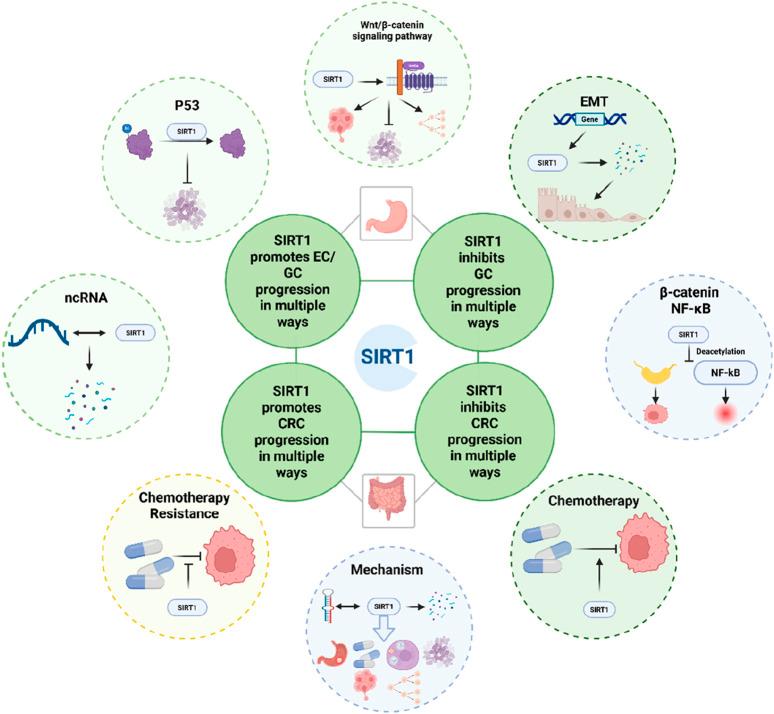
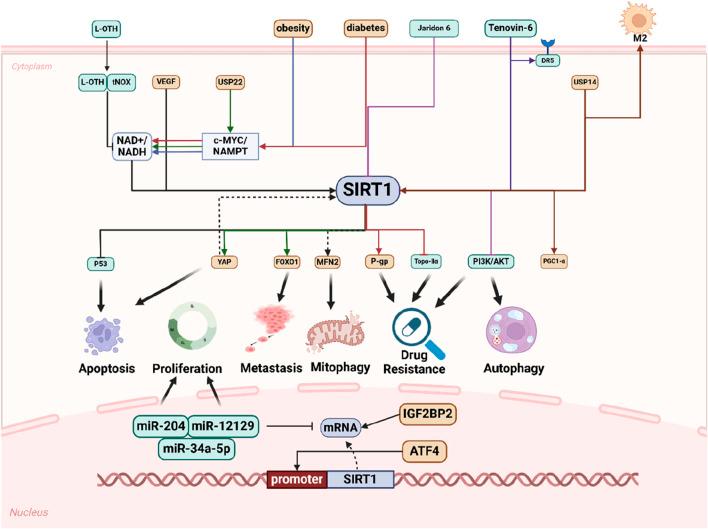
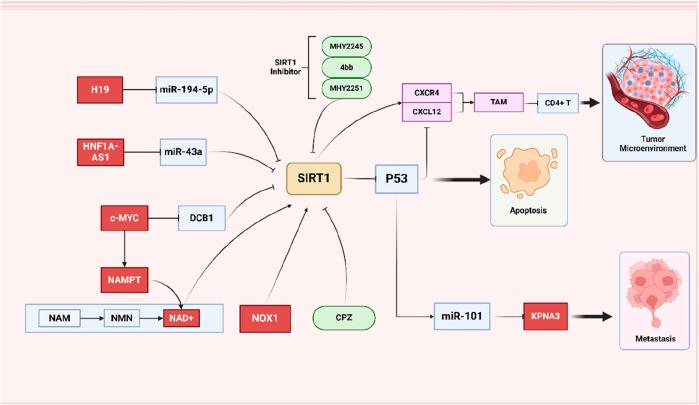
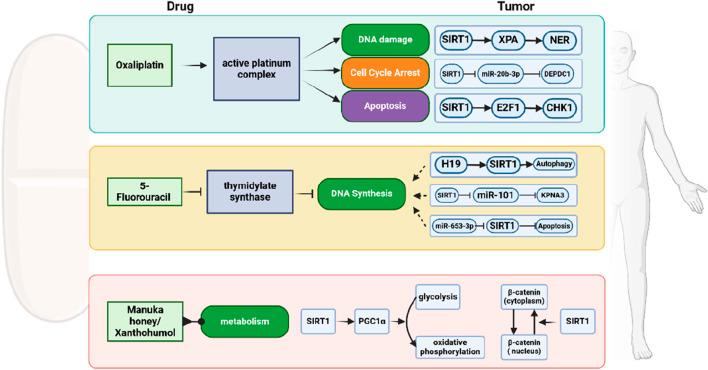
Gastrointestinal tumors, including esophageal cancer (EC), gastric cancer (GC) and colorectal cancer (CRC) and, pose significant global health challenges due to their high morbidity and mortality rates. SIRT1, an NAD-dependent deacetylase, plays diverse roles in physiological processes and has been implicated in cancer development. This review examines the dual roles of SIRT1 in gastrointestinal tumors. In EC, SIRT1 consistently promotes tumor progression, with high SIRT1 expression associated with advanced TNM stage, poor prognosis, lymph node metastasis, and inferior overall survival. In GC, SIRT1 similarly promotes tumor progression via autophagy and chemoresistance, but studies also highlight its potential anti-cancer effects through ferroptosis regulation. In CRC, SIRT1 is often overexpressed and promotes tumor progression through mechanisms involving p53 inhibition, activation of the Wnt/β-catenin pathway, and regulation of Epithelial-Mesenchymal Transition (EMT). However, conflicting evidence suggests SIRT1 can also act as a tumor suppressor by inhibiting β-catenin and nuclear factor-κB (NF-κB) signaling. The dual nature of SIRT1 underscores the need for context-specific understanding of its function. Future research should focus on elucidating SIRT1's mechanisms and developing personalized therapeutic strategies targeting SIRT1.
胃肠道肿瘤,包括食管癌(EC)、胃癌(GC)和结直肠癌(CRC),因其高发病率和死亡率而给全球健康带来重大挑战。SIRT1是一种依赖烟酰胺腺嘌呤二核苷酸(NAD)的脱乙酰酶,在生理过程中发挥多种作用,并与癌症发展有关。本综述探讨了SIRT1在胃肠道肿瘤中的双重作用。在食管癌中,SIRT1持续促进肿瘤进展,SIRT1高表达与晚期TNM分期、预后不良、淋巴结转移及较差的总生存率相关。在胃癌中,SIRT1同样通过自噬和化疗耐药促进肿瘤进展,但研究也强调了其通过铁死亡调节发挥的潜在抗癌作用。在结直肠癌中,SIRT1常过度表达,并通过涉及抑制p53、激活Wnt/β-连环蛋白通路及调节上皮-间质转化(EMT)的机制促进肿瘤进展。然而,相互矛盾的证据表明,SIRT1也可通过抑制β-连环蛋白和核因子-κB(NF-κB)信号传导发挥肿瘤抑制作用。SIRT1的双重性质凸显了根据具体情况了解其功能的必要性。未来的研究应侧重于阐明SIRT1的机制,并制定针对SIRT1的个性化治疗策略。


 Zotero 插件