
iKcr-DRC:基于新型注意力模块和密集连接网络的蛋白质赖氨酸巴豆酰化位点预测
iKcr-DRC: prediction of lysine crotonylation sites in proteins based on a novel attention module and DenseNet.
作者信息
Wei Xin, Hu Siqin, Tu Jian, Remli Muhammad Akmal
机构信息
Institute for Artificial Intelligence and Big Data, Universiti Malaysia Kelantan, Kota Bharu, Kelantan, Malaysia.
Business School, Jiangxi Institute of Fashion Technology, Nanchang, China.
出版信息
Front Genet. 2025 Jun 11;16:1574832. doi: 10.3389/fgene.2025.1574832. eCollection 2025.
INTRODUCTION
Lysine crotonylation (Kcr) is a recently identified post-translational modification that predominantly occurs on lysine residues and plays a crucial role in regulating gene expression, cellular metabolism, and various biological processes. Increasing evidence has linked Kcr to the pathogenesis of major diseases such as cancer, highlighting the importance of accurately identifying Kcr sites for understanding disease mechanisms and normal cellular function.
METHODS
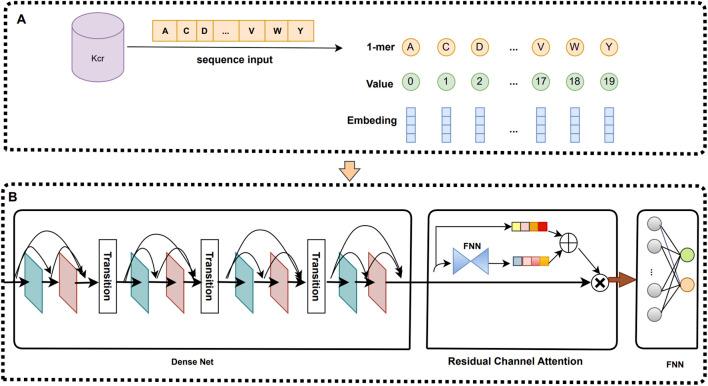
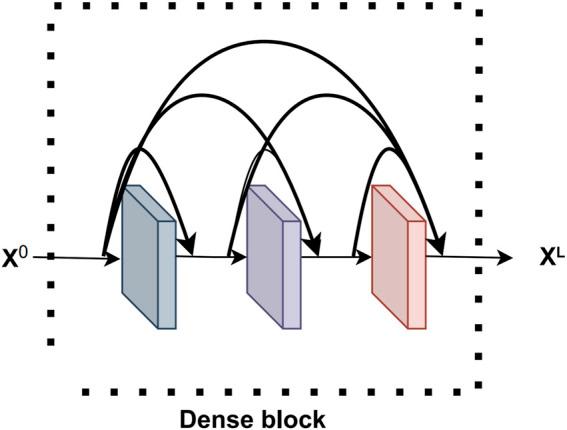
In this study, we present a novel deep learning-based computational model, named iKcr-DRC, for the accurate prediction of lysine crotonylation sites. The model leverages a densely connected convolutional network (DenseNet) as its backbone to effectively capture high-level local features from protein sequences. Additionally, we introduce an enhanced channel attention mechanism with a short-circuit connection design, endowing the network with residual properties and improved feature refinement capabilities.
RESULTS
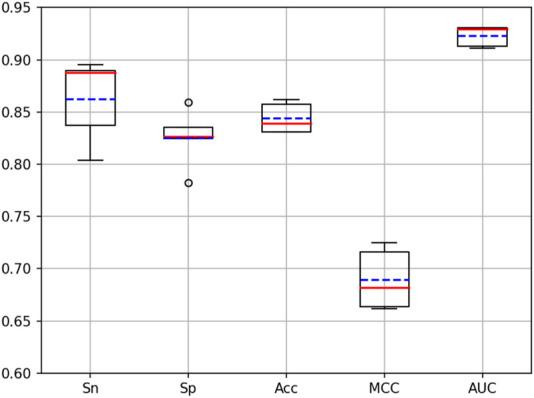
The experimental results show that the iKcr-DRC model achieves 90.30%, 78.35%, 84.33% and 69.15% for sensitivity, specificity, accuracy, and Matthew's correlation coefficients, respectively. These results indicate a significant improvement over existing state-of-the-art Kcr prediction tools.
DISCUSSION
The proposed iKcr-DRC model provides an effective and innovative approach for predicting lysine crotonylation sites. It holds great potential for advancing applications in bioinformatics and enhancing the understanding of protein post-translational modifications. An online prediction tool based on the iKcr-DRC model is freely accessible at: http://www.lzzzlab.top/ikcr/.
引言
赖氨酸巴豆酰化(Kcr)是一种最近被发现的翻译后修饰,主要发生在赖氨酸残基上,在调节基因表达、细胞代谢和各种生物学过程中起着关键作用。越来越多的证据将Kcr与癌症等重大疾病的发病机制联系起来,凸显了准确识别Kcr位点对于理解疾病机制和正常细胞功能的重要性。
方法
在本研究中,我们提出了一种基于深度学习的新型计算模型,名为iKcr-DRC,用于准确预测赖氨酸巴豆酰化位点。该模型利用密集连接卷积网络(DenseNet)作为其主干,以有效捕捉蛋白质序列中的高级局部特征。此外,我们引入了一种具有短路连接设计的增强通道注意力机制,赋予网络残差特性和改进的特征细化能力。
结果
实验结果表明,iKcr-DRC模型的灵敏度、特异性、准确率和马修斯相关系数分别达到90.30%、78.35%、84.33%和69.15%。这些结果表明,与现有的最先进的Kcr预测工具相比有显著改进。
讨论
所提出的iKcr-DRC模型为预测赖氨酸巴豆酰化位点提供了一种有效且创新的方法。它在推进生物信息学应用和增强对蛋白质翻译后修饰的理解方面具有巨大潜力。基于iKcr-DRC模型的在线预测工具可在以下网址免费访问:http://www.lzzzlab.top/ikcr/ 。




 Zotero 插件