
接受雄激素剥夺治疗的前列腺癌患者中与-相关基因变异的预后意义。 (注:原文中“-Related”前缺少具体内容,翻译可能存在一定局限性)
Prognostic Significance of -Related Gene Variants in Patients With Prostate Cancer Undergoing Androgen Deprivation Therapy.
作者信息
Huang Shu-Pin, Bao Bo-Ying, Chuang Ta-Hsien, Huang Chao-Yuan, Yu Chia-Cheng, Lin Victor C, Lu Te-Ling, Chen Yei-Tsung
机构信息
Graduate Institute of Clinical Medicine, College of Medicine, Kaohsiung Medical University, Kaohsiung, Taiwan, R.O.C.
Department of Urology, Kaohsiung Medical University Hospital, Kaohsiung, Taiwan, R.O.C.
出版信息
Cancer Genomics Proteomics. 2025 Jun 26;22(4):611-623. doi: 10.21873/cgp.20525.
BACKGROUND/AIM: Prostate cancer remains a major global health burden, with treatment resistance posing a significant challenge. Enhancer of zeste 2 polycomb repressive complex 2 subunit (EZH2), a histone methyltransferase, is frequently overexpressed in prostate cancer, contributing to tumor progression and castration resistance. Clinical trials of EZH2 inhibitors may have therapeutic benefits. This study aimed to evaluate the impact of genetic variants in -related genes on survival outcomes in prostate cancer.
PATIENTS AND METHODS
We conducted a genetic association study evaluating 76 single nucleotide polymorphisms (SNPs) across 10 -related genes in 630 patients with prostate cancer undergoing androgen deprivation therapy (ADT). Functional analyses, including gene ontology and pathway enrichment assessments, were performed to elucidate the biological significance of key genes across multiple datasets.
RESULTS
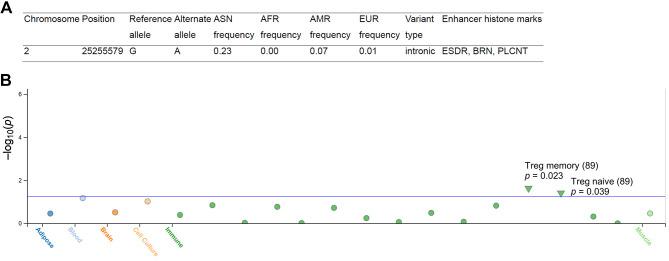
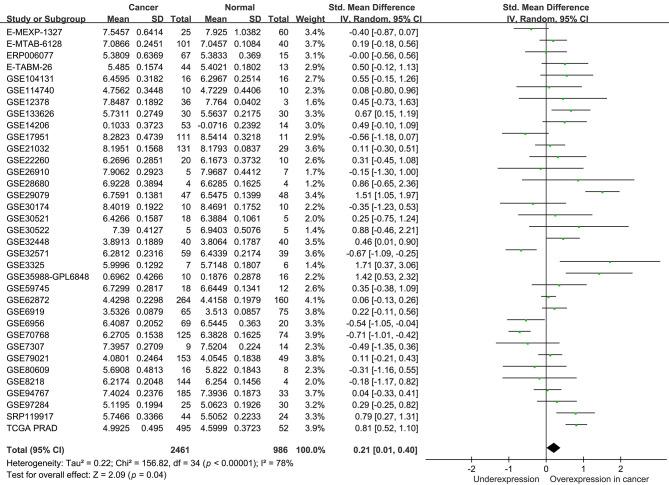
rs77993651 was significantly associated with both cancer-specific survival [hazard ratio (HR)=0.82, =0.042] and overall survival (HR=0.80, =0.011). Functional annotation indicated that rs77993651 resides within enhancer histone marks, potentially regulating expression. Elevated expression was observed in prostate tumor tissues and correlated with more aggressive features and shorter progression-free survival. Gene set enrichment analysis revealed that expression was strongly associated with cell cycle G/M checkpoint regulation, implicating a role in prostate cancer progression.
CONCLUSION
The prognostic significance of and its genetic variant rs77993651 in prostate cancer is herein highlighted. Targeting -mediated pathways may offer novel therapeutic strategies for prostate cancer management.
背景/目的:前列腺癌仍然是一项重大的全球健康负担,治疗耐药性构成了重大挑战。zeste 2多梳抑制复合体2亚基增强子(EZH2),一种组蛋白甲基转移酶,在前列腺癌中经常过度表达,促进肿瘤进展和去势抵抗。EZH2抑制剂的临床试验可能具有治疗益处。本研究旨在评估相关基因中的基因变异对前列腺癌生存结果的影响。
患者与方法
我们进行了一项基因关联研究,评估了630例接受雄激素剥夺治疗(ADT)的前列腺癌患者中10个相关基因的76个单核苷酸多态性(SNP)。进行了功能分析,包括基因本体和通路富集评估,以阐明多个数据集中关键基因的生物学意义。
结果
rs77993651与癌症特异性生存[风险比(HR)=0.82,P=0.042]和总生存(HR=0.80,P=0.011)均显著相关。功能注释表明rs77993651位于增强子组蛋白标记内,可能调节表达。在前列腺肿瘤组织中观察到表达升高,且与更具侵袭性的特征和更短的无进展生存期相关。基因集富集分析显示,表达与细胞周期G/M检查点调节密切相关,提示其在前列腺癌进展中起作用。
结论
本文强调了及其基因变异rs77993651在前列腺癌中的预后意义。靶向介导的通路可能为前列腺癌治疗提供新的策略。




 Zotero 插件