
一种用于跟踪肩部活动范围的仪器设备的可靠性和有效性。
The Reliability and Validity of an Instrumented Device for Tracking the Shoulder Range of Motion.
作者信息
Roos Rachel E, Lambiase Jennifer, Riffitts Michelle, Scholle Leslie, Kulkarni Simran, Luck Connor L, Parmanto Dharma, Putraadinatha Vayu, Yoga Made D, Lang Stephany N, Tatko Erica, Grant Jim, Oakley Jennifer I, Disantis Ashley, Saptono Andi, Parmanto Bambang, Popchak Adam, McClincy Michael P, Bell Kevin M
机构信息
Department of Bioengineering, University of Pittsburgh, Pittsburgh, PA 15260, USA.
ēlizur, Pittsburgh, PA 15237, USA.
出版信息
Sensors (Basel). 2025 Jun 18;25(12):3818. doi: 10.3390/s25123818.
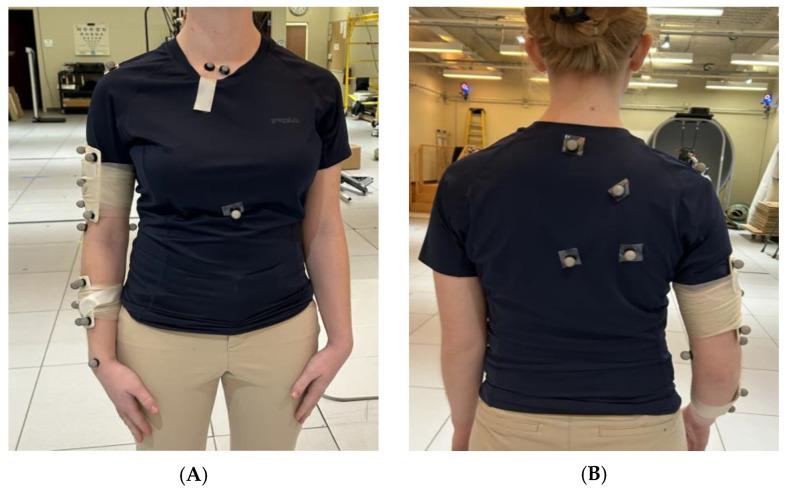
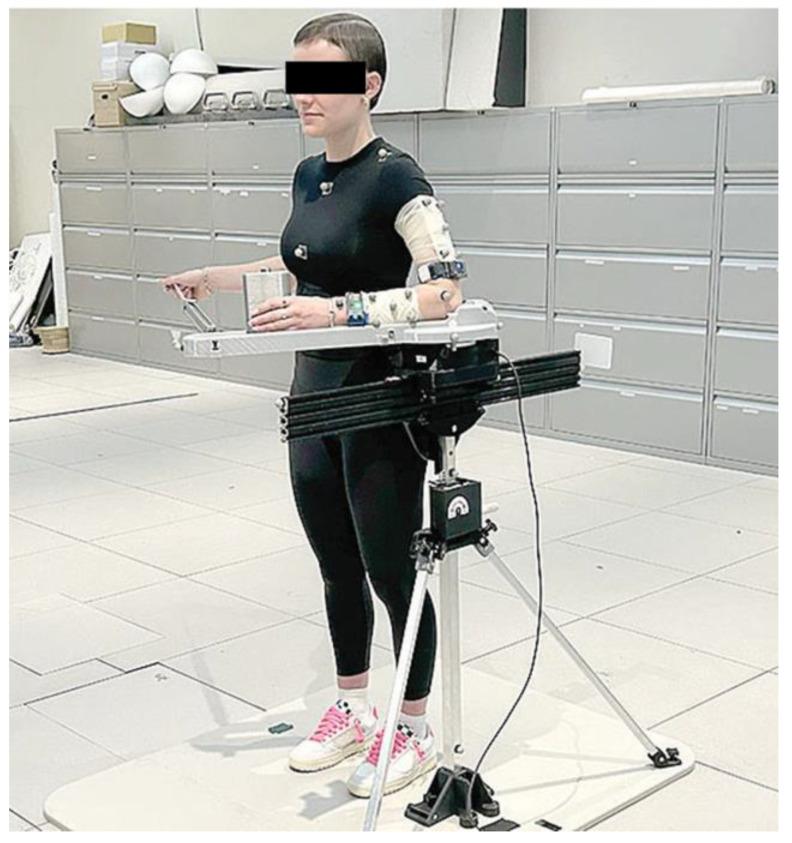
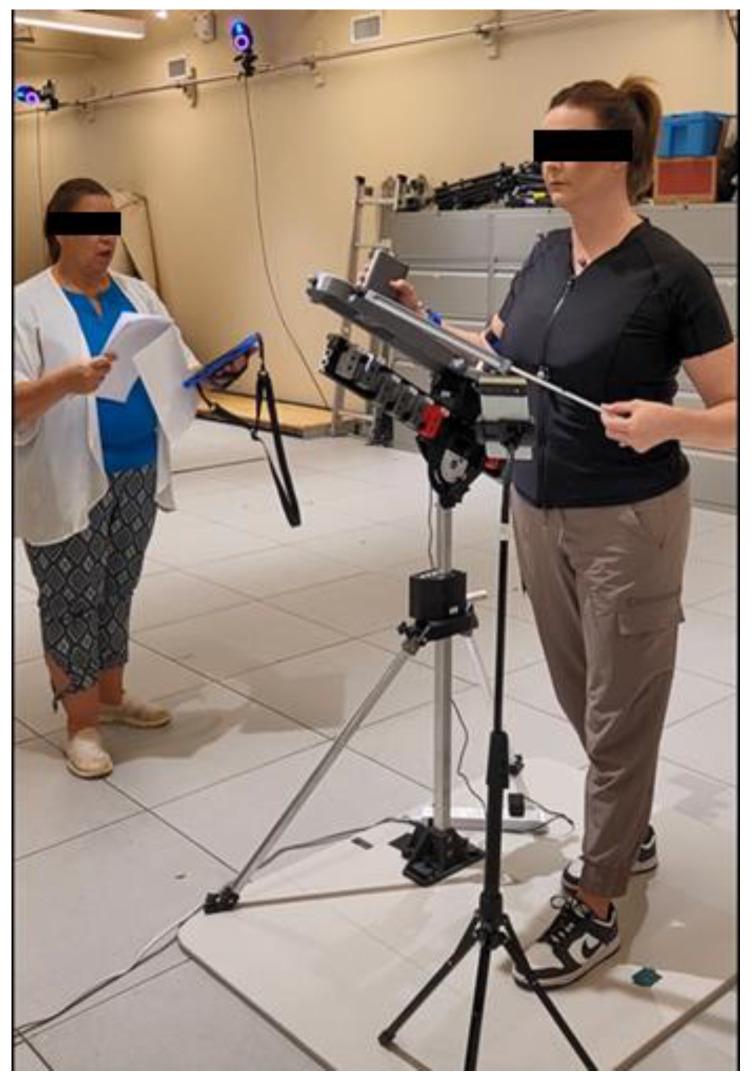
Rotator cuff tears are common in individuals over 40, and physical therapy is often prescribed post-surgery. However, access can be limited by cost, convenience, and insurance coverage. CuffLink is a telehealth rehabilitation system that integrates the Strengthening and Stabilization System mechanical exerciser with the interACTION mobile health platform. The system includes a triple-axis accelerometer (LSM6DSOX + LIS3MDL FeatherWing), a rotary encoder, a VL530X time-of-flight sensor, and two wearable BioMech Health IMUs to capture upper-limb motion. CuffLink is designed to facilitate controlled, home-based exercise while enabling clinicians to remotely monitor joint function. Concurrent validity and test-retest reliability were used to assess device accuracy and repeatability. The results showed moderate to good validity for shoulder rotation (ICC = 0.81), device rotation (ICC = 0.94), and linear tracking (from zero: ICC = 0.75 and RMSE = 2.41; from start: ICC = 0.88 and RMSE = 2.02) and good reliability (e.g., RMSEs as low as 1.66 cm), with greater consistency in linear tracking compared to angular measures. Shoulder rotation and abduction exhibited higher variability in both validity and reliability measures. Future improvements will focus on manufacturability, signal stability, and force sensing. CuffLink supports accessible, data-driven rehabilitation and holds promise for advancing digital health in orthopedic recovery.
肩袖撕裂在40岁以上人群中很常见,术后通常会开物理治疗的处方。然而,获得物理治疗可能会受到费用、便利性和保险覆盖范围的限制。CuffLink是一个远程医疗康复系统,它将强化与稳定系统机械锻炼器与interACTION移动健康平台集成在一起。该系统包括一个三轴加速度计(LSM6DSOX + LIS3MDL FeatherWing)、一个旋转编码器、一个VL530X飞行时间传感器和两个可穿戴的BioMech Health惯性测量单元,以捕捉上肢运动。CuffLink旨在促进可控的家庭锻炼,同时使临床医生能够远程监测关节功能。采用同时效度和重测信度来评估设备的准确性和可重复性。结果显示,肩部旋转(组内相关系数ICC = 0.81)、设备旋转(ICC = 0.94)和线性跟踪(从零开始:ICC = 0.75,均方根误差RMSE = 2.41;从起始点开始:ICC = 0.88,RMSE = 2.02)的效度为中等至良好,信度良好(例如,RMSE低至1.66厘米),与角度测量相比,线性跟踪的一致性更高。肩部旋转和外展在效度和信度测量中均表现出较高的变异性。未来的改进将集中在可制造性、信号稳定性和力传感方面。CuffLink支持可及的、数据驱动的康复治疗,并有望推动骨科康复领域的数字健康发展。


 Zotero 插件