
用于囊性纤维化患者优化抗真菌治疗的伏立康唑纳米水凝胶
Voriconazole-Loaded Nanohydrogels Towards Optimized Antifungal Therapy for Cystic Fibrosis Patients.
作者信息
Cemal Shaul D, Ladetto María F, Alava Katherine Hermida, Kazimirsky Gila, Cucher Marcela, Glisoni Romina J, Cuestas María L, Byk Gerardo
机构信息
Department of Chemistry, Bar-Ilan University, Ramat Gan 5290002, Israel.
Instituto de Investigaciones en Microbiología y Parasitología Médica (IMPaM), CONICET, Universidad de Buenos Aires, Buenos Aires 1121, Argentina.
出版信息
Pharmaceutics. 2025 May 30;17(6):725. doi: 10.3390/pharmaceutics17060725.
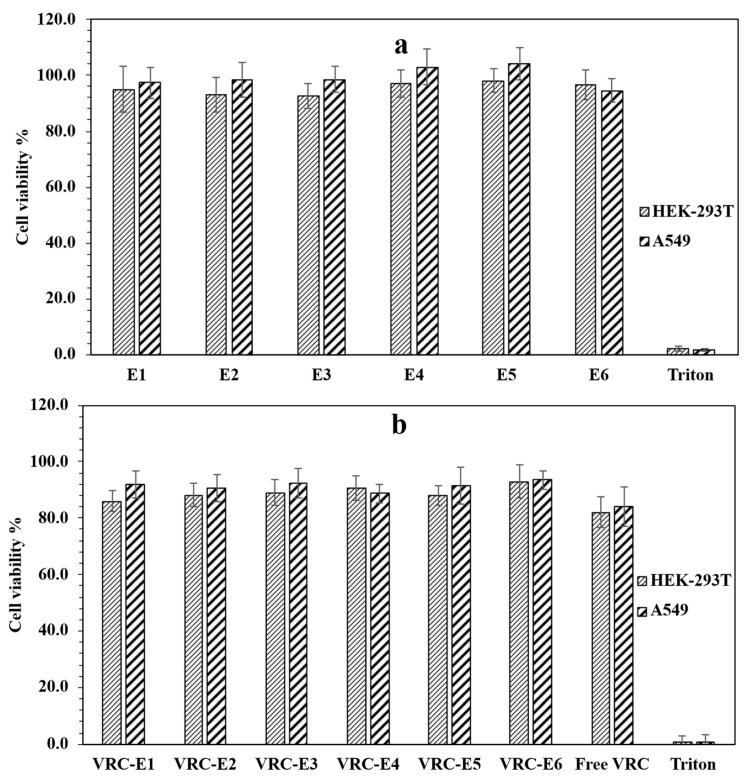
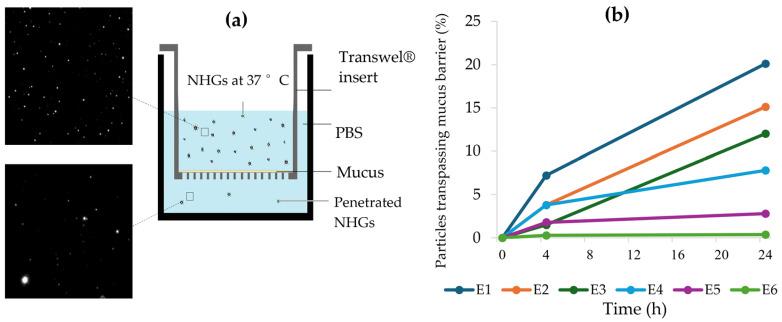
: Filamentous fungi, in particular the species , , and , frequently colonize the lungs of cystic fibrosis (CF) patients. Chronic colonization is linked to hypersensitivity reactions and persistent infections leading to a significant long-term decline in lung function. Azole antifungal therapy such as voriconazole (VRC) slows disease progression, particularly in patients with advanced CF; however, excessive mucus production in CF lungs poses a diffusional barrier to effective treatment. : Here, biodegradable nanohydrogels (NHGs) recently developed as nanocarriers were evaluated for formulating VRC as a platform for treating fungal infections in CF lungs. The NHGs entrapped up to about 30 μg/mg of VRC, and physicochemical properties were investigated via dynamic laser light scattering and nanoparticle tracking analysis. Diameters were 100-400 nm, and excellent colloidal stability was demonstrated in interstitial fluids, indicating potential for pulmonary delivery. Nano-formulations exhibited high in vitro cytocompatibility in A549 and HEK293T cells and were tested for the release of VRC under two different sink conditions. : Notably, the antifungal activity of VRC-loaded nanohydrogels was up to eight-fold greater than an aqueous suspension drug against different fungal species isolated from CF sputum, regardless of the presence of a CF artificial mucus layer. : These findings support the development of potent VRC nano-formulations for treating fungal disorders in CF lungs.
丝状真菌,尤其是 、 和 等物种,经常在囊性纤维化(CF)患者的肺部定植。慢性定植与超敏反应和持续性感染有关,导致肺功能长期显著下降。伏立康唑(VRC)等唑类抗真菌疗法可减缓疾病进展,尤其是在晚期CF患者中;然而,CF肺部过多的黏液分泌对有效治疗构成了扩散障碍。在此,对最近开发的作为纳米载体的可生物降解纳米水凝胶(NHGs)进行了评估,以将VRC配制成治疗CF肺部真菌感染的平台。NHGs可包封高达约30μg/mg的VRC,并通过动态激光散射和纳米颗粒跟踪分析研究其物理化学性质。直径为100 - 400nm,在间质液中表现出优异的胶体稳定性,表明具有肺部给药的潜力。纳米制剂在A549和HEK293T细胞中表现出高体外细胞相容性,并在两种不同的漏槽条件下测试了VRC的释放。值得注意的是,负载VRC的纳米水凝胶对从CF痰液中分离出的不同真菌物种的抗真菌活性比水悬浮药物高八倍,无论是否存在CF人工黏液层。这些发现支持开发有效的VRC纳米制剂用于治疗CF肺部的真菌疾病。



 Zotero 插件