
补充姜黄素针对认知衰老的研究:一项系统综述与荟萃分析。
Targeting cognitive aging with curcumin supplementation: A systematic review and meta-analysis.
作者信息
Yu Lirong, Li Na, Li Bin, Ye Kaisy Xinhong, Guo Jiuyu, Shan Jiatong, Cao Luwen, Song Mei, Wang Yanyu, Lee Tih-Shih, Maier Andrea B, Feng Lei
机构信息
School of Nursing, Shandong Second Medical University, Weifang, China.
Laboratory of Molecular Pharmacology, Jilin Provincial Key Laboratory of Biomacromolecules of Chinese Medicine, Jilin Ginseng Academy, Changchun University of Chinese Medicine, Changchun, China.
出版信息
J Prev Alzheimers Dis. 2025 Sep;12(8):100248. doi: 10.1016/j.tjpad.2025.100248. Epub 2025 Jun 26.
BACKGROUND
Cognitive aging is a growing public health concern, and curcumin, a bioactive compound derived from turmeric, has been proposed as a potential intervention to support cognitive function due to its anti-inflammatory and antioxidant properties.
OBJECTIVES
This systematic review and meta-analysis aimed to evaluate the effects of curcumin on cognitive outcomes related to aging.
METHODS
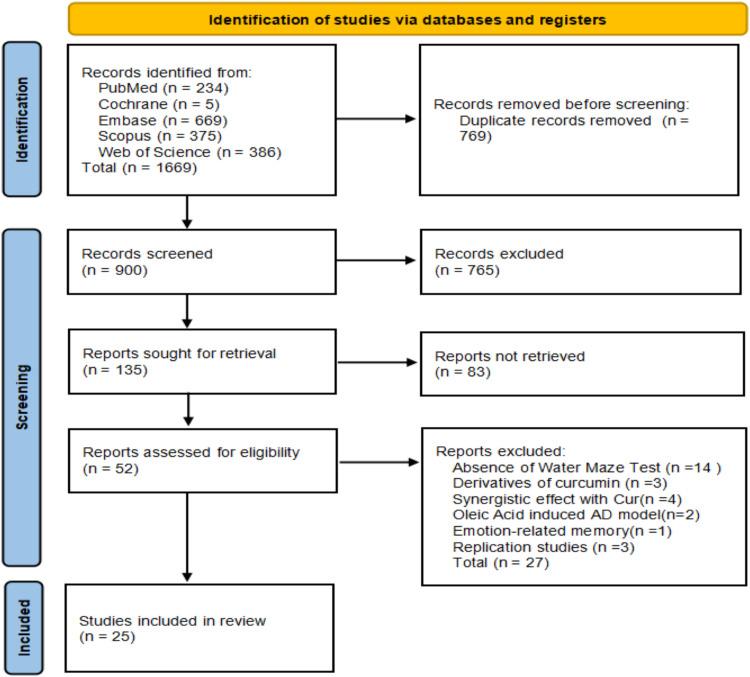
A comprehensive search of PubMed, Embase, Cochrane Library, Web of Science, and Scopus was conducted to identify studies published up to June 18, 2024, including both in vivo preclinical animal studies and randomized controlled trials (RCTs) assessing curcumin's effects on cognitive function. In vivo animal studies using Alzheimer's disease (AD) models and RCTs in human participants were included. Data were extracted and analyzed using meta-analytic techniques.
RESULTS
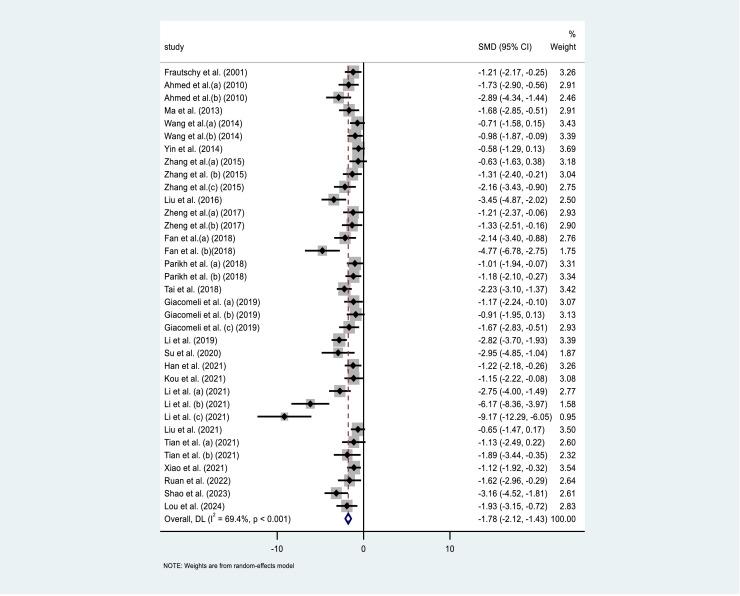
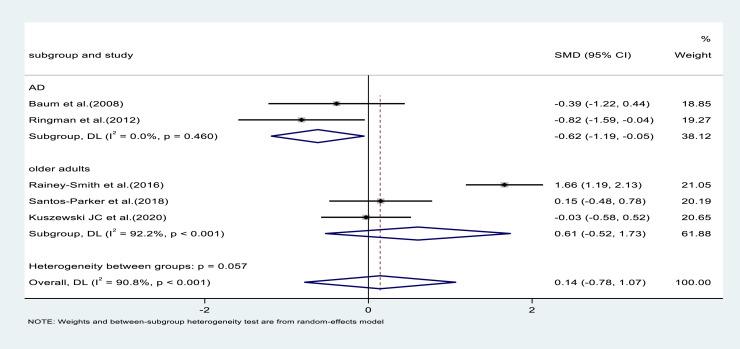
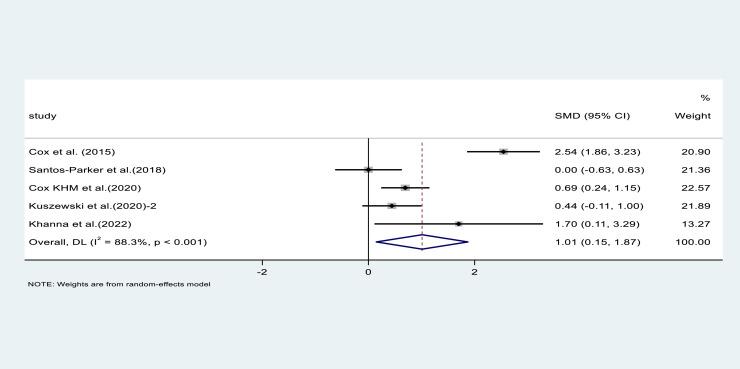
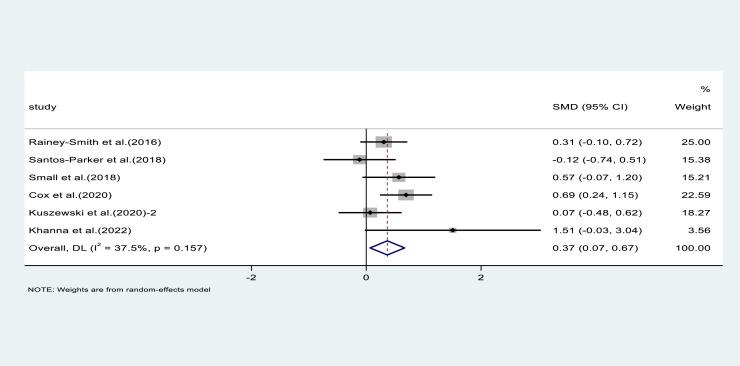
In preclinical in vivo murine studies (n = 25; total animals = 572), curcumin consistently improved both acquisition memory (SMD = -1.78, 95 % CI: -2.12 to -1.43) and retention memory (SMD = 2.36, 95 % CI: 1.72 to 3.00) in rodent models of AD. Ten human studies include 531 participants. Overall, curcumin showed no significant effect on global cognitive outcomes compared to placebo (SMD = 0.14, 95 % CI: -0.78 to 1.07). Subgroup analyses revealed significant improvements in working memory (SMD = 1.01, 95 % CI: 0.15 to 1.87) and processing speed (SMD = 0.37, 95 % CI: 0.07 to 0.67). The incidence of adverse events was higher in the curcumin group than in the control group.
CONCLUSIONS
Preclinical in vivo evidence suggests curcumin enhances cognitive function in AD models. However, human studies show inconsistent findings with benefits limited to specific cognitive domains. Larger, well-designed randomized controlled trials are needed to establish curcumin's efficacy and safety in cognitive aging.
背景
认知衰老日益引起公众对健康的关注,姜黄素是一种从姜黄中提取的生物活性化合物,因其抗炎和抗氧化特性,被认为是一种支持认知功能的潜在干预措施。
目的
本系统评价和荟萃分析旨在评估姜黄素对与衰老相关的认知结果的影响。
方法
全面检索了PubMed、Embase、Cochrane图书馆、Web of Science和Scopus,以识别截至2024年6月18日发表的研究,包括体内临床前动物研究和评估姜黄素对认知功能影响的随机对照试验(RCT)。纳入了使用阿尔茨海默病(AD)模型的体内动物研究和人类参与者的RCT。使用荟萃分析技术提取和分析数据。
结果
在临床前体内小鼠研究中(n = 25;动物总数 = 572),姜黄素在AD啮齿动物模型中持续改善了获取记忆(标准化均数差[SMD]= -1.78,95%可信区间[CI]:-2.12至-1.43)和保留记忆(SMD = 2.36,95% CI:1.72至3.00)。十项人体研究包括531名参与者。总体而言,与安慰剂相比,姜黄素对整体认知结果无显著影响(SMD = 0.14,95% CI:-0.78至1.07)。亚组分析显示工作记忆(SMD = 1.01,95% CI:0.15至1.87)和处理速度(SMD = 0.37,95% CI:0.07至0.67)有显著改善。姜黄素组不良事件的发生率高于对照组。
结论
临床前体内证据表明姜黄素可增强AD模型中的认知功能。然而,人体研究结果不一致,益处仅限于特定认知领域。需要开展更大规模、设计良好的随机对照试验来确定姜黄素在认知衰老中的疗效和安全性。



 Zotero 插件