
基因组监测揭示了美国农村社区吸毒者中丙型肝炎病毒传播网络的区域差异。
Genomic surveillance uncovers regional variation in HCV transmission networks among people who use drugs in rural U.S. communities.
作者信息
Tully Damien, Bean David, Sarette Jacklyn, Ngo Thang Long, Power Karen, Brook Daniel, Cooper Hannah, Feinberg Judith, Friedmann Peter, Hochstatter Karli, Havens Jennifer, Babalonis Shanna, Hurt Christopher, Jenkins Wiley, Korthuis Todd, Miller William, Pho Mai, Smith Gordan, Stopka Thomas, Tsui Judith, Mixson Sarah, Westergaard Ryan, Young April, Allen Todd
机构信息
Medical Research Council / Uganda Virus Research Institute and LSHTM Uganda Research Unit.
Ragon Institute of MGH, MIT and Harvard.
出版信息
Res Sq. 2025 Jun 10:rs.3.rs-6810633. doi: 10.21203/rs.3.rs-6810633/v1.
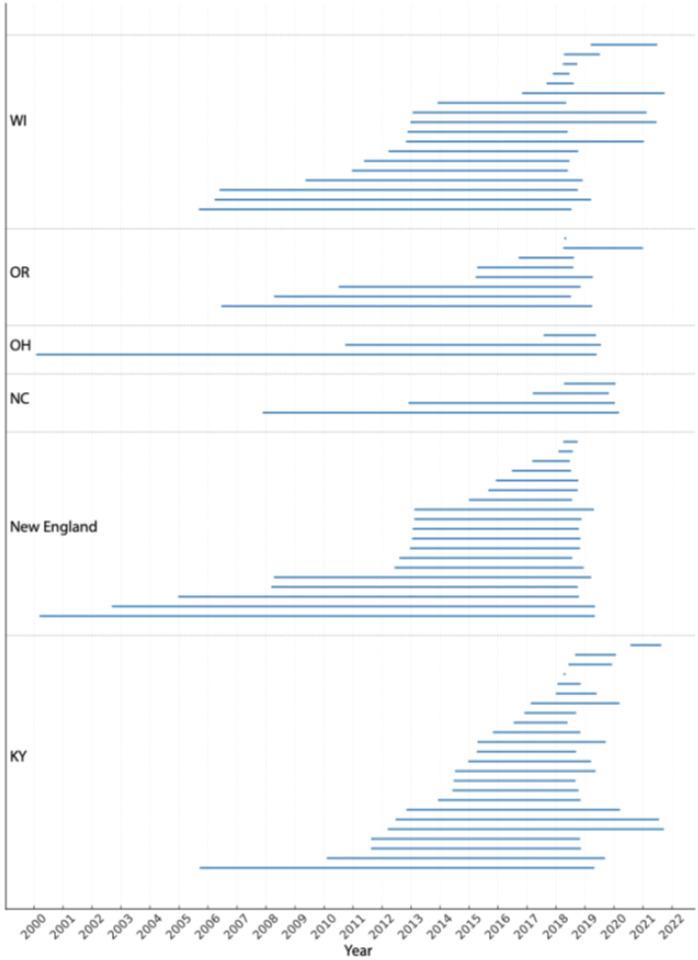
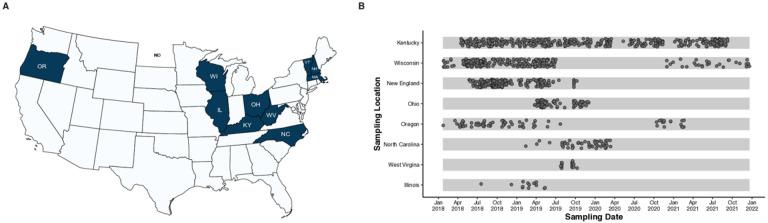
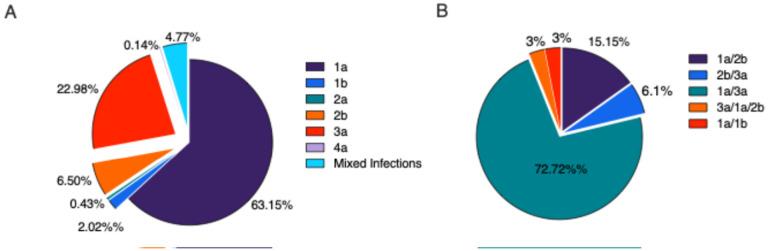
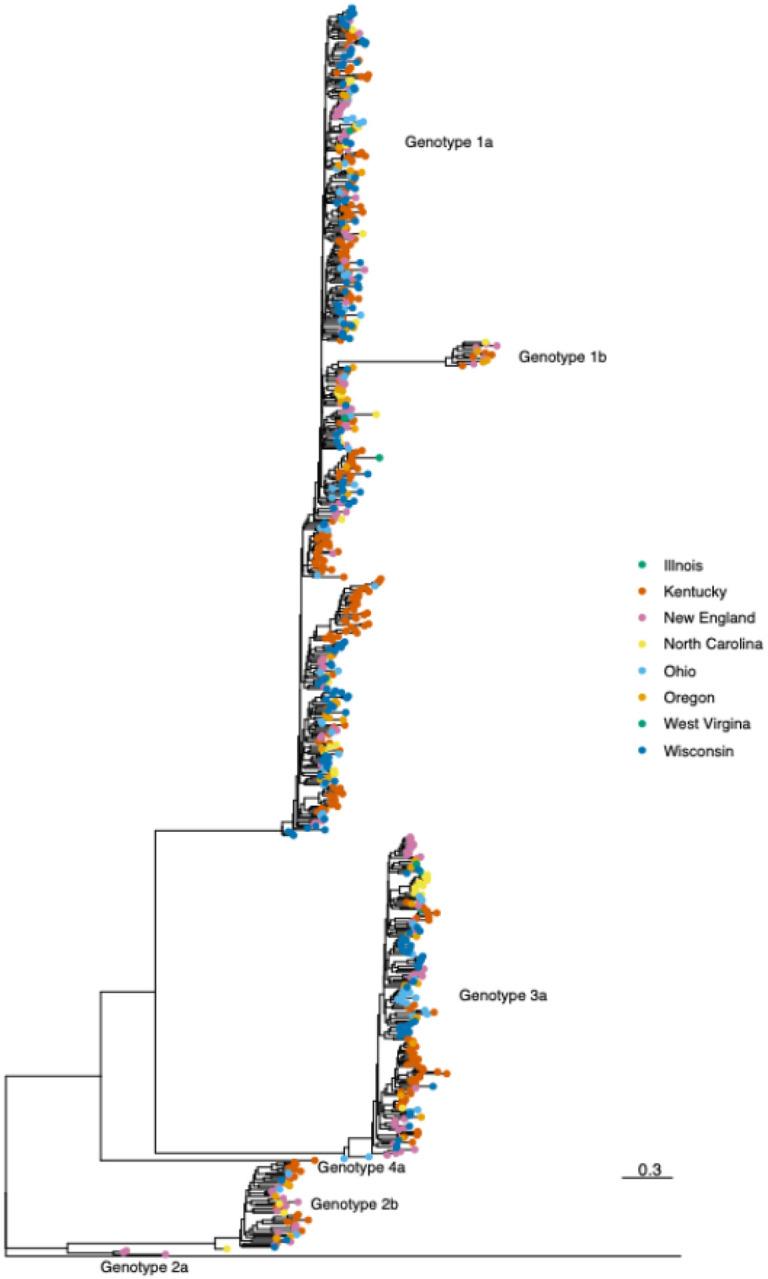
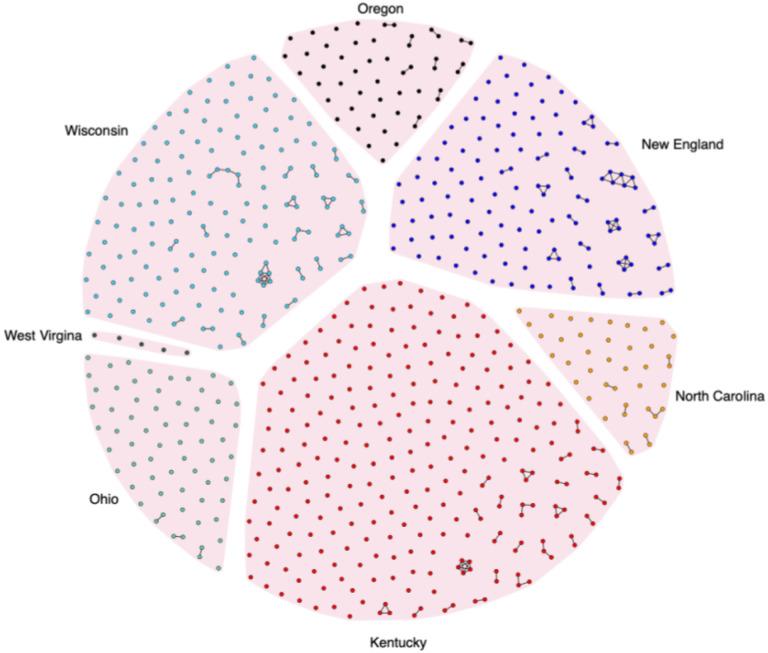
Hepatitis C virus (HCV) remains a significant public health concern in the United States particularly in rural communities where the opioid epidemic has accelerated transmission among people who use drugs (PWUD)/ Despite, this growing burden the genetic features and transmission patterns of HCV in these settings are poorly understood. This study analyzed 692 HCV antibody-positive specimens collected from rural communities in ten U.S. states. Using amplicon-based deep sequencing and the Global Hepatitis Outbreak and Surveillance Technology (GHOST) platform, transmission networks were reconstructed. Among sequenced individuals, 29.5% were linked within clusters. The structure of these clusters varied by region-from sparse networks in Ohio to dense, interconnected clusters in New England. Phylogenetic analysis revealed that some transmission networks persisted for over a decade, highlighting long-term, sustained transmission. Nearly half of all clusters involved individuals connected through social recruitment, suggesting peer-referral strategies can effectively identify transmission chains. Younger age was independently associated with clustering, while recruitment by an intimate partner showed a weaker link. These findings emphasize the importance of ongoing genomic surveillance and social network-informed strategies to detect emerging HCV clusters and guide targeted public health interventions in underserved rural communities.
丙型肝炎病毒(HCV)在美国仍然是一个重大的公共卫生问题,尤其是在农村社区,阿片类药物流行加速了药物使用者(PWUD)之间的传播。尽管负担日益加重,但人们对这些环境中HCV的基因特征和传播模式了解甚少。本研究分析了从美国十个州的农村社区收集的692份HCV抗体阳性标本。使用基于扩增子的深度测序和全球肝炎爆发与监测技术(GHOST)平台,重建了传播网络。在测序个体中,29.5%在簇内有联系。这些簇的结构因地区而异——从俄亥俄州的稀疏网络到新英格兰的密集、相互连接的簇。系统发育分析表明,一些传播网络持续了十多年,突出了长期、持续的传播。所有簇中近一半涉及通过社交招募联系的个体,这表明同伴推荐策略可以有效地识别传播链。年龄较小与聚集独立相关,而亲密伴侣的招募显示出较弱的联系。这些发现强调了持续进行基因组监测和基于社会网络的策略对于检测新出现的HCV簇以及指导在服务不足的农村社区开展有针对性的公共卫生干预措施的重要性。

 Zotero 插件