
大脑复杂性体现了序列学习中的不确定性,并证实了帕金森病患者的习惯化缺陷。
Brain complexity represents uncertainty in sequence learning and corroborates habituation deficit in Parkinson disease patients.
作者信息
Beni Mohammad Hossein Heidari, Hosseinpour Kamyab, Seyednejad Mohammad Reza, Aghajan Hamid
机构信息
Department of Electrical Engineering, Sharif University of Technology, Tehran, Iran.
出版信息
Sci Rep. 2025 Jul 1;15(1):22320. doi: 10.1038/s41598-025-00826-5.
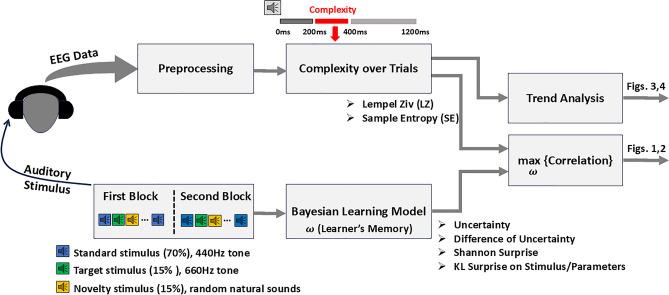
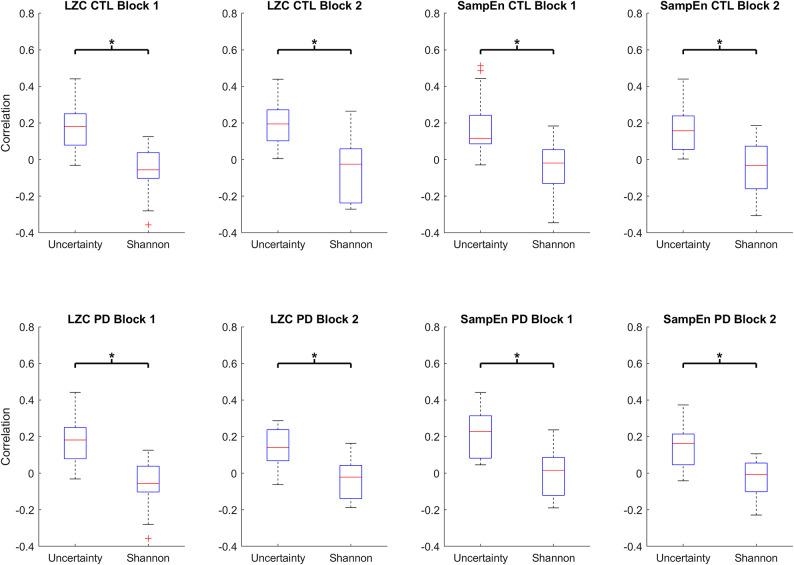
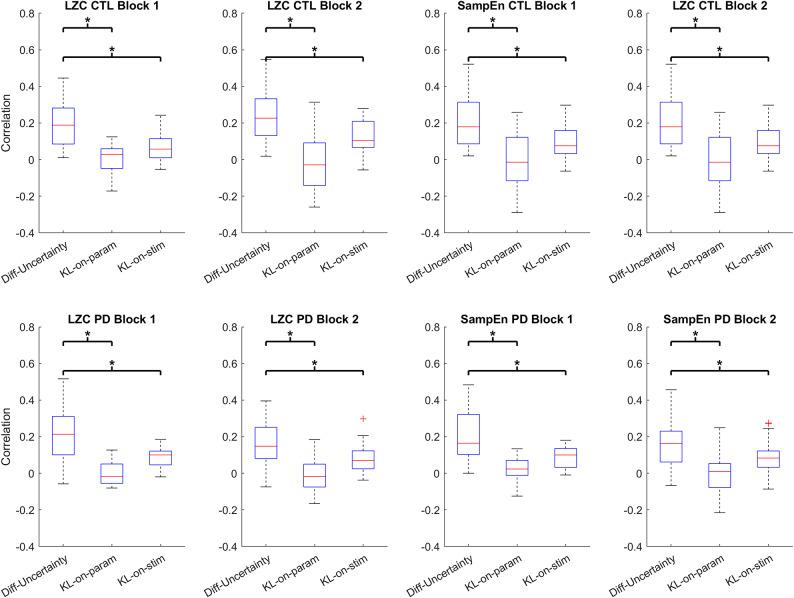
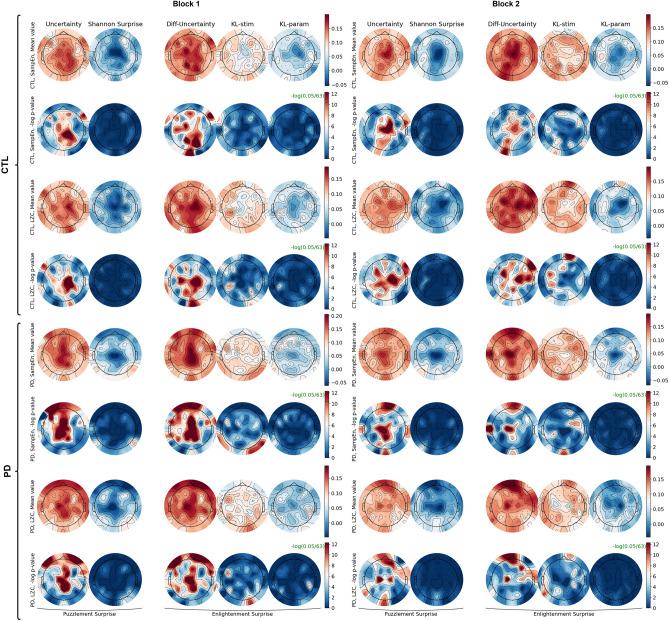
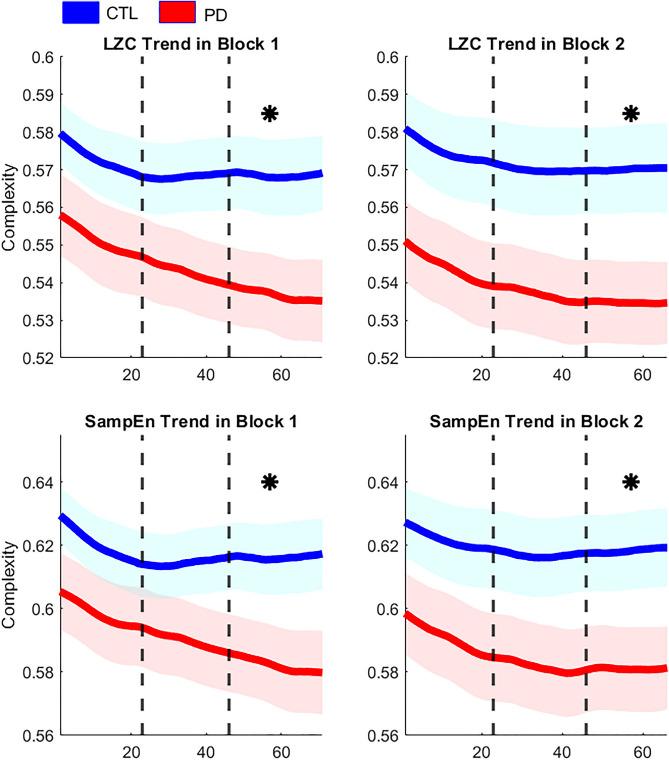
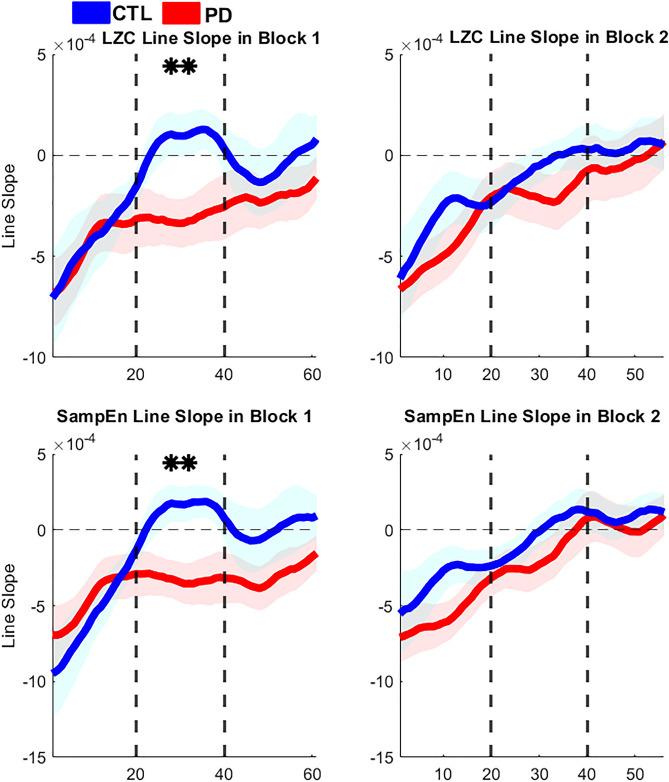
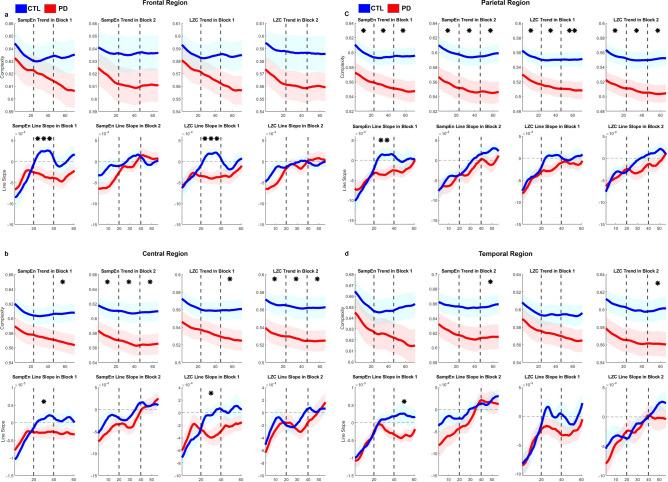
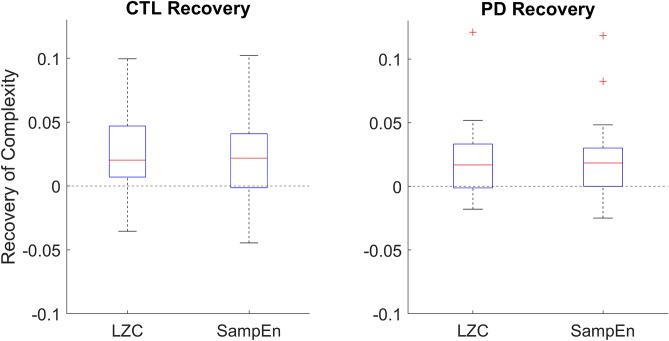
Information processing is a core element of cognitive processes in the brain. Rooted in the idea postulated by John von Neumann that the stochasticity of neural operations might essentially be a reflection of the probabilistic nature of information, it can be argued that fluctuations in the complexity of the brain operations should reflect aspects of information processing activities undertaken to infer nuances embedded in the sensory data. The current study elucidates these aspects by examining the intricate relationship between information processing in the brain, reflected in the complexity of brain activities, and information-theoretical measures of uncertainty in the Bayesian models of sequence learning. A key finding of our study is that the brain complexity shows a significantly superior correlation with the uncertainty about the input, captured by the entropy of the posterior distribution over all input values, compared to its correlation with the novel information stored in the current input as measured by the Shannon or Bayesian models of surprise. Additionally, we found that the brain complexity follows the habituation process known to occur during learning by demonstrating a decreasing trend and also corroborates the process of spontaneous recovery at the onset of a repeated learning task. As further evidence for this relationship, distinguished complexity trends are observed in patients of Parkinson disease, reflecting cognitive disorders in habituation and habit formation caused by the disease.
信息处理是大脑认知过程的核心要素。基于约翰·冯·诺依曼提出的观点,即神经运算的随机性本质上可能是信息概率性质的一种反映,可以认为大脑运算复杂性的波动应反映为推断感官数据中所蕴含细微差别而进行的信息处理活动的各个方面。当前的研究通过考察大脑中的信息处理(反映在大脑活动的复杂性上)与序列学习贝叶斯模型中不确定性的信息理论度量之间的复杂关系,阐明了这些方面。我们研究的一个关键发现是,与大脑复杂性和通过香农或贝叶斯惊奇模型测量的当前输入中存储的新信息之间的相关性相比,大脑复杂性与后验分布在所有输入值上的熵所捕获的关于输入的不确定性表现出显著更强的相关性。此外,我们发现大脑复杂性通过呈现下降趋势遵循学习过程中已知会出现的习惯化过程,并且在重复学习任务开始时也证实了自发恢复过程。作为这种关系的进一步证据,在帕金森病患者中观察到了明显不同的复杂性趋势,反映了该疾病导致的习惯化和习惯形成方面的认知障碍。
 Zotero 插件