
GAINSeq:利用由下一代测序数据驱动的机器学习模型进行青光眼症状前检测。
GAINSeq: glaucoma pre-symptomatic detection using machine learning models driven by next-generation sequencing data.
作者信息
Iqbal Muhammad, Iqbal Arshad, Ayub Humaira, Khan Maqbool, Ahmad Naveed, Javed Yasir, Alshara Mohammed Ali
机构信息
Sino-Pak Center for Artificial Intelligence (SPCAI), School of Computing Sciences, Pak-Austria Fachhochschule: Institute of Applied Sciences and Technology (PAF-IAST), Haripur, 22620, Pakistan.
Department of Biological and Health Sciences, Pak-Austria Fachhochschule: Institute of Applied Sciences and Technology (PAF-IAST), Haripur, 22620, Pakistan.
出版信息
Sci Rep. 2025 Jul 2;15(1):23091. doi: 10.1038/s41598-025-04249-0.
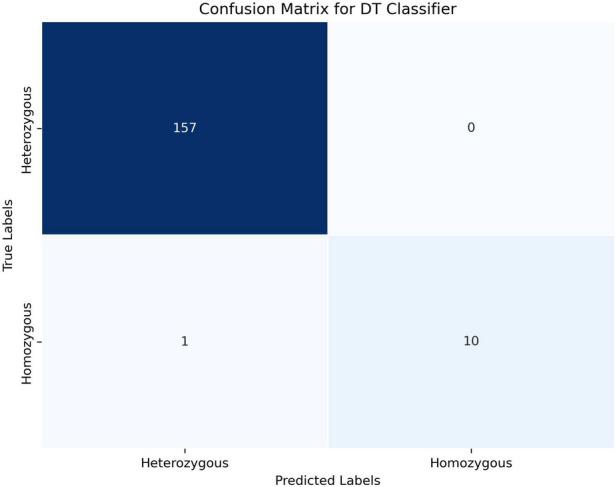
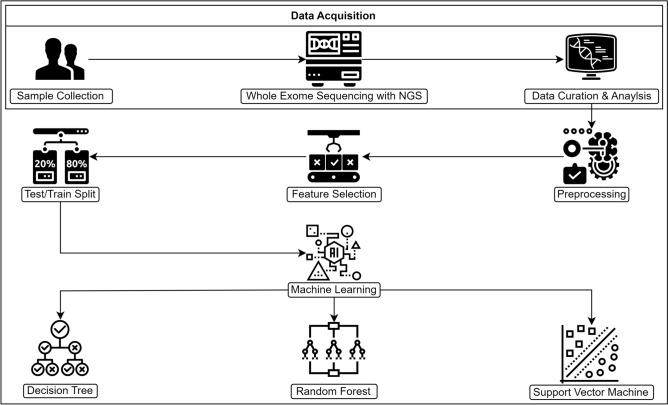
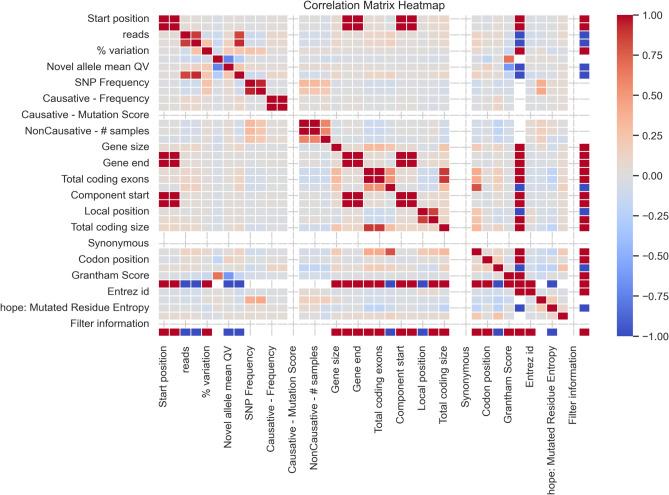
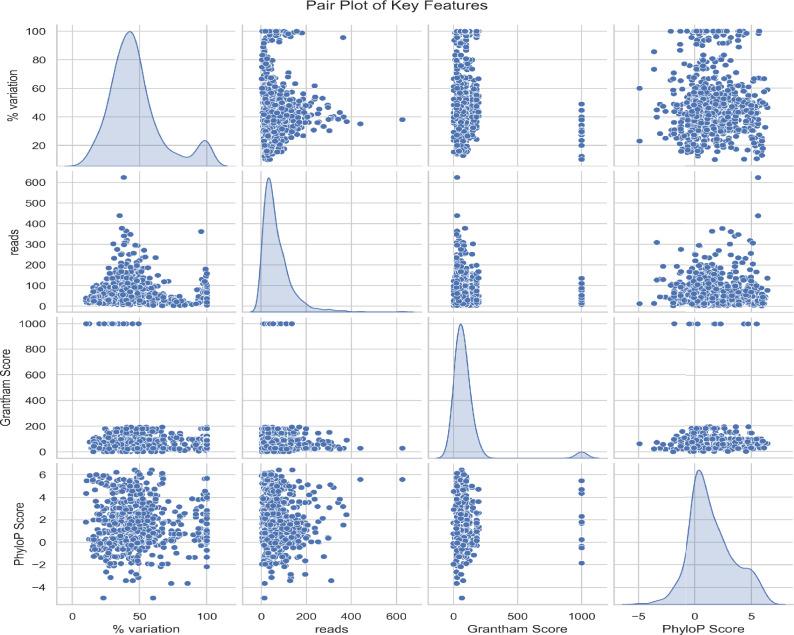
Congenital glaucoma, a complex and diverse condition, presents considerable difficulties in its identification and categorization. This research used Next Generation Sequencing (NGS) whole-exome data to create a categorization framework using machine learning methods. This study specifically investigated the effectiveness of decision tree, random forests, and support vector classification (SVC) algorithms in distinguishing different glaucoma genotypes. Proposed methodology used a range of genomic characteristics, such as percentage variation, PhyloP scores, and Grantham scores, to comprehensively understand the genetic pathways that contribute to the illness. This investigation showed that Decision Tree and Random Forest algorithms consistently performed better than earlier techniques in identifying congenital glaucoma subtypes. These algorithms demonstrated outstanding accuracy and resilience. The findings highlight the capacity of machine learning methods to reveal complex patterns in NGS data, therefore improving the proposed comprehension of the causes of congenital glaucoma. Moreover, the knowledge obtained from this research shows potential for enhancing the accuracy of diagnoses and developing tailored treatment approaches for afflicted people.
先天性青光眼是一种复杂多样的病症,在其识别和分类方面存在相当大的困难。本研究使用下一代测序(NGS)全外显子数据,通过机器学习方法创建了一个分类框架。本研究具体调查了决策树、随机森林和支持向量分类(SVC)算法在区分不同青光眼基因型方面的有效性。所提出的方法使用了一系列基因组特征,如变异百分比、系统发育保守评分(PhyloP评分)和格兰瑟姆评分,以全面了解导致该疾病的遗传途径。这项调查表明,决策树和随机森林算法在识别先天性青光眼亚型方面始终比早期技术表现更好。这些算法显示出卓越的准确性和适应性。研究结果突出了机器学习方法揭示NGS数据中复杂模式的能力,从而增进了对先天性青光眼病因的理解。此外,从这项研究中获得的知识显示了提高诊断准确性和为患者制定个性化治疗方法的潜力。


 Zotero 插件