
南苏丹新财富指数的制定:在南苏丹加扎勒河省北部季节性疟疾化学预防背景下家庭财富与疟疾预防措施之间的关联
Development of a new wealth index for South Sudan: association between household wealth and malaria prevention practices in the context of seasonal malaria chemoprevention in Northern Bahr el Ghazal, South Sudan.
作者信息
Huang Sikai, Khan Jamshed, Lokang Francis, Ayuiel Abubaker Rom, Baker Kevin, Julla Ahmed, Richardson Sol
机构信息
Vanke School of Public Health, Tsinghua University, Beijing, China.
Malaria Consortium South Sudan, Plot 23, Block Government Contentment Area, Second Class Residential, Airport Road, Goshen House, Juba, South Sudan.
出版信息
Infect Dis Poverty. 2025 Jul 1;14(1):57. doi: 10.1186/s40249-025-01327-3.
BACKGROUND
The World Health Organization recommends seasonal malaria chemoprevention (SMC) using sulfadoxine-pyrimethamine and amodiaquine (SPAQ) to prevent malaria among children aged 3-59 months in regions with marked seasonality of malaria transmission. Socioeconomic disparities in household malaria prevention within the SMC context remain uncharacterized. This study aimed to construct a household wealth index and examine its association with SMC implementation, children malaria infection, and malaria prevention practices in South Sudan.
METHODS
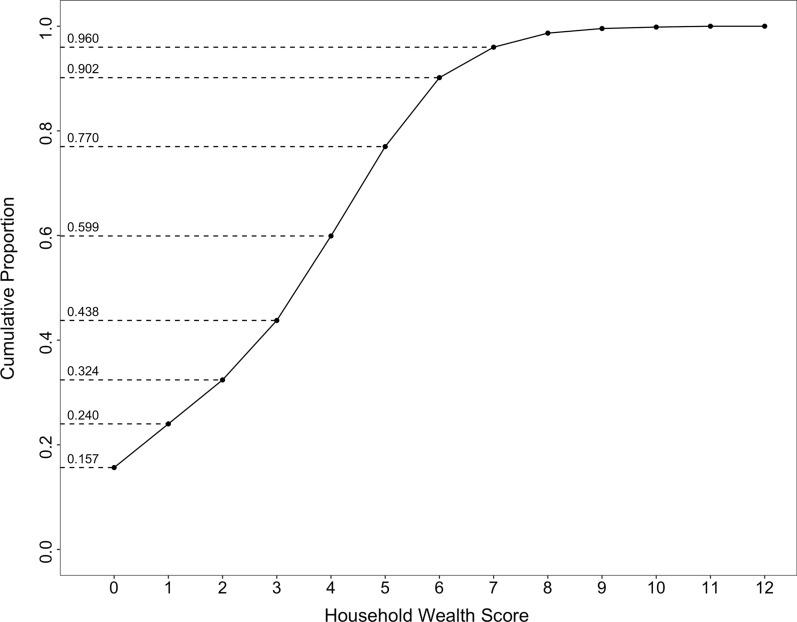
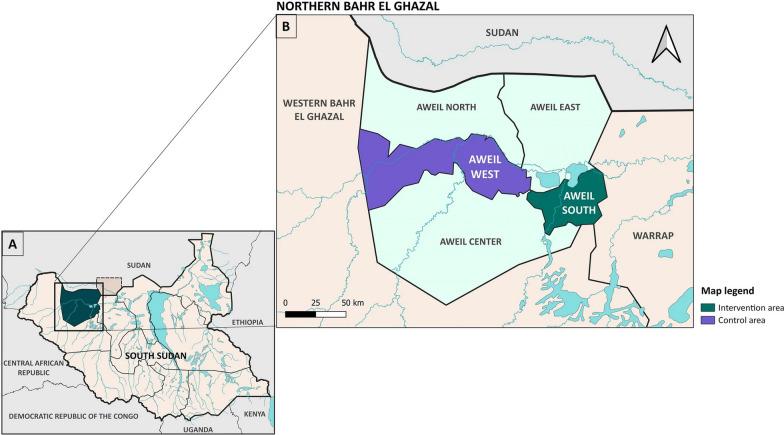
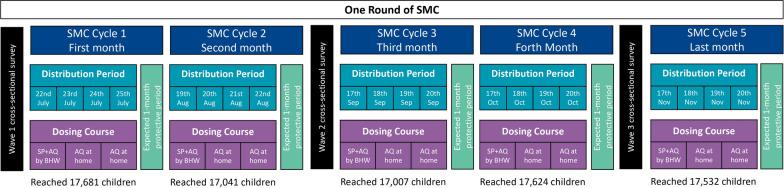
We utilized data from repeated cross-sectional household surveys conducted in Aweil County in 2022, involving 2767 households. The survey included asset-based questions tailored to the local context. We constructed a 12-item wealth score scale based on asset ownership using Mokken scale analysis and calculated weighted scores using multiple correspondence analysis to obtain wealth index quintiles. Survey-weighted logistic regressions were performed to assess the association of household wealth index quintiles with SMC implementation, children malaria infection, and malaria prevention practices.
RESULTS
The constructed 12-item wealth scale demonstrated strong internal consistency (Cronbach's alpha = 0.72). However, households in the lower wealth quintiles (1st quintile) had lower odds of ownership of mosquito nets compared with those in the 3rd quintile [odds ratio (OR) = 0.12, 95% confidence interval (CI): 0.05-0.26, P < 0.001)]. Households in the highest wealth quintile (5th quintile) had higher odds of access to alternative malaria prevention tools (e.g., repellents) compared with the 3rd quintile (OR = 2.75, 95% CI: 1.30-5.83, P = 0.010). However, household wealth was not significantly associated with SMC implementation (household visits by SMC boma distributors, child receipt of Day 1 SPAQ, and caregiver SMC knowledge) or malaria infection outcomes within SMC context.
CONCLUSIONS
The new wealth index tailored to South Sudan is a useful tool for assessing socioeconomic health determinants. While household access to SMC showed a low degree of wealth-associated disparities, reflecting the equitable coverage of the door-to-door SMC delivery model, significant inequities remain in household access to other malaria prevention practices, such as mosquito nets. These findings imply the need for strategies to enhance equity in distributing essential malaria prevention resources.
背景
世界卫生组织建议在疟疾传播具有明显季节性的地区,使用磺胺多辛-乙胺嘧啶和阿莫地喹(SPAQ)进行季节性疟疾化学预防(SMC),以预防3至59个月儿童感染疟疾。在季节性疟疾化学预防背景下,家庭疟疾预防方面的社会经济差异仍未得到充分描述。本研究旨在构建一个家庭财富指数,并研究其与南苏丹季节性疟疾化学预防实施情况、儿童疟疾感染及疟疾预防措施之间的关联。
方法
我们利用了2022年在阿韦勒县进行的重复横断面家庭调查数据,涉及2767户家庭。该调查包括根据当地情况量身定制的基于资产的问题。我们使用莫肯量表分析,基于资产所有权构建了一个包含12个项目的财富得分量表,并使用多重对应分析计算加权得分,以获得财富指数五分位数。进行调查加权逻辑回归,以评估家庭财富指数五分位数与季节性疟疾化学预防实施情况、儿童疟疾感染及疟疾预防措施之间的关联。
结果
构建的包含12个项目的财富量表显示出很强的内部一致性(克朗巴哈系数α = 0.72)。然而,与处于第三财富五分位数的家庭相比,处于较低财富五分位数(第一五分位数)的家庭拥有蚊帐的几率较低[比值比(OR)= 0.12,95%置信区间(CI):0.05 - 0.26,P < 0.001]。与第三财富五分位数的家庭相比,处于最高财富五分位数(第五五分位数)的家庭获得其他疟疾预防工具(如驱虫剂)的几率更高(OR = 2.75,95% CI:1.30 - 5.83,P = 0.010)。然而,家庭财富与季节性疟疾化学预防实施情况(季节性疟疾化学预防社区分发员的家访、儿童接受第1天的SPAQ以及照顾者对季节性疟疾化学预防的了解)或季节性疟疾化学预防背景下的疟疾感染结果并无显著关联。
结论
为南苏丹量身定制的新财富指数是评估社会经济健康决定因素的有用工具。虽然家庭获得季节性疟疾化学预防服务的情况显示出与财富相关的差异程度较低,这反映了挨家挨户提供季节性疟疾化学预防服务模式的公平覆盖,但在家庭获得其他疟疾预防措施(如蚊帐)方面仍存在显著不平等。这些发现意味着需要制定战略,以提高在分配基本疟疾预防资源方面的公平性。
 Zotero 插件