
通过血流动力学分析姿势性直立性心动过速综合征的病理生理机制。
Pathophysiological mechanisms of Postural Orthostatic Tachycardia Syndrome analyzed by means of hemodynamics.
作者信息
Wei Liuchuang, Cheng Heming, Chen Suihai, Dai Jifeng, Li Gen, Ding Dongfang, Zhang Xue, Zhang Ke, Li Jianyun, Hou Jie
机构信息
Department of Mechanics, Kunming University of Science and Technology, Kunming, PR China.
Department of Hydraulic Engineering, Kunming University of Science and Technology, Kunming, PR China.
出版信息
PLoS One. 2025 Jul 2;20(7):e0327236. doi: 10.1371/journal.pone.0327236. eCollection 2025.
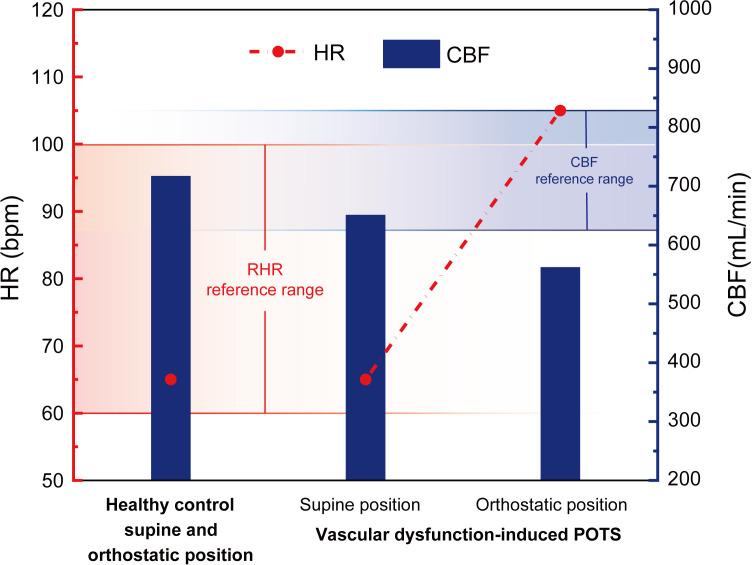
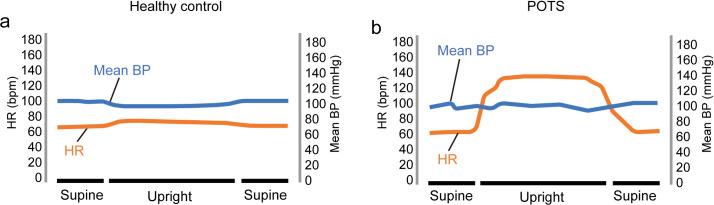
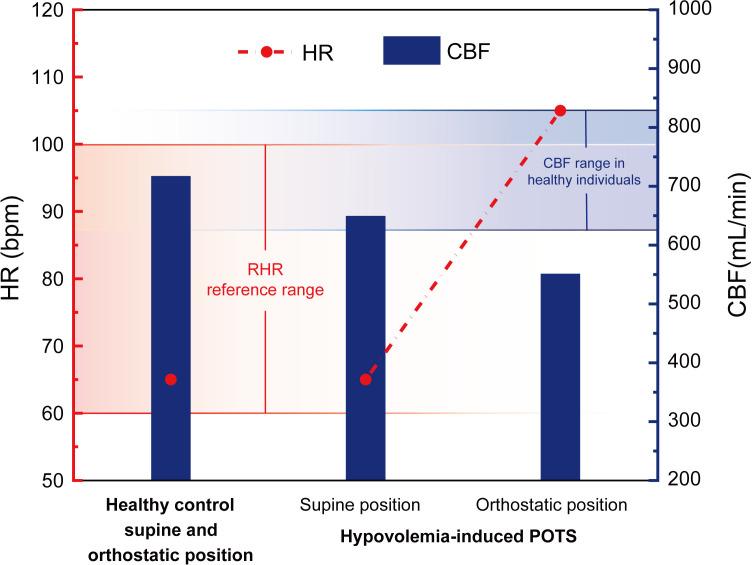
Postural Orthostatic Tachycardia Syndrome is characterized by an excessive increase in heart rate during postural changes without significant blood pressure alterations, often accompanied by symptoms such as dizziness, fatigue, and palpitations. While prior studies have explored potential mechanisms, the precise etiology and pathological basis of Postural Orthostatic Tachycardia Syndrome remain unclear, leading to treatments focused on symptom management rather than addressing root causes. This study employs a hemodynamic fluid-structure interaction model (using existing clinical data) to investigate the roles of hypovolemia, vascular dysfunction, and autonomic nervous system dysregulation in Postural Orthostatic Tachycardia Syndrome pathogenesis. Computational results revealed that hypovolemia reduces cerebral blood flow by approximately 100 mL/min due to a 30% decrease in blood volume, while vascular dysfunction-marked by a 50-100% increase in arterial stiffness-further diminishes cardiac output and cerebral perfusion. These conditions trigger compensatory tachycardia through autonomic feedback mechanisms. Our findings demonstrate that an insufficient cerebral blood supply, driven by hypovolemia and impaired vascular compliance, combined with autonomic dysregulation, underlies the hallmark tachycardia in Postural Orthostatic Tachycardia Syndrome. This mechanistic insight provides a foundation for targeted therapeutic strategies, emphasizing the need to address blood volume management, vascular elasticity, and autonomic balance to improve clinical outcomes.
体位性直立性心动过速综合征的特征是在体位变化时心率过度增加,而血压无明显改变,常伴有头晕、疲劳和心悸等症状。虽然先前的研究已经探索了潜在机制,但体位性直立性心动过速综合征的确切病因和病理基础仍不清楚,导致治疗主要集中在症状管理而非解决根本原因。本研究采用血流动力学流固耦合模型(利用现有临床数据)来研究血容量不足、血管功能障碍和自主神经系统失调在体位性直立性心动过速综合征发病机制中的作用。计算结果显示,血容量不足导致血容量减少30%,使脑血流量减少约100毫升/分钟,而以动脉僵硬度增加50%-100%为特征的血管功能障碍进一步降低心输出量和脑灌注。这些情况通过自主反馈机制引发代偿性心动过速。我们的研究结果表明,血容量不足和血管顺应性受损导致脑供血不足,再加上自主神经失调,是体位性直立性心动过速综合征标志性心动过速的基础。这一机制性见解为靶向治疗策略提供了基础,强调需要解决血容量管理、血管弹性和自主神经平衡问题,以改善临床结果。


 Zotero 插件