
风在使沿海合流制下水道溢流中的微塑料和纳米塑料气溶胶化方面的理论作用。
The theoretical role of the wind in aerosolising microplastics and nanoplastics from coastal combined sewer overflows.
作者信息
Biermann Lauren, Moffat David, Sabel Clive E, Stovin Thomas E
机构信息
School of Biological and Marine Sciences, University of Plymouth, Plymouth, PL4 8AA, UK.
Environmental Intelligence Group, Plymouth Marine Laboratory, Plymouth, PL1 3DH, UK.
出版信息
Sci Rep. 2025 Jul 2;15(1):23623. doi: 10.1038/s41598-025-06115-5.
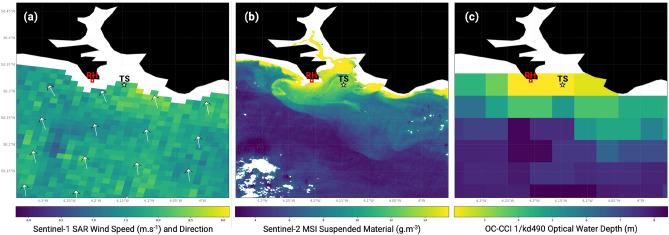
Inhaled microplastics and nanoplastics (MNPs) have shown bio-persistence in the body, with concerning implications for human health. Airborne MNPs primarily originate from terrestrial sources, but sea air may contribute when onshore 'aerosolising' winds coincide with high concentrations of MNPs in surface waters. From the thousands of cities worldwide with Combined Sewer Overflows, millions to billions of MNPs can be discharged daily into rivers, estuaries, and the sea. To assess the possible links between water pollution and air quality, we analysed two years of Combined Sewer Overflows (spills) off Plymouth, UK, alongside same-day and long-term meteorological and satellite data. Winds exceeding 6.5 m/s were applied as the theoretical threshold for marine aerosol production at the sea surface. From 2022 to 2023, sewer spills into Plymouth Sound coincided with onshore aerosolising winds for a minimum of 178 days. Specifically, MNPs may have been stripped from coastal spills and blown back inland for over 1,586 hours, amounting to at least 10% of the 2-year period. Surprisingly, rainfall was too weakly correlated with spills to be a predictor, with little to no precipitation for 18% of sewer overflow events overall. In the satellite data, river plumes coincident with spills remained detectable ~ 10 km offshore, and we observed a significant degradation in winter water clarity over the past decade. Given the global footprint of outdated sewage infrastructure, our findings suggest that coastal spills-when combined with onshore aerosolising winds-may serve as an overlooked source of airborne MNPs. To better understand potential exposure pathways, it is essential that future scientific studies integrate air quality monitoring with assessments of coastal water quality.
吸入的微塑料和纳米塑料(MNPs)已在体内表现出生物持久性,对人类健康产生了令人担忧的影响。空气中的MNPs主要源自陆地,但当陆上“雾化”风与地表水中高浓度的MNPs同时出现时,海洋空气也可能起到作用。在全球数千个存在合流制污水溢流的城市中,每天有数百万至数十亿的MNPs会排放到河流、河口和海洋中。为了评估水污染与空气质量之间的可能联系,我们分析了英国普利茅斯附近两年的合流制污水溢流(泄漏)情况,以及同日和长期的气象与卫星数据。超过6.5米/秒的风速被用作海面产生海洋气溶胶的理论阈值。在2022年至2023年期间,流入普利茅斯湾的污水泄漏与陆上雾化风同时出现的天数至少为178天。具体而言,MNPs可能已从沿海泄漏物中剥离并被吹回内陆超过1586小时,占两年时间的至少10%。令人惊讶的是,降雨与泄漏的相关性太弱,无法作为预测指标,在所有污水溢流事件中,有18%几乎没有降水。在卫星数据中,与泄漏同时出现的河流羽状物在离岸约10公里处仍可检测到,并且我们观察到在过去十年中冬季水体透明度显著下降。鉴于过时的污水基础设施在全球的分布,我们的研究结果表明,沿海泄漏物与陆上雾化风相结合时,可能是空气中MNPs的一个被忽视的来源。为了更好地了解潜在的暴露途径,未来的科学研究将空气质量监测与沿海水质评估相结合至关重要。




 Zotero 插件