
一种剂量定制的抗浆细胞方案可降低晚期心脏淀粉样变性的死亡率。
A Dose-Tailored Anti-Plasma Cell Regimen Lowers the Mortality of Late-Stage Cardiac Amyloidosis.
作者信息
Ti Yun, Yu Huaitao, Wang Ying, Ni Mei, Liu Tongtao, Wang Luqun, Zhang Cheng, Bu Peili, Zhang Yun
机构信息
State Key Laboratory for Innovation and Transformation of Luobing Theory, Key Laboratory of Cardiovascular Remodeling and Function Research of MOE, NHC, CAMS and Shandong Province, Department of Cardiology Qilu Hospital of Shandong University Jinan China.
Department of Hematology Qilu Hospital of Shandong University Jinan China.
出版信息
MedComm (2020). 2025 Jul 2;6(7):e70219. doi: 10.1002/mco2.70219. eCollection 2025 Jul.
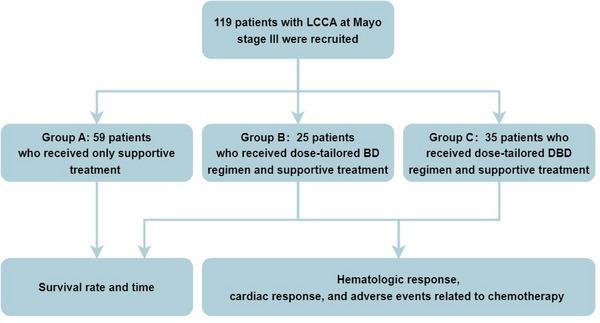
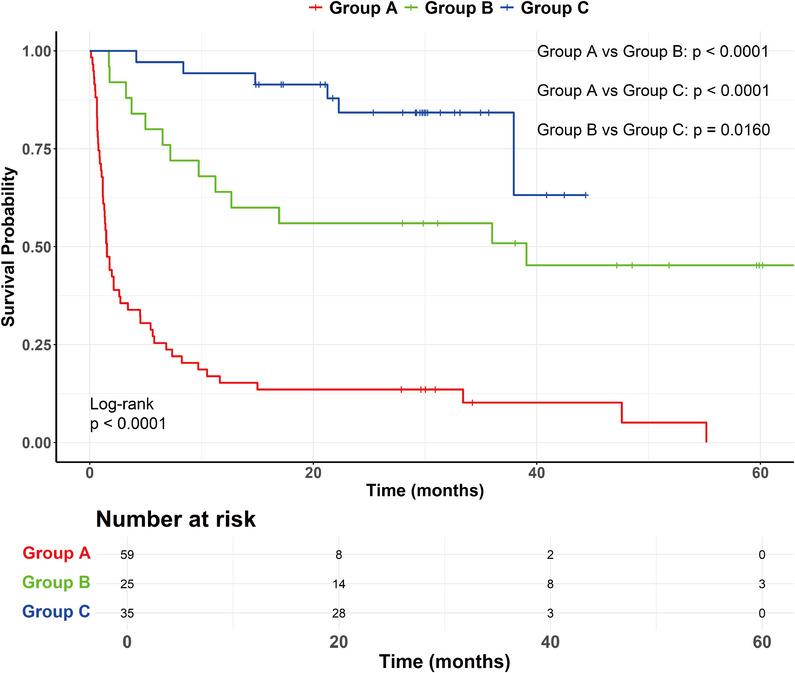
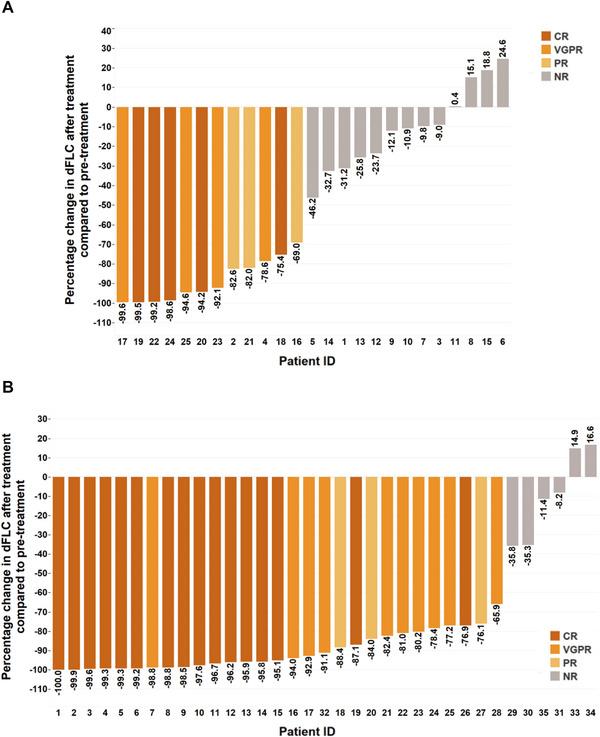
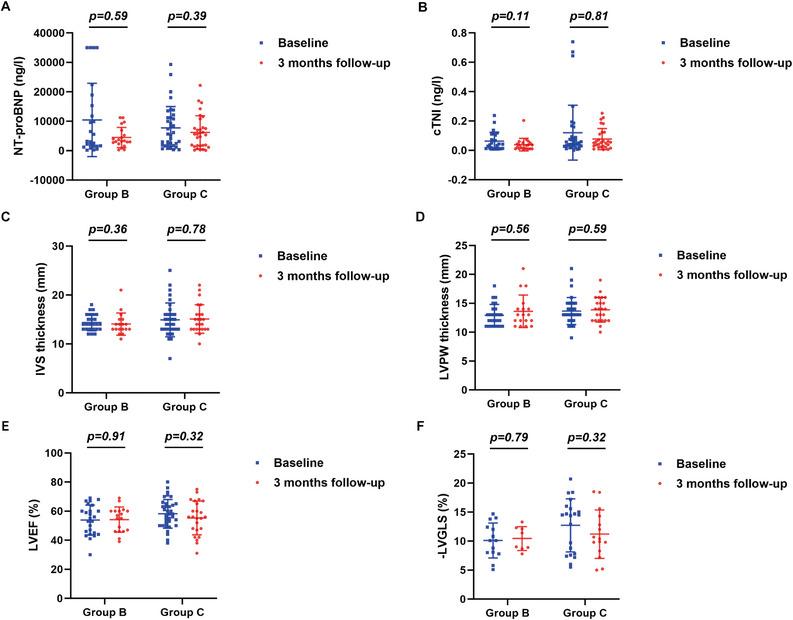
A major obstacle to using current guideline-recommended chemotherapy in patients with advanced light-chain cardiac amyloidosis (LCCA) is their intolerance to standard drug dosages. The study aimed to assess the efficacy and safety of the dose-tailored BD and DBD regimen proposed by our team for patients with LCCA at Mayo Stage III. A total of 119 patients who met the inclusion and exclusion criteria for cardiac amyloidosis were recruited and divided into three groups: group A, group B, and group C who received supportive therapy, dose-tailored BD regimen, and dose-tailored DBD regimen, respectively. Survival rate and time, hematologic and cardiac response, and adverse events were evaluated during a median follow-up of 30.2 months. No significant differences in baseline characteristics were found among the three groups. Group B and C showed increased survival rates and time compared to group A. Group C showed improved hematologic and cardiac responses relative to group B. Additionally, group C showed fewer adverse events related to chemotherapy compared to group B. Both dose-tailored BD and DBD regimens increased survival rates and time in advanced LCCA patients, with the dose-tailored DBD regimen demonstrating superior efficacy and safety. Further randomized clinical trials are needed to confirm these preliminary findings.
在晚期轻链型心脏淀粉样变性(LCCA)患者中,使用当前指南推荐的化疗方法的一个主要障碍是他们对标准药物剂量不耐受。本研究旨在评估我们团队提出的针对梅奥III期LCCA患者的剂量调整BD和DBD方案的疗效和安全性。总共招募了119名符合心脏淀粉样变性纳入和排除标准的患者,并将其分为三组:A组、B组和C组,分别接受支持性治疗、剂量调整BD方案和剂量调整DBD方案。在中位随访30.2个月期间评估生存率和生存时间、血液学和心脏反应以及不良事件。三组之间的基线特征未发现显著差异。与A组相比,B组和C组的生存率和生存时间有所增加。与B组相比,C组的血液学和心脏反应有所改善。此外,与B组相比,C组与化疗相关的不良事件更少。剂量调整BD和DBD方案均提高了晚期LCCA患者的生存率和生存时间,剂量调整DBD方案显示出更好的疗效和安全性。需要进一步的随机临床试验来证实这些初步发现。



 Zotero 插件