
纳米孔宏基因组第三代测序在肺癌患者感染诊断中的诊断价值
Diagnostic value of nanopore-based metagenomic third-generation sequencing in the diagnosis of infection in patients with lung cancer.
作者信息
Luo Yuyan, Cheng Wei, Ma Lei, Wang Tiantian, Shi Weirong
机构信息
Department of Medical Oncology, Affiliated Nantong Hospital of Shanghai University, Nantong, Jiangsu 226001, PR China.
Department of Respiratory Diseases, Tongzhou People's Hospital, Nantong, Jiangsu 226300, PR China.
出版信息
J Med Microbiol. 2025 Jul;74(7). doi: 10.1099/jmm.0.002031.
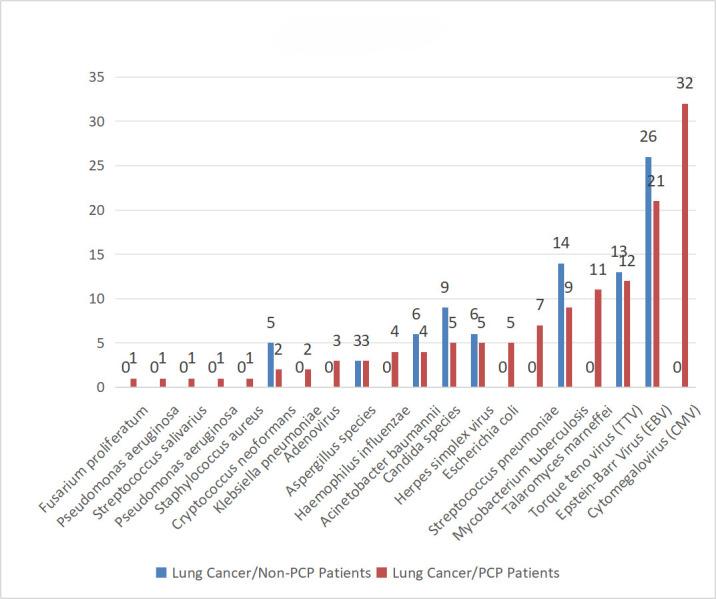
pneumonia (PJP, formerly known as pneumonia), an opportunistic fungal infection caused by the fungus , is a severe pulmonary infection that primarily affects immunocompromised patients, including those with lung cancer. Traditional diagnostic methods for PJP, such as Grocott-Gomori's methenamine silver staining and real-time PCR, have limitations, including low positivity and high missed diagnosis rates. Despite the critical need for accurate and sensitive diagnostic tools for PJP, especially in immunocompromised populations, existing methods fall short in providing the necessary reliability and efficiency. This study aims to evaluate the efficacy of nanopore-based metagenomic third-generation sequencing in diagnosing infection in lung cancer patients, hypothesizing that this approach may offer superior sensitivity and specificity. A prospective observational study was conducted on 118 lung cancer patients with suspected pulmonary infection at the Sixth Hospital of Nantong City, China, from January 2021 to December 2023. The identification of pathogens in bronchoalveolar lavage fluid samples was performed using both metagenomics and traditional tests. Metagenomics showed a significantly higher detection rate of (33.0%) compared to methenamine silver staining (4.2%) and real-time PCR (30.5%). The sensitivity, specificity and accuracy of metagenomics detection were all 100%, which is markedly superior to traditional methods. Furthermore, metagenomics also identified mixed infections with other pathogens, such as and Epstein-Barr virus. Metagenomics technology demonstrates high sensitivity and specificity in diagnosing infection, including mixed infections with other pathogens, in lung cancer patients. It provides a clear direction for clinical treatment and is a powerful tool for diagnosing PJP, contributing to improved diagnostic efficiency and accuracy, reducing misdiagnosis and missed diagnosis rates and improving clinical outcomes in these patients.
肺孢子菌肺炎(PJP,以前称为卡氏肺孢子虫肺炎)是由肺孢子菌引起的一种机会性真菌感染,是一种严重的肺部感染,主要影响免疫功能低下的患者,包括肺癌患者。PJP的传统诊断方法,如格罗特-戈莫里六胺银染色和实时PCR,存在局限性,包括阳性率低和漏诊率高。尽管迫切需要用于PJP的准确、灵敏的诊断工具,尤其是在免疫功能低下人群中,但现有方法在提供必要的可靠性和效率方面存在不足。本研究旨在评估基于纳米孔的宏基因组第三代测序在诊断肺癌患者肺孢子菌感染中的疗效,假设这种方法可能具有更高的敏感性和特异性。2021年1月至2023年12月,在中国南通市第六医院对118例疑似肺部肺孢子菌感染的肺癌患者进行了一项前瞻性观察研究。使用宏基因组学和传统检测方法对支气管肺泡灌洗 fluid样本中的病原体进行鉴定。与六胺银染色(4.2%)和实时PCR(30.5%)相比,宏基因组学显示肺孢子菌的检出率显著更高(33.0%)。宏基因组学检测的敏感性、特异性和准确性均为100%,明显优于传统方法。此外,宏基因组学还鉴定出与其他病原体的混合感染,如曲霉和EB病毒。宏基因组学技术在诊断肺癌患者的肺孢子菌感染(包括与其他病原体的混合感染)方面显示出高敏感性和特异性。它为临床治疗提供了明确的方向,是诊断PJP的有力工具,有助于提高诊断效率和准确性,降低误诊和漏诊率,并改善这些患者的临床结局。
 Zotero 插件