
东地中海区域宫颈癌筛查的障碍与促进因素:一项系统综述
Barriers and facilitators to cervical cancer screening in the Eastern Mediterranean Region: a systematic review.
作者信息
Rezapour Ramin, Saadati Mohammad, Sarsour Hassan, Mahmoud Lamia, Zareipour Moradali, Khezri Soma
机构信息
Tabriz Health Services Management Research Centre, Tabriz University of Medical Sciences, Tabriz, Iran.
Department of Public Health, Khoy University of Medical Sciences, Khoy, Iran.
出版信息
BMC Public Health. 2025 Jul 3;25(1):2370. doi: 10.1186/s12889-025-23532-3.
BACKGROUND
Cervical cancer is the sixth most common cancer among women in Eastern Mediterranean Region. Although screening is recommended as the early detection policy to enable timely intervention, women across the region face diverse factors that either facilitate or hinder their participation in screening programmes. We aimed to systematically identify facilitators and barriers to cervical cancer screening (CCS) uptake among women in EMR countries.
METHODS
This systematic review was conducted in 2024 (Prospero code = CRD42023443818). Literature search was performed using the PICO framework through Web of Sciences, Scopus, Science Direct, Embase and WHO Index Medicus for the Eastern Mediterranean Region (IMEMR) databases. PRISMA algorithm was followed for literature screening independently by two researchers. Extracted data were categorised based on Andersen and Newman Framework of Health Services Utilization.
RESULTS
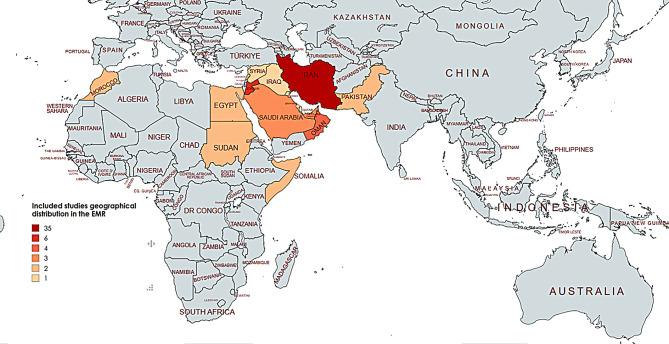
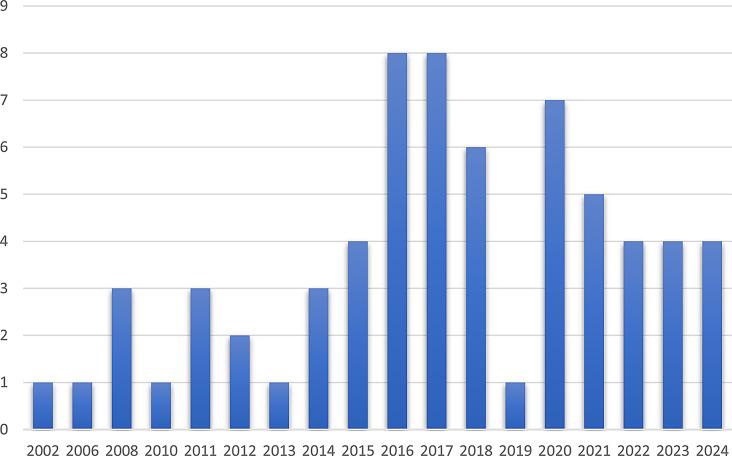
Out of 234 studies identified, 66 met the inclusion criteria. Iran and Jordan contributed the highest number of included articles. Predisposing factors at the individual and health system-related were categorised into demographics, social structure and beliefs. Enabling individual items were classified at personal/family and community levels, whereas health system-related factors were grouped into health policy, financing and organizational domains. Need factors were designated solely as individual determinants and accordingly grouped into perceived and evaluated CCS facilitators or barriers.
CONCLUSIONS
Cervical cancer screening uptake in EMR countries is influenced by a complex interplay of individual, social, and health system-related factors. These were categorised into predisposing, enabling and need-based determinants require multi-level strategies to be addressed. Despite the existing supportive regional policies, persistent barriers such as lack of awareness, stigma, financial constraints, and limited access to services continue to pose significant challenges. These findings offer a foundation for future policy adaptation and programme development in countries of the EMR.
背景
宫颈癌是东地中海区域女性中第六大常见癌症。尽管推荐进行筛查作为早期检测策略以实现及时干预,但该区域的女性面临着各种促进或阻碍她们参与筛查项目的因素。我们旨在系统地确定东地中海区域国家女性接受宫颈癌筛查(CCS)的促进因素和障碍。
方法
这项系统评价于2024年进行(国际系统评价注册平台编号 = CRD42023443818)。通过科学网、Scopus、科学Direct、Embase和世界卫生组织东地中海区域医学索引(IMEMR)数据库,使用PICO框架进行文献检索。由两名研究人员独立遵循PRISMA算法进行文献筛选。提取的数据根据安德森和纽曼卫生服务利用框架进行分类。
结果
在确定的234项研究中,66项符合纳入标准。伊朗和约旦贡献的纳入文章数量最多。个体和卫生系统相关的易患因素分为人口统计学、社会结构和信念。促成因素在个人/家庭和社区层面进行分类,而卫生系统相关因素分为卫生政策、筹资和组织领域。需求因素仅被指定为个体决定因素,并相应地分为感知到的和评估出的CCS促进因素或障碍。
结论
东地中海区域国家的宫颈癌筛查接受情况受到个体、社会和卫生系统相关因素复杂相互作用的影响。这些因素分为易患、促成和基于需求的决定因素,需要采取多层次策略来解决。尽管存在现有的支持性区域政策,但诸如缺乏意识、耻辱感、经济限制和服务获取有限等持续障碍仍然构成重大挑战。这些发现为东地中海区域国家未来的政策调整和项目开发提供了基础。



 Zotero 插件