
利用β细胞复制:推进糖尿病再生疗法的分子见解
Harnessing beta-cell replication: advancing molecular insights to regenerative therapies in diabetes.
作者信息
Vasavada Rupangi C, Dhawan Sangeeta
机构信息
Department of Translational Research and Cellular Therapeutics, Arthur Riggs Diabetes and Metabolism Research Institute, City of Hope, Duarte, CA, United States.
出版信息
Front Endocrinol (Lausanne). 2025 Jun 19;16:1612576. doi: 10.3389/fendo.2025.1612576. eCollection 2025.
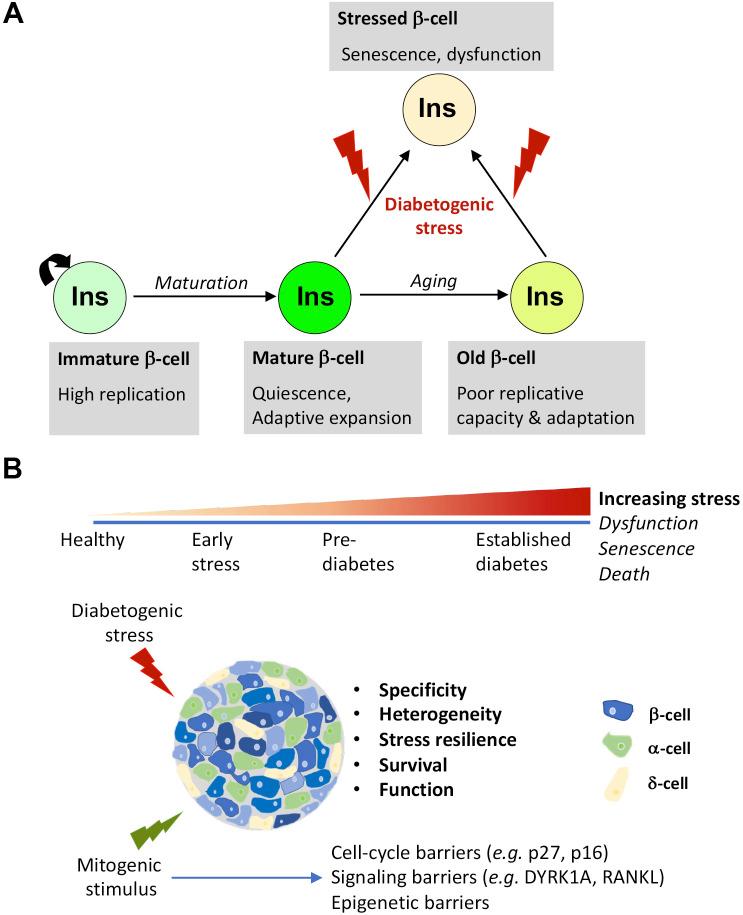
Diminished functional beta-cell mass is a key pathogenic mechanism underlying both type 1 and type 2 diabetes (T1D and T2D), precipitated by the progressive impairment of insulin secretion, loss of cellular identity, and ultimately, beta-cell death. The replenishment of beta-cell deficit through the transplantation of pancreatic islets from cadaveric donors or beta-cells derived from human embryonic stem cells has shown transformative therapeutic potential. However, the regeneration of functional beta-cell mass remains an important therapeutic goal, as a more physiological and scalable approach. Effective beta-cell replenishment must address the underlying causes of beta-cell loss, such as cellular stress and autoimmunity, while simultaneously promoting beta-cell regeneration, function, and survival. Advances in the mechanistic underpinnings of beta-cell differentiation, growth, and survival, coupled with cutting-edge high-throughput screening methods have accelerated the discovery of novel therapeutic targets and small-molecule interventions. Current strategies for beta-cell expansion include modulating the cell-cycle to promote replication, reprogramming non-beta-cell lineages into beta-cells, and enhancing beta-cell survival. However, the limited regenerative capacity and inherently high stress sensitivity of beta-cells pose significant barriers to their expansion, further complicated by the fundamental conflict between replication and functional maintenance, and the high vulnerability of replicating cells in a metabolically stressed environment. There has been tremendous progress in developing approaches that simultaneously promote beta-cell expansion and function. In this review, we discuss the recent advances in beta-cell expansion, along with remaining challenges and emerging opportunities to address them.
功能性β细胞量减少是1型和2型糖尿病(T1D和T2D)潜在的关键致病机制,其由胰岛素分泌的进行性损害、细胞特性丧失以及最终的β细胞死亡所引发。通过移植尸体供体的胰岛或源自人类胚胎干细胞的β细胞来补充β细胞不足已显示出变革性的治疗潜力。然而,功能性β细胞量的再生仍然是一个重要的治疗目标,作为一种更具生理性和可扩展性的方法。有效的β细胞补充必须解决β细胞丢失的根本原因,如细胞应激和自身免疫,同时促进β细胞再生、功能和存活。β细胞分化、生长和存活的机制基础研究进展,以及前沿的高通量筛选方法加速了新型治疗靶点和小分子干预措施的发现。目前β细胞扩增的策略包括调节细胞周期以促进复制、将非β细胞谱系重编程为β细胞以及提高β细胞存活率。然而,β细胞有限的再生能力和固有的高应激敏感性对其扩增构成了重大障碍,复制与功能维持之间的根本冲突以及代谢应激环境中复制细胞的高脆弱性进一步加剧了这一问题。在开发同时促进β细胞扩增和功能的方法方面已经取得了巨大进展。在这篇综述中,我们讨论了β细胞扩增的最新进展,以及剩余的挑战和应对这些挑战的新机遇。
 Zotero 插件