
林奇综合征与结直肠癌:分子遗传学与临床策略的当前观点综述
Lynch syndrome and colorectal cancer: A review of current perspectives in molecular genetics and clinical strategies.
作者信息
Gómez-Molina Raquel, Martínez Raquel, Suárez Miguel, Peña-Cabia Ana, Calderón MARíA CONCEPCIóN, Mateo Jorge
机构信息
Department of Laboratory Medicine, Virgen de la Luz Hospital, Cuenca, 16002, Spain.
Gastroenterology Department, Virgen de la Luz Hospital, Cuenca, 16002, Spain.
出版信息
Oncol Res. 2025 Jun 26;33(7):1531-1545. doi: 10.32604/or.2025.063951. eCollection 2025.
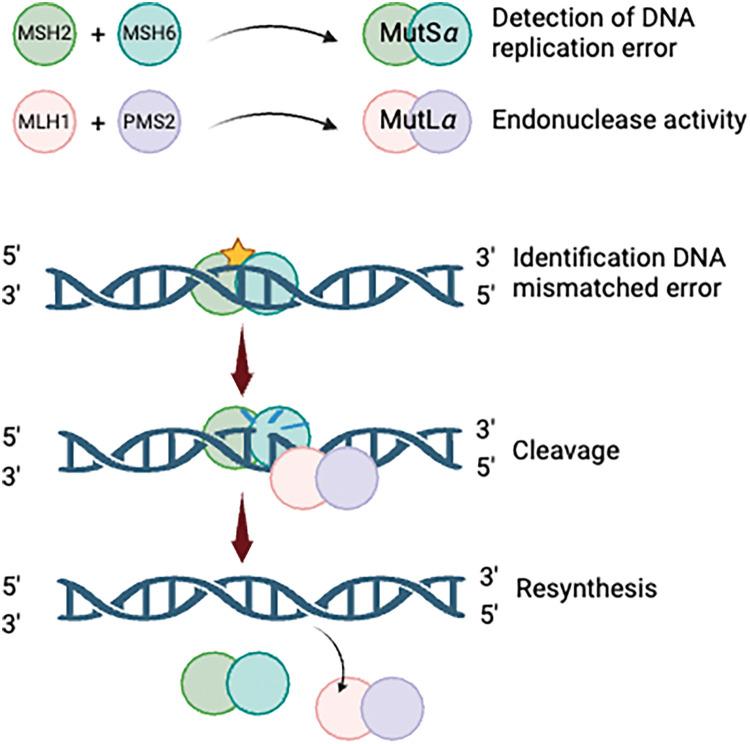
Lynch syndrome (LS), also known as hereditary non-polyposis colorectal cancer (HNPCC), is an inherited condition associated with a higher risk of colorectal cancer (CRC) and other cancers. It is caused by germline mutations in DNA mismatch repair (MMR) genes, including and . These mutations lead to microsatellite instability (MSI) and defective DNA repair mechanisms, resulting in increased cancer risk. Early detection of LS is crucial for effective management and cancer prevention. Endoscopic surveillance, particularly regular colonoscopy, is recommended for individuals with LS to detect CRC at early stages. Additionally, universal screening of CRC for MMR deficiency can help identify at-risk individuals. Genetic counseling plays a valuable role in LS by guiding patients and their families in understanding the genetic basis, making informed decisions regarding surveillance and prevention, and offering reproductive options to reduce the transmission of pathogenic variants of the offspring. The aim of this review is to outline current strategies for the diagnosis, surveillance, and management of LS, with a focus on the role of genetic counseling, endoscopic screening, and emerging therapeutic approaches to mitigate cancer risk in affected individuals.
林奇综合征(LS),也称为遗传性非息肉病性结直肠癌(HNPCC),是一种遗传性疾病,与结直肠癌(CRC)及其他癌症的发病风险增加相关。它由DNA错配修复(MMR)基因的种系突变引起,包括 和 。这些突变导致微卫星不稳定性(MSI)和有缺陷的DNA修复机制,从而增加癌症风险。LS的早期检测对于有效管理和癌症预防至关重要。对于LS患者,建议进行内镜监测,尤其是定期结肠镜检查,以便在早期阶段检测出CRC。此外,对CRC进行MMR缺陷的普遍筛查有助于识别高危个体。遗传咨询在LS中发挥着重要作用,指导患者及其家属了解遗传基础,就监测和预防做出明智决策,并提供生殖选择以减少致病变异传给后代。本综述的目的是概述当前LS的诊断、监测和管理策略,重点关注遗传咨询、内镜筛查以及减轻受影响个体癌症风险的新兴治疗方法的作用。

 Zotero 插件