
释放肿瘤靶向肽在精准肿瘤学中的潜力。
Unlocking the potential of tumor-targeting peptides in precision oncology.
作者信息
Rehman Hafiz Muhammad, Ahmad Sidra, Sarwar Azeem, Bashir Hamid
机构信息
University Institute of Medical Lab Technology, Faculty of Allied Health Sciences, The University of Lahore, Lahore, 54590, Pakistan.
Centre for Applied Molecular Biology, 87-West Canal, Bank Road, University of the Punjab, Lahore, 53700, Pakistan.
出版信息
Oncol Res. 2025 Jun 26;33(7):1547-1570. doi: 10.32604/or.2025.062197. eCollection 2025.
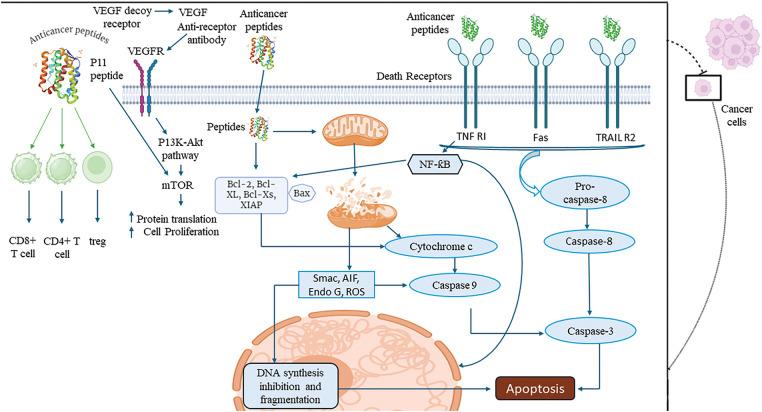
Targeted cancer therapy has emerged as a promising alternative to conventional chemotherapy, which is often plagued by poor selectivity, off-target effects, and drug resistance. Among the various targeting agents in development, peptides stand out for their unique advantages, including minimal immunogenicity, high tissue penetration, and ease of modification. Their small size, specificity, and flexibility allow them to target cancer cells while minimizing damage to healthy tissue selectively. Peptide-based therapies have shown great potential in enhancing the efficacy of drug delivery, improving tumor imaging, and reducing adverse effects. With cancer responsible for millions of deaths worldwide, the development of peptide-based therapeutics offers new hope in addressing the limitations of current treatments. As detailed studies on different aspects of targeting peptides are crucial for optimizing drug development, this review provides a comprehensive overview of the literature on tumor-targeting peptides, including their structure, sources, modes of action, and their application in cancer therapy-both as standalone agents and in fusion drugs. Additionally, various computational tools for peptide-based tumor-targeting drug design and validation are explored. The promising results from these studies highlight peptides as ideal candidates for targeted cancer therapies, offering valuable insights for researchers and accelerating the discovery of novel anti-tumor peptide base drug candidates.
靶向癌症治疗已成为传统化疗的一种有前景的替代方案,传统化疗常常受到选择性差、脱靶效应和耐药性的困扰。在各种正在研发的靶向药物中,肽因其独特优势脱颖而出,包括免疫原性极小、组织穿透力强以及易于修饰。它们的小尺寸、特异性和灵活性使它们能够靶向癌细胞,同时选择性地将对健康组织的损害降至最低。基于肽的疗法在提高药物递送效率、改善肿瘤成像以及减少不良反应方面已显示出巨大潜力。鉴于癌症在全球导致数百万人死亡,基于肽的治疗方法的开发为解决当前治疗方法的局限性带来了新希望。由于对靶向肽不同方面的详细研究对于优化药物开发至关重要,本综述全面概述了关于肿瘤靶向肽的文献,包括它们的结构、来源、作用方式以及它们在癌症治疗中的应用——既作为单独的药物,也作为融合药物。此外,还探讨了用于基于肽的肿瘤靶向药物设计和验证的各种计算工具。这些研究取得的有前景的结果突出了肽作为靶向癌症治疗的理想候选药物,为研究人员提供了有价值的见解,并加速了新型抗肿瘤肽基候选药物的发现。

 Zotero 插件