
昼夜节律时钟、新陈代谢与炎症——炎症性肠病的三位一体。
The circadian clock, metabolism, and inflammation-the holy trinity of inflammatory bowel diseases.
作者信息
Froy Oren, Weintraub Yael
机构信息
Institute of Biochemistry, Food Science and Nutrition, The Robert H. Smith Faculty of Agriculture, Food and Environment, The Hebrew University of Jerusalem, Rehovot, Israel.
Institute of Gastroenterology, Nutrition and Liver Diseases, Schneider Children's Medical Center of Israel, Petach Tikva, Petach Tikva, Israel.
出版信息
Clin Sci (Lond). 2025 Jul 4;139(13):777-90. doi: 10.1042/CS20256383.
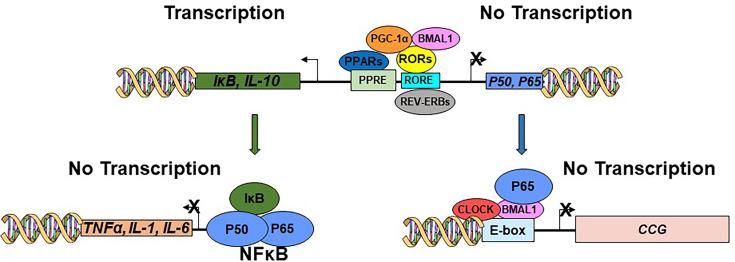
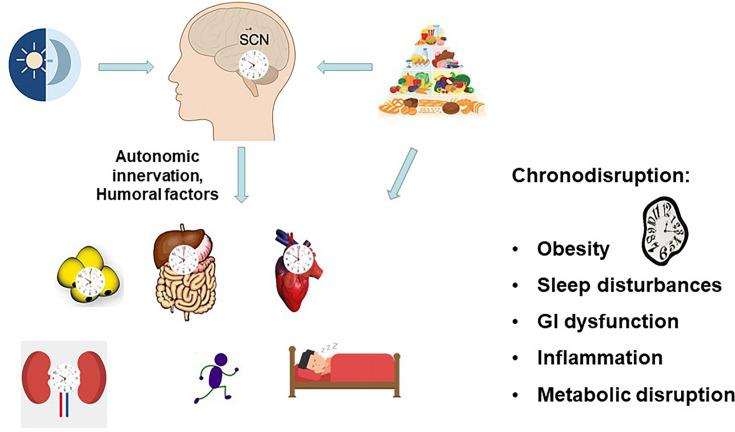
Inflammatory bowel diseases (IBDs), including Crohn's disease and ulcerative colitis, are characterized by relapsing-remitting immune activation and inflammation within the gastrointestinal tract. The immune system activity displays diurnal variation, which is regulated by the circadian clock. This is achieved by modulating the number of circulating lymphocytes, antibody production, cytokine production, host- pathogen interactions, and the activation of innate and adaptive immunity around the circadian cycle. Indeed, intestinal biopsies and peripheral blood cells obtained from patients with active IBD demonstrated reduced circadian clock gene expression. Key clock regulatory proteins, such as retinoic acid receptor-related orphan receptors, REV-ERBs, peroxisome proliferator-activated receptors (PPARs), PPARγ transcriptional co-activator 1α, adenosine monophosphate-activated protein kinase and Sirtuin 1, have a dual function as they regulate clock gene expression as well as the expression of certain pro- and anti-inflammatory factors through the NF-κB signaling pathway. All the aforementioned clock regulatory proteins are also key regulators of metabolism. Thus, these factors form a complex triangular network that regulates the circadian clock, inflammation, and metabolism. Emerging data support the notion that clock disruption is associated with inflammation and aberrant metabolic regulation and that regulators of the circadian clock may play a role in inflammatory and metabolic processes. In this review, we will focus on the interrelations among the circadian clock, metabolism, and inflammation in IBD.
炎症性肠病(IBDs),包括克罗恩病和溃疡性结肠炎,其特征是胃肠道内反复出现免疫激活和炎症。免疫系统活动呈现昼夜变化,这受生物钟调节。这是通过在昼夜周期中调节循环淋巴细胞数量、抗体产生、细胞因子产生、宿主与病原体相互作用以及固有免疫和适应性免疫的激活来实现的。实际上,从活动性IBD患者获取的肠道活检组织和外周血细胞显示生物钟基因表达降低。关键的生物钟调节蛋白,如维甲酸受体相关孤儿受体、REV-ERBs、过氧化物酶体增殖物激活受体(PPARs)、PPARγ转录共激活因子1α、腺苷单磷酸激活蛋白激酶和沉默调节蛋白1,具有双重功能,因为它们既调节生物钟基因表达,又通过核因子κB信号通路调节某些促炎和抗炎因子的表达。上述所有生物钟调节蛋白也是代谢的关键调节因子。因此,这些因素形成一个复杂的三角网络,调节生物钟、炎症和代谢。新出现的数据支持这样的观点,即生物钟紊乱与炎症和异常代谢调节相关,并且生物钟调节因子可能在炎症和代谢过程中起作用。在本综述中,我们将聚焦于IBD中生物钟、代谢和炎症之间的相互关系。


 Zotero 插件