
数字赋能受阻:德国全国性横断面患者调查研究中的数字医疗应用差距
Digital empowerment on hold: DiGA adoption gaps-a German national cross-sectional patient survey study.
作者信息
Kremer Phillip, Fink Daniel, Morf Harriet, Labinsky Hannah, Gente Karolina, Aries Peer, Krusche Martin, Muehlensiepen Felix, Kuhn Sebastian, Hueber Axel, Knitza Johannes
机构信息
Division of Rheumatology and Systemic Inflammtory Diseases, III. Department of Medicine, University Medical Center Hamburg-Eppendorf, Hamburg, Germany.
Rheumazentrum Mittelhessen, Bad Endbach, Germany.
出版信息
Rheumatol Int. 2025 Jul 4;45(7):165. doi: 10.1007/s00296-025-05922-3.
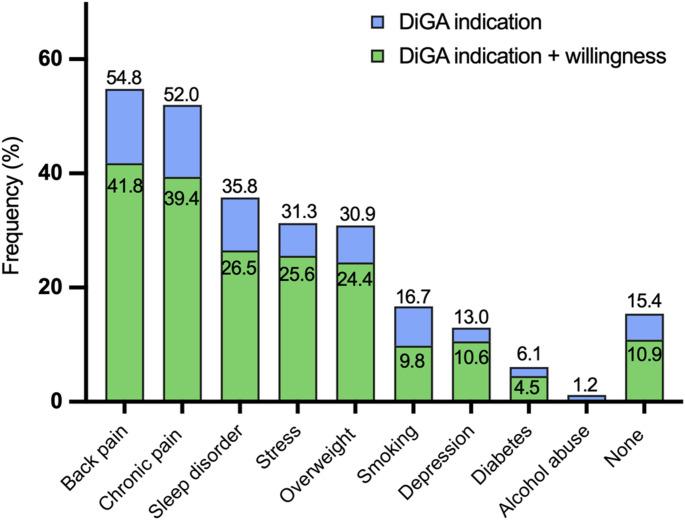
Digital health applications (DiGAs), prescribable and reimbursed in Germany since 2020, have the potential to enhance patient self-management. This study aimed to assess rheumatology patients' awareness, willingness to use, suitability, and actual adoption of DiGAs. Between February 17 and April 8, 2025, adult patients attending seven German rheumatology outpatient clinics completed an electronic survey. A total of 246 patients participated (mean age 50.4 years; 71.1% female), with most treated at university hospitals (59.8%). The predominant diagnoses were rheumatoid arthritis (41.1%), psoriatic arthritis (18.3%), and axial spondyloarthritis (10.2%). While only 19.5% reported prior use of medical apps, 39.8% were aware of DiGAs, and 12.6% had used one. Notably, 84.6% reported at least one comorbidity matching an approved DiGA indication, most commonly back pain (54.8%), chronic pain (52.0%), and sleep disorders (35.8%). A majority expressed willingness to regularly use a DiGA (72.4%) and were open to recommendations from their rheumatologists or health insurers (72.8%). Additionally, 76.0% showed interest in a rheumatology-specific DiGA. Despite high interest and relevant comorbidities among patients, current DiGA use was limited. These findings underscore the need for targeted implementation strategies to increase uptake and realize the full potential of digital health applications in rheumatology care. The results also emphasize the need for rheumatologists to actively educate and guide their patients regarding the availability and potential benefits of DiGAs.
数字健康应用程序(DiGAs)自2020年起在德国可开具处方并报销,具有增强患者自我管理的潜力。本研究旨在评估风湿病患者对DiGAs的认知度、使用意愿、适用性以及实际采用情况。在2025年2月17日至4月8日期间,德国七家风湿病门诊诊所的成年患者完成了一项电子调查。共有246名患者参与(平均年龄50.4岁;71.1%为女性),大多数患者在大学医院接受治疗(59.8%)。主要诊断为类风湿性关节炎(41.1%)、银屑病关节炎(18.3%)和轴性脊柱关节炎(10.2%)。虽然只有19.5%的患者报告曾使用过医疗应用程序,但39.8%的患者知晓DiGAs,12.6%的患者使用过一种DiGAs。值得注意的是,84.6%的患者报告至少有一种合并症与获批的DiGAs适应症相符,最常见的是背痛(54.8%)、慢性疼痛(52.0%)和睡眠障碍(35.8%)。大多数患者表示愿意定期使用DiGAs(72.4%),并接受风湿病医生或健康保险公司的推荐(72.8%)。此外,76.0%的患者对特定于风湿病的DiGAs表现出兴趣。尽管患者兴趣浓厚且存在相关合并症,但目前DiGAs的使用仍然有限。这些发现强调了需要有针对性的实施策略来提高DiGAs的采用率,并实现数字健康应用程序在风湿病护理中的全部潜力。研究结果还强调了风湿病医生需要积极教育和指导患者了解DiGAs的可用性和潜在益处。

 Zotero 插件