
基于机器学习的策略识别出用于阿尔茨海默病的脑脊液中强大的蛋白质生物标志物组。
Machine-learning based strategy identifies a robust protein biomarker panel for Alzheimer's disease in cerebrospinal fluid.
作者信息
Hou Xiaosen, Qiu Yunjie, Li Hui, Yan Yan, Zhao Dongxu, Ji Simei, Ni Junjun, Zhang Jun, Liu Kefu, Qing Hong, Quan Zhenzhen
机构信息
Key Laboratory of Molecular Medicine and Biotherapy, School of Life Science, Beijing Institute of Technology, Beijing, China.
Department of Biology, Shenzhen MSU-BIT University, Shenzhen, Guangdong Province, China.
出版信息
Alzheimers Res Ther. 2025 Jul 4;17(1):147. doi: 10.1186/s13195-025-01789-5.
BACKGROUND
The complex pathogenesis of Alzheimer's disease (AD) has resulted in limited current biomarkers for its classification and diagnosis, necessitating further investigation into reliable universal biomarkers or combinations.
METHODS
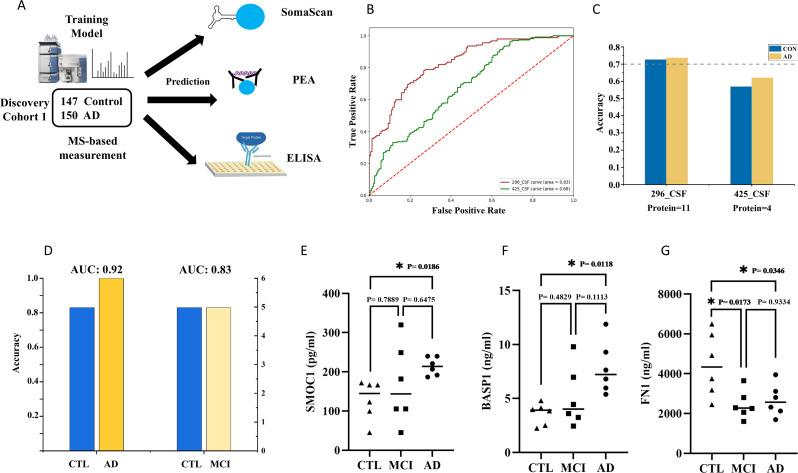
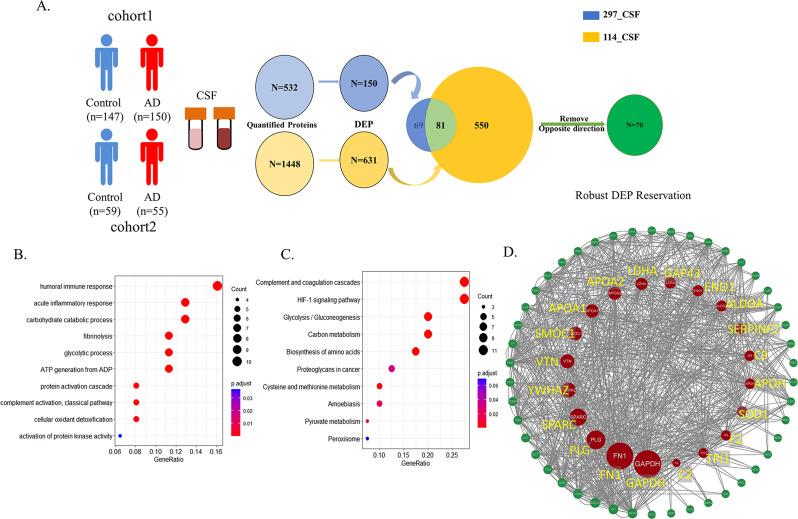
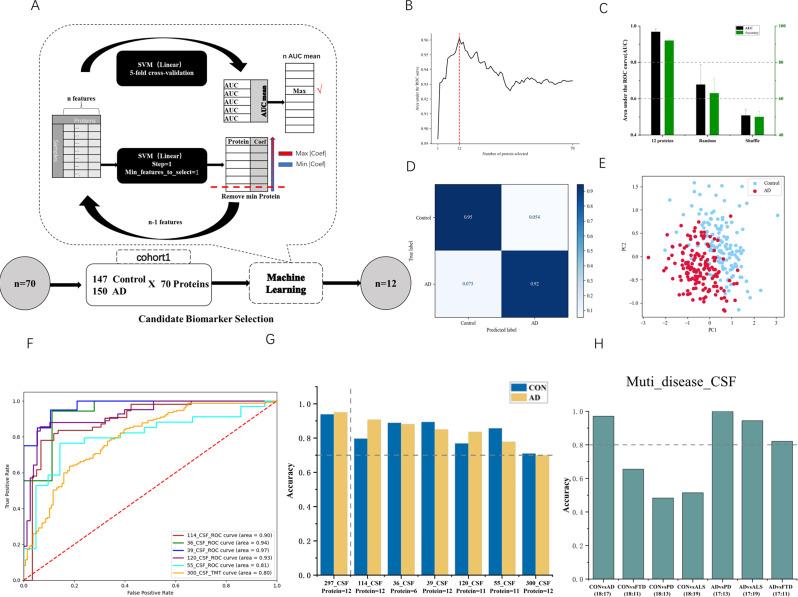
In this work, we collect multiple CSF proteomics datasets and build a universal diagnose model by SVM-RFECV method combined with equal sample size and standard normalization design. The model was training in 297_CSF and then test the effect in other datasets.
RESULTS
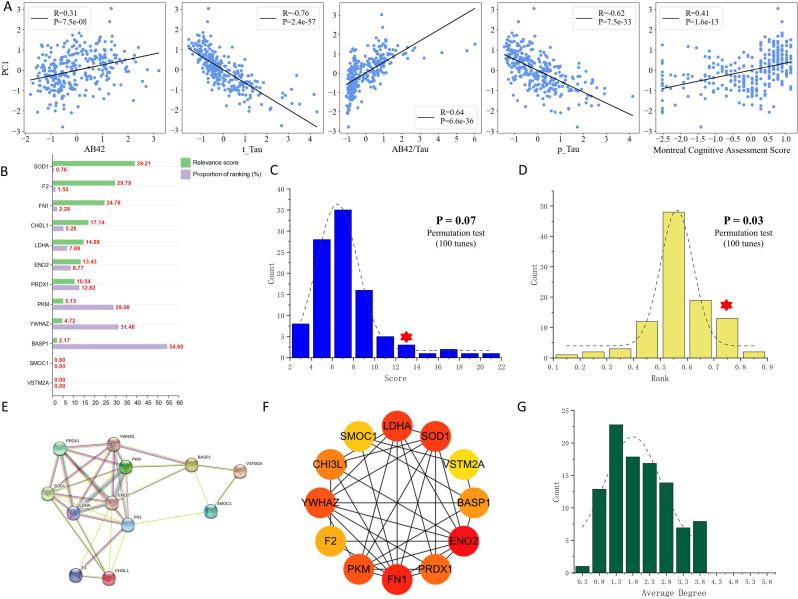
Utilizing machine learning, we identify a 12-protein panel from cerebrospinal fluid proteomic datasets. The universal diagnosis model demonstrated strong diagnostic capability and high accuracy across ten different AD cohorts across different countries and different detection technologies. These proteins involved in various biological processes related to AD and shows a tight correlation with established AD pathogenic biomarkers, including amyloid-β, tau/p-tau, and the Montreal Cognitive Assessment score. The high accuracy in the model may due to multiple protein combination based on comprehensive pathogenesis and different AD progress. Furthermore, it effectively differentiates AD from mild cognitive impairment (MCI) and other neurodegenerative disorders, especially the frontotemporal dementia (FTD), which share similar pathogenesis as AD.
CONCLUSION
This study highlights a high accuracy, robustness and compatibility model of 12-protein panel whose detection is even based on label-free, TMT and DIA mass spectrometry or ELISA technologies, implicating its potential prospect in clinical application.
背景
阿尔茨海默病(AD)复杂的发病机制导致目前用于其分类和诊断的生物标志物有限,因此有必要进一步研究可靠的通用生物标志物或生物标志物组合。
方法
在本研究中,我们收集了多个脑脊液蛋白质组学数据集,并通过支持向量机-递归特征消除法(SVM-RFECV)结合等样本量和标准归一化设计构建了一个通用诊断模型。该模型在297_CSF数据集上进行训练,然后在其他数据集上测试其效果。
结果
利用机器学习,我们从脑脊液蛋白质组学数据集中鉴定出一个由12种蛋白质组成的蛋白组。该通用诊断模型在来自不同国家、采用不同检测技术的10个不同AD队列中均表现出强大的诊断能力和高准确性。这些蛋白质参与了与AD相关的各种生物学过程,并与已确立的AD致病生物标志物,包括淀粉样蛋白-β、tau/p-tau以及蒙特利尔认知评估得分,呈现出紧密的相关性。该模型的高准确性可能归因于基于综合发病机制和不同AD进展的多种蛋白质组合。此外,它能有效地区分AD与轻度认知障碍(MCI)以及其他神经退行性疾病,尤其是与AD发病机制相似的额颞叶痴呆(FTD)。
结论
本研究突出了一个由12种蛋白质组成的蛋白组具有高准确性、稳健性和兼容性的模型,其检测甚至基于无标记、串联质谱标签(TMT)和数据独立采集(DIA)质谱法或酶联免疫吸附测定(ELISA)技术,这暗示了其在临床应用中的潜在前景。

 Zotero 插件