
铁死亡在脂多糖诱导的肉鸡肠道炎症中的作用
Involvement of ferroptosis in lipopolysaccharide-induced intestinal inflammation in broilers.
作者信息
Chen Yi-Ting, Liu Ching-Hsuan, Lin Yuan-Yu
机构信息
Department of Animal Science and Technology, National Taiwan University, Taipei City, Taiwan.
Department of Animal Science and Technology, National Taiwan University, Taipei City, Taiwan.
出版信息
Poult Sci. 2025 Jul 3;104(10):105512. doi: 10.1016/j.psj.2025.105512.
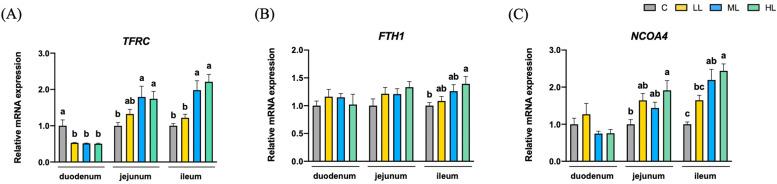
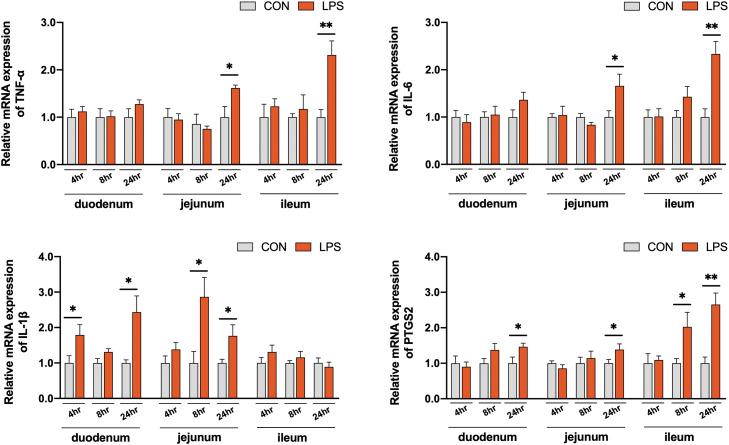
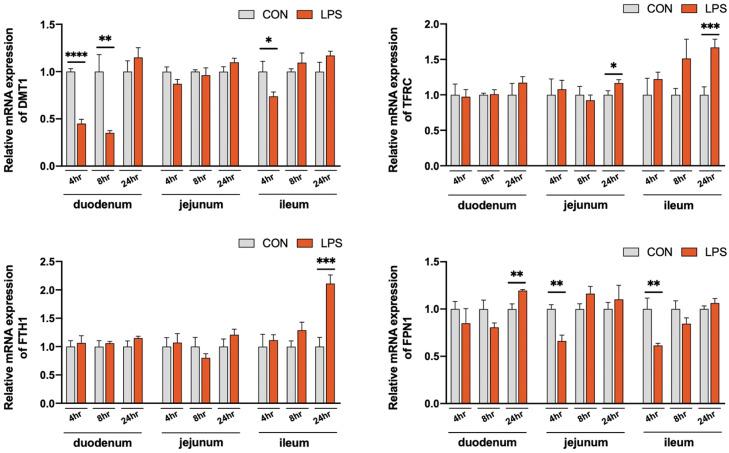
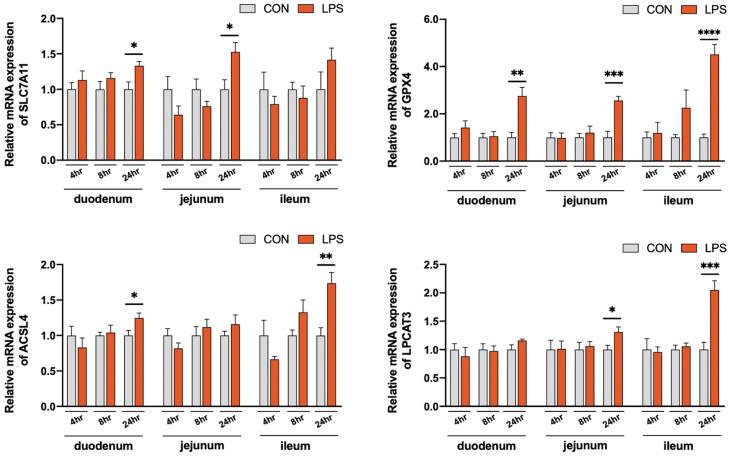
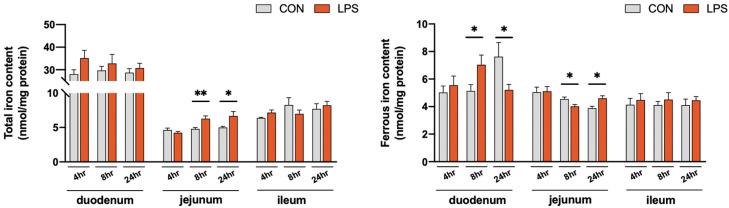
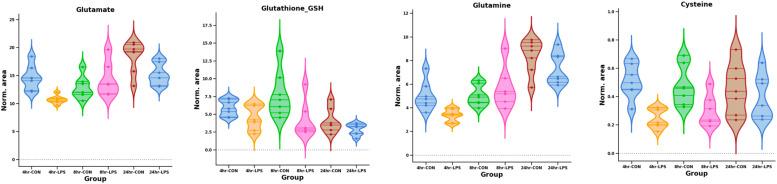
This study aimed to investigate whether lipopolysaccharide (LPS)-induced intestinal inflammation involves ferroptosis and its impact on broiler gut health. Two animal trials were conducted. In the first trial, 192 ROSS 308 broilers were randomly assigned to four groups and intraperitoneally injected with either 0.9 % sterile saline (control) or different doses of LPS (0.5, 1.0, and 5.0 mg/kg body weight) on days 16, 18, and 20. The results suggested that ferroptosis-related changes might occur in the intestine at the 5.0 mg/kg LPS dose, but the effects were not significant. Thus, a second trial was conducted with a shorter observation period. In this trial, 42 broilers were administered 5.0 mg/kg LPS or saline and sampled at 4, 8, and 24 h after the final injection to analyze ferroptosis-related markers in the intestine. Results showed that high-dose LPS significantly affected broiler growth performance, reducing average daily gain (ADG) and increasing feed conversion ratio (FCR). Intestinal morphology analysis revealed a decrease in villus height and an increase in crypt depth in the LPS-treated group, indicating intestinal structural damage. Quantitative PCR (qPCR) analysis demonstrated significant alterations in the expression of ferroptosis-related genes (e.g., FTH1, NCOA4, GPX4, ACSL4) in the intestinal tissue following LPS treatment. Additionally, LPS administration elevated total iron and ferrous iron levels in the intestine, further supporting the involvement of ferroptosis in inflammation. Metabolomic analysis indicated significant changes in specific intestinal metabolites associated with ferroptosis and inflammatory responses. In conclusion, this study confirms that LPS induces intestinal inflammation in broilers and may exacerbate damage through ferroptosis, providing valuable insights for developing nutritional strategies to improve broiler gut health.
本研究旨在探讨脂多糖(LPS)诱导的肠道炎症是否涉及铁死亡及其对肉鸡肠道健康的影响。进行了两项动物试验。在第一项试验中,192只ROSS 308肉鸡被随机分为四组,并在第16、18和20天腹腔注射0.9%无菌生理盐水(对照组)或不同剂量的LPS(0.5、1.0和5.0 mg/kg体重)。结果表明,在LPS剂量为5.0 mg/kg时,肠道可能发生与铁死亡相关的变化,但影响不显著。因此,进行了第二项观察期较短的试验。在该试验中,给42只肉鸡施用5.0 mg/kg LPS或生理盐水,并在最后一次注射后4、8和24小时取样,以分析肠道中与铁死亡相关的标志物。结果显示,高剂量LPS显著影响肉鸡生长性能,降低平均日增重(ADG)并提高饲料转化率(FCR)。肠道形态分析显示,LPS处理组绒毛高度降低,隐窝深度增加,表明肠道结构受损。定量PCR(qPCR)分析表明,LPS处理后肠道组织中与铁死亡相关的基因(如FTH1、NCOA4、GPX4、ACSL4)表达发生显著变化。此外,施用LPS可提高肠道中的总铁和亚铁水平,进一步支持铁死亡参与炎症反应。代谢组学分析表明,与铁死亡和炎症反应相关的特定肠道代谢物发生了显著变化。总之,本研究证实LPS可诱导肉鸡肠道炎症,并可能通过铁死亡加剧损伤,为制定改善肉鸡肠道健康的营养策略提供了有价值的见解。




 Zotero 插件