
从人子宫内膜组织建立三维极性反转类器官作为感染诱导性子宫内膜炎的模型
The Establishment of 3D Polarity-Reversed Organoids From Human Endometrial Tissue as a Model for Infection-Induced Endometritis.
作者信息
Zhang Xin, Zhang Li, Fan Linyuan, Liu Zhaohui
机构信息
Department of Gynecology, Beijing Obstetrics and Gynecology Hospital, Capital Medical University, Beijing Maternal and Child Health Care Hospital, Beijing, China.
出版信息
Bio Protoc. 2025 Jun 20;15(12):e5349. doi: 10.21769/BioProtoc.5349.
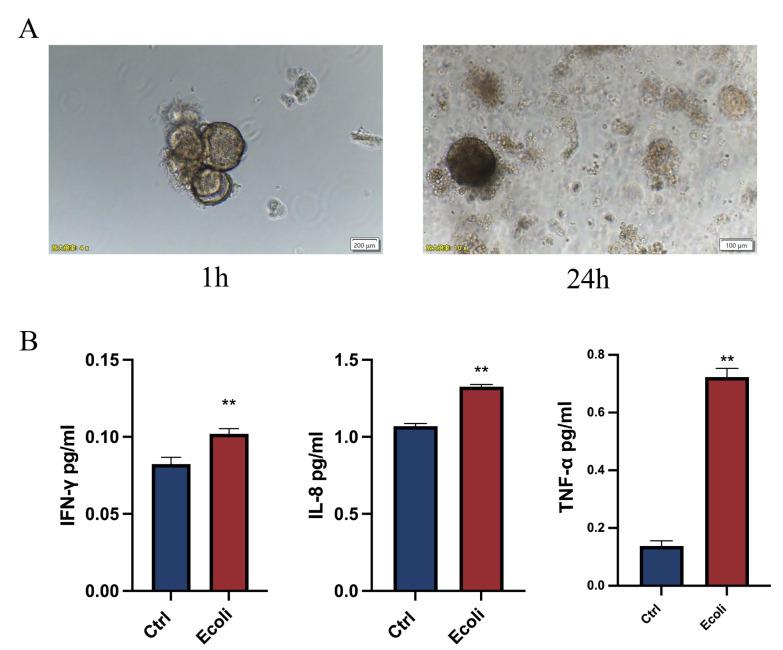
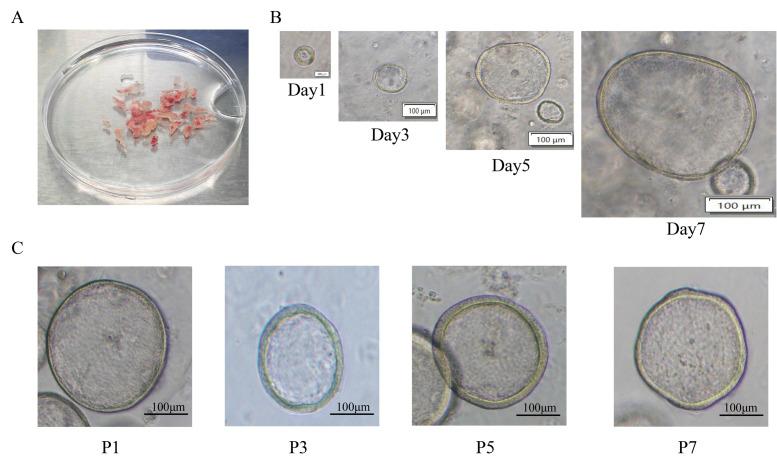
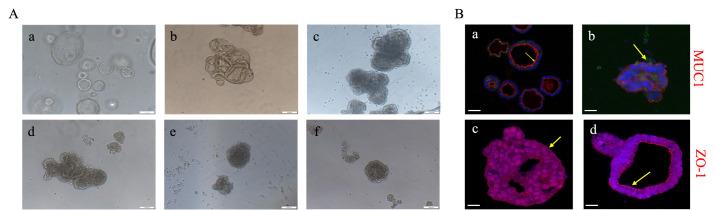
Endometritis is a prevalent gynecological condition, often resulting from bacterial infections, which poses significant risks to women's reproductive health, including recurrent pregnancy loss, spontaneous abortion, and intrauterine adhesions. While conventional in vitro models have provided valuable insights into the pathogenesis of bacterial-induced endometritis, they often fail to replicate the complex cellular architecture and microenvironment of the endometrium due to species-specific differences and variations in the menstrual cycle. In this study, we present a novel organoid-based culture system that establishes a bacterial-induced endometritis model using endometrial organoids derived from primary epithelial cells. This protocol involves culturing endometrial organoids in a Matrigel-based three-dimensional matrix, followed by infection with at a defined multiplicity of infection (MOI). The model effectively recapitulates key pathological features of bacterial-induced endometritis, including disruption of the epithelial barrier, release of inflammatory cytokines, and cellular damage. By preserving epithelial polarity, this approach offers enhanced physiological relevance, improves host-pathogen interaction studies, and provides a robust platform for evaluating potential therapeutic interventions. Key features • Establishes apical-out endometrial organoids to model pathogen-induced endometritis via natural infection routes. • Utilizes primary human endometrial epithelial cells to preserve cellular diversity and mimic the native endometrial microenvironment. • Provides a versatile platform for investigating host-pathogen interactions and evaluating potential therapeutic interventions in bacterial-induced endometritis. • Developed apical-out endometrial organoids to better mimic tissue structure and enhance pathogen infection for host-pathogen interaction studies.
子宫内膜炎是一种常见的妇科疾病,通常由细菌感染引起,对女性生殖健康构成重大风险,包括反复流产、自然流产和宫腔粘连。虽然传统的体外模型为细菌感染所致子宫内膜炎的发病机制提供了有价值的见解,但由于物种特异性差异和月经周期的变化,它们往往无法复制子宫内膜复杂的细胞结构和微环境。在本研究中,我们提出了一种基于类器官的新型培养系统,该系统使用源自原代上皮细胞的子宫内膜类器官建立细菌感染所致子宫内膜炎模型。该方案包括在基于基质胶的三维基质中培养子宫内膜类器官,然后以确定的感染复数(MOI)进行感染。该模型有效地概括了细菌感染所致子宫内膜炎的关键病理特征,包括上皮屏障破坏、炎性细胞因子释放和细胞损伤。通过保持上皮极性,这种方法具有更高的生理相关性,改善宿主-病原体相互作用研究,并为评估潜在的治疗干预措施提供了一个强大的平台。关键特性 • 通过自然感染途径建立顶端向外的子宫内膜类器官,以模拟病原体诱导的子宫内膜炎。 • 利用原代人子宫内膜上皮细胞来保持细胞多样性并模拟天然子宫内膜微环境。 • 为研究宿主-病原体相互作用和评估细菌感染所致子宫内膜炎的潜在治疗干预措施提供了一个通用平台。 • 开发顶端向外的子宫内膜类器官以更好地模拟组织结构并增强病原体感染,用于宿主-病原体相互作用研究。
 Zotero 插件