
芦荟素介导的头颈部鳞状细胞癌中STAT3/SLC7A11信号通路调控的机制研究
Mechanistic insights into Aloin-mediated regulation of STAT3/SLC7A11 signaling in head and neck squamous cell carcinoma.
作者信息
Wang Li-Jian, Wang Jun
机构信息
Graduate School, Zhejiang Chinese Medical University, Hangzhou, 310000 Zhejiang China.
Stomatology Department, Lishui People's Hospital (The First Affiliated Hospital of Lishui University), Lishui, 323000 Zhejiang China.
出版信息
Cytotechnology. 2025 Aug;77(4):137. doi: 10.1007/s10616-025-00798-4. Epub 2025 Jul 3.
UNLABELLED
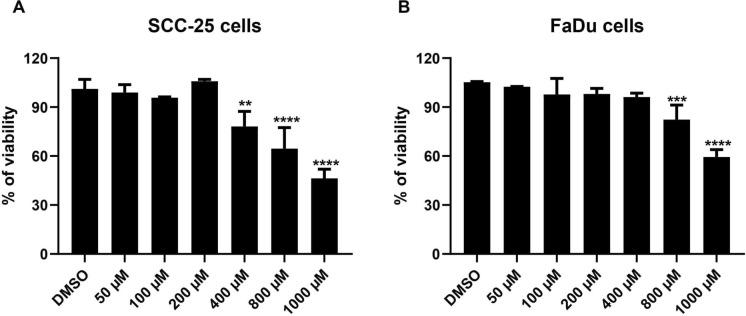
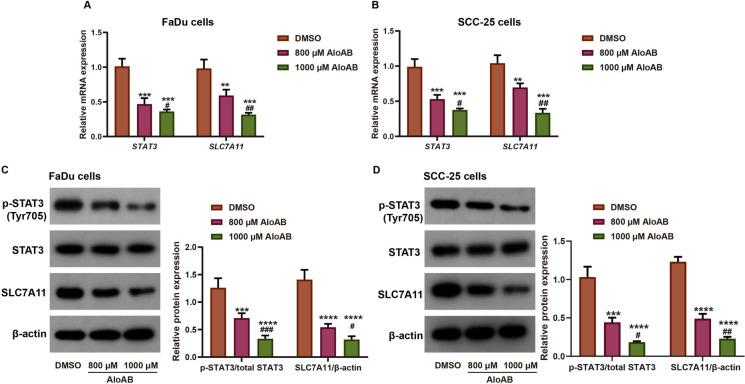
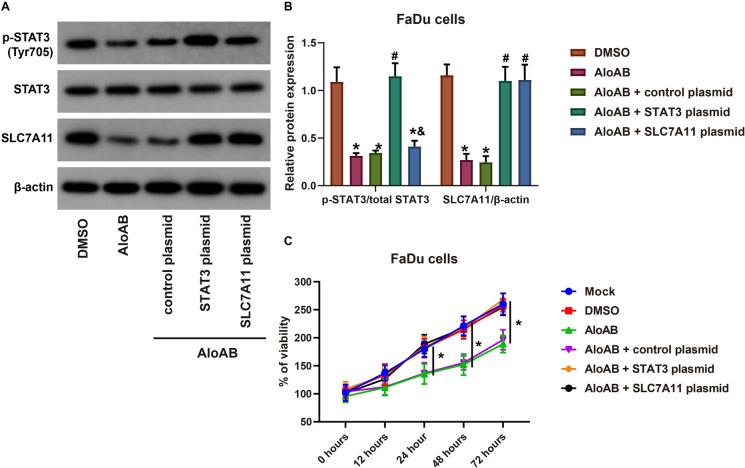
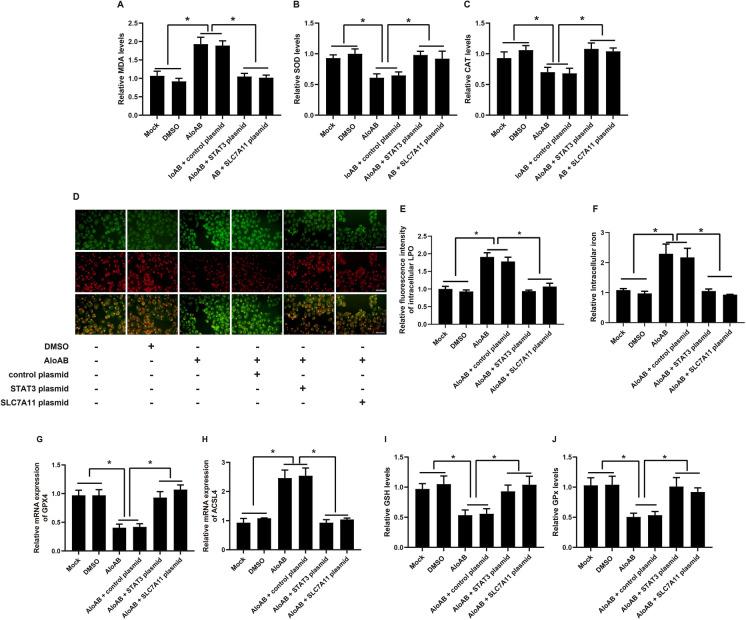
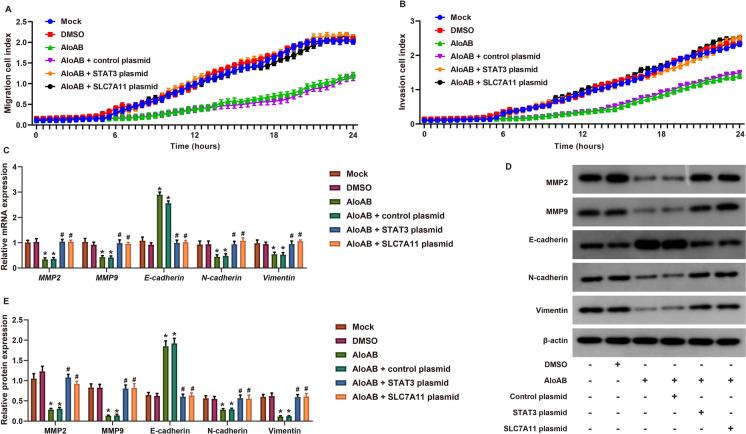
This study aims to investigate the mechanisms by which Aloin (AloAB) mediates the signal transducer and activator of transcription 3 (STAT3)/solute carrier family 7 member 11 (SLC7A11) signaling pathway in head and neck squamous cell carcinoma (HNSCC). HNSCC cells were treated with 50-1000 μM AloAB to assess dose-dependent cytotoxicity and its effects on the STAT3/SLC7A11 pathway. CRISPR activation plasmids were used to overexpress STAT3 or SLC7A11 in FaDu cells. Subsequent analyses included migration and invasion assays, lipid peroxidation (LPO) assay, intracellular iron assay, as well as the measurement of oxidative stress markers and ferroptosis-related factors. Epithelial-mesenchymal transition (EMT) markers and matrix metalloproteinase (MMP) expression levels were also assessed. AloAB treatment significantly reduced cell viability in HNSCC cells at higher concentrations. It inhibited FaDu cell proliferation, migration, invasion, and epithelial-mesenchymal transition (EMT), while downregulating STAT3/SLC7A11 expression. Additionally, AloAB induced oxidative stress and ferroptosis, as indicated by elevated malondialdehyde (MDA), Acyl-CoA Synthetase Long-Chain Family Member 4 (ACSL4), lipid peroxidation (LPO), and iron levels, alongside decreased levels of superoxide dismutase (SOD), catalase (CAT), glutathione peroxidase 4 (GPX4), reduced glutathione (GSH), and glutathione peroxidase (GPx). Overexpression of STAT3 or SLC7A11 reversed these effects, restoring oxidative stress markers and ferroptosis-related factors to control levels. Moreover, the suppression of EMT was alleviated by the upregulation of E-cadherin and the downregulation of N-cadherin, Vimentin, MMP2, and MMP9. AloAB exerts anti-tumor effects on HNSCC cells by inhibiting the STAT3/SLC7A11 signaling pathway, inducing oxidative stress, ferroptosis, and suppression of migration, invasion, and EMT.
SUPPLEMENTARY INFORMATION
The online version contains supplementary material available at 10.1007/s10616-025-00798-4.
未标注
本研究旨在探讨芦荟素(AloAB)在头颈部鳞状细胞癌(HNSCC)中介导信号转导和转录激活因子3(STAT3)/溶质载体家族7成员11(SLC7A11)信号通路的机制。用50 - 1000μM的AloAB处理HNSCC细胞,以评估剂量依赖性细胞毒性及其对STAT3/SLC7A11通路的影响。使用CRISPR激活质粒在FaDu细胞中过表达STAT3或SLC7A11。后续分析包括迁移和侵袭试验、脂质过氧化(LPO)试验、细胞内铁试验,以及氧化应激标志物和铁死亡相关因子的测定。还评估了上皮-间质转化(EMT)标志物和基质金属蛋白酶(MMP)的表达水平。高浓度的AloAB处理显著降低了HNSCC细胞的活力。它抑制了FaDu细胞的增殖、迁移、侵袭和上皮-间质转化(EMT),同时下调了STAT3/SLC7A11的表达。此外,AloAB诱导了氧化应激和铁死亡,表现为丙二醛(MDA)、酰基辅酶A合成酶长链家族成员4(ACSL4)、脂质过氧化(LPO)和铁水平升高,同时超氧化物歧化酶(SOD)、过氧化氢酶(CAT)、谷胱甘肽过氧化物酶4(GPX4)、还原型谷胱甘肽(GSH)和谷胱甘肽过氧化物酶(GPx)水平降低。STAT3或SLC7A11的过表达逆转了这些作用,使氧化应激标志物和铁死亡相关因子恢复到对照水平。此外,E-钙黏蛋白的上调和N-钙黏蛋白、波形蛋白、MMP2和MMP9的下调减轻了EMT的抑制。AloAB通过抑制STAT3/SLC7A11信号通路、诱导氧化应激、铁死亡以及抑制迁移、侵袭和EMT对HNSCC细胞发挥抗肿瘤作用。
补充信息
在线版本包含可在10.1007/s10616-025-00798-4获取的补充材料。

 Zotero 插件