
糖尿病足沟通时间:糖尿病足管理中有效沟通的框架
Diabetic Foot Talk-Time: framework for effective communication in diabetic foot management.
作者信息
Cacciatore Lavinia, Meloni Marco
机构信息
Master of Diabetic Podopathy, University of Rome Tor Vergata, Rome, Italy.
Diabetic Foot Unit, Department of Internal Medicine, University of Rome "Tor Vergata", Rome, Italy.
出版信息
Front Clin Diabetes Healthc. 2025 Jun 23;6:1590570. doi: 10.3389/fcdhc.2025.1590570. eCollection 2025.
INTRODUCTION
Diabetic foot syndrome is a prevalent and costly chronic complication of diabetes mellitus, linked to high mortality rates and significant psychological and social burdens. These challenges exacerbate the disease's impact and can hinder the ability of healthcare professionals to effectively connect with patients. Therapeutic education and effective communication can play crucial roles in fostering patient empowerment and adherence to care, which can help reduce frustration for both patients and caregivers. However, there is currently a lack of specific guidelines to direct healthcare professionals in diabetic foot care. This study employs a mixed-methods approach, integrating a systematic literature review and a cross-sectional survey, to evaluate existing communication strategies and develop a structured digital framework aimed at improving diabetic foot care. The research focuses on reviewing recent literature (from the past five years) on effective communication and therapeutic education in the prevention and management of Diabetic Foot Syndrome. Additionally, it includes an analysis of existing manuals on communication strategies and a descriptive survey to assess professional-patient and interprofessional communication challenges, identify areas for improvement, and measure levels of awareness among diabetic patients.
MATERIALS AND METHODS
The literature review was conducted using the PICO method on the Medline database through PubMed, yielding 273 articles, of which eight were selected for in-depth analysis. A survey, conducted over four months, included 165 participants divided into professional and diabetic groups, each receiving targeted questionnaires.
RESULTS
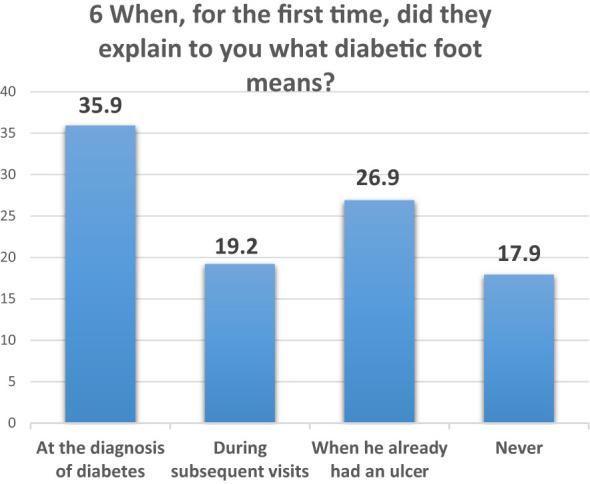
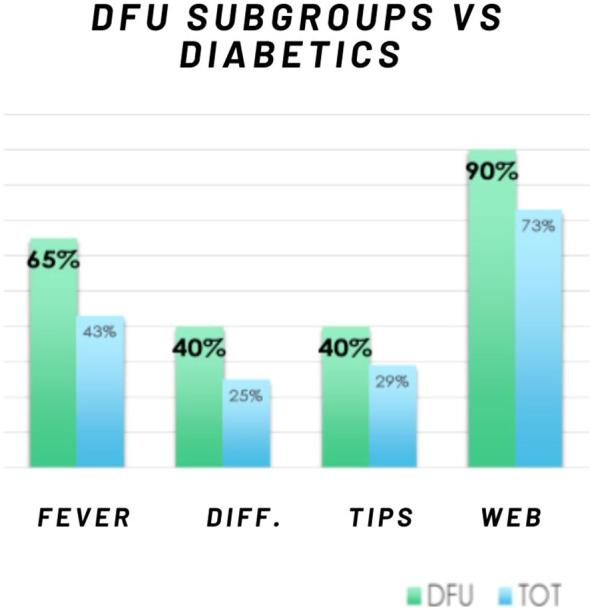
The analysis of selected articles and communication manuals highlighted key themes aligned with the study's objectives. Findings emphasized that self-management, effective communication, professional training in therapeutic education, and the use of information and communication technologies (ICT) are essential to improving patient adherence to diabetic foot care and optimizing therapeutic outcomes. Survey results revealed that a large proportion of diabetic patients reported either not receiving information on diabetic foot syndrome from healthcare professionals or only receiving it post-complication, leading many to seek information online. Both professionals and patients acknowledged that online resources enhance adherence to care.
DISCUSSION
The study underscores the need for reliable, accessible resources, including multimedia support for active health education aimed at both healthcare professionals and diabetic patients at risk of foot complications. Based on these findings, a prototype framework was developed-a web platform designed to support professionals and diabetic patients with features such as daily podiatric routines, alert systems, instructional images, and practical examples to integrate into clinical practice. Additionally, the platform includes a community space for feedback and interprofessional communication. The vision is to develop a mobile application a "virtual network of connection" designed to enhance the training of healthcare professionals and improve the care of diabetics with at-risk feet. This online framework could serve as a valuable tool to motivate and guide both professionals and patients along a path of effective prevention and care. By integrating into a secure web-based health network, it aims to provide accessible, reliable resources for better management of diabetic foot health.
引言
糖尿病足综合征是糖尿病常见且代价高昂的慢性并发症,与高死亡率以及重大的心理和社会负担相关。这些挑战加剧了疾病的影响,并可能阻碍医护人员与患者有效沟通的能力。治疗性教育和有效沟通在促进患者自我管理和坚持治疗方面可发挥关键作用,这有助于减轻患者和护理人员的挫败感。然而,目前缺乏指导医护人员进行糖尿病足护理的具体指南。本研究采用混合方法,将系统文献综述与横断面调查相结合,以评估现有的沟通策略,并开发一个结构化的数字框架,旨在改善糖尿病足护理。该研究重点回顾了最近五年关于糖尿病足综合征预防和管理中有效沟通及治疗性教育的文献。此外,还包括对现有沟通策略手册的分析以及一项描述性调查,以评估医患之间和跨专业沟通的挑战、确定改进领域,并衡量糖尿病患者的认知水平。
材料与方法
通过PubMed在Medline数据库上使用PICO方法进行文献综述,共检索到273篇文章,其中8篇被选中进行深入分析。一项为期四个月的调查包括165名参与者,分为专业人员组和糖尿病患者组,每组都收到针对性的问卷。
结果
对所选文章和沟通手册的分析突出了与研究目标一致的关键主题。研究结果强调,自我管理、有效沟通、治疗性教育方面的专业培训以及信息通信技术(ICT)的使用对于提高患者对糖尿病足护理的依从性和优化治疗效果至关重要。调查结果显示,很大一部分糖尿病患者表示未从医护人员那里获得关于糖尿病足综合征的信息,或者仅在出现并发症后才获得相关信息,这导致许多患者在网上寻求信息。专业人员和患者都承认在线资源有助于提高对治疗的依从性。
讨论
该研究强调需要可靠、易于获取的资源,包括为有足部并发症风险的医护人员和糖尿病患者提供积极健康教育的多媒体支持。基于这些发现,开发了一个原型框架——一个网络平台,旨在通过每日足部护理常规、警报系统、教学图片和实际案例等功能来支持专业人员和糖尿病患者,并将这些功能整合到临床实践中。此外,该平台还包括一个用于反馈和跨专业沟通的社区空间。设想是开发一个移动应用程序——一个“虚拟连接网络”,旨在加强医护人员的培训,并改善对有足部风险的糖尿病患者的护理。这个在线框架可以作为一个有价值的工具,激励和指导专业人员和患者走上有效的预防和护理之路。通过整合到一个安全的基于网络的健康网络中,它旨在提供易于获取、可靠的资源,以更好地管理糖尿病足健康。





 Zotero 插件