
山竹和百香果的营养、药理及工业应用:综述
Nutritional, Pharmacological and Industrial Applications of Mangosteen and Passion Fruit: A Review.
作者信息
Arshad Muhammad Tayyab, Basher Nosiba S, Ibrahim Nasir A, Ikram Ali, Maqsood Sammra, Rasheed Amara, Naveed Feroza, Waqar Muhammad, Raza Awais, Noreen Sana, Al M K M, Ahmad Muhammad, Hussain Mahreen Faqeer, Jebreen Ali, Al-Farga Ammar
机构信息
Functional Food and Nutrition Program, Faculty of Agro-Industry Prince of Songkla University Hatyai, Songkhla Thailand.
University Institute of Food Science and Technology The University of Lahore Lahore Pakistan.
出版信息
Food Sci Nutr. 2025 Jul 7;13(7):e70574. doi: 10.1002/fsn3.70574. eCollection 2025 Jul.
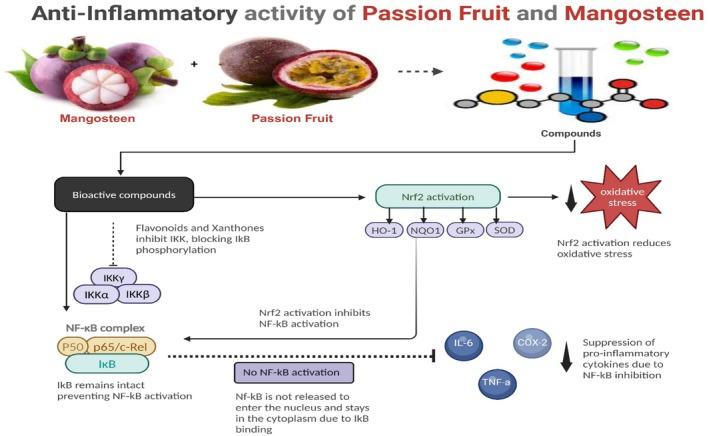
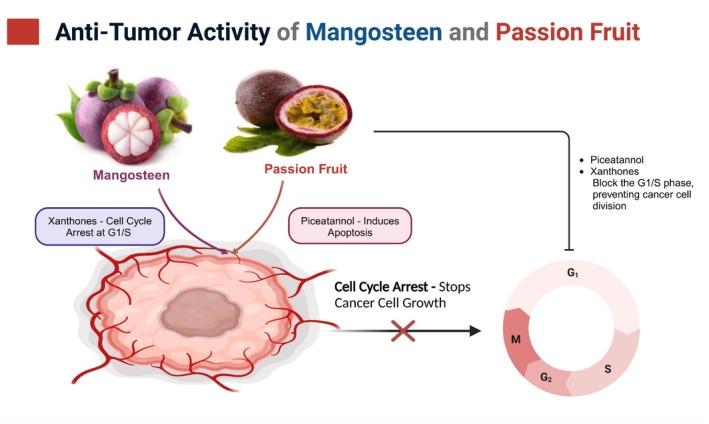
The stunning nutritional and medicinal attributes of tropical fruits have propelled them to international fame. Passion fruit () and mangosteen () are two examples of such fruits. This review discusses in depth their phytochemical composition, health benefits, and utility in the industrial sector. Mangosteen is an important dietary food and nutraceutical agent that exhibits high antioxidant, anti-inflammatory, antibacterial, and anticancer properties because of its richness in xanthones, anthocyanins, and polyphenols. Passion fruit has the potential to serve as an antidiabetic, antihypertensive, and anticancer agent because it is rich in vitamins (A, B2, and C), carotenoids, and polyphenols. Owing to its antioxidant nature, mangosteen has applications in the cosmetics industry. Passion fruit, however, is extensively used in beverages, pastries, and sweets owing to its flavor and bioactive benefits. This review highlights the numerous uses of these fruits and demonstrates how they can contribute to the areas of sustainable agriculture, medicine, and nutrition. Perishability, limited cultivation, and underutilized by-products (e.g., peels and seeds) are challenges that persist despite their benefits. Enhancing postharvest technologies, boosting agronomic practices, and valoring waste would make them more commercially viable. Enhancing extraction procedures, shelf life, and finding new applications in pharmaceuticals and functional foods are all directions in which future investigations need to focus to provide maximum social, economic, and health gains.
热带水果令人惊叹的营养和药用特性使其在国际上声名远扬。百香果(西番莲)和山竹就是这类水果的两个例子。本综述深入讨论了它们的植物化学成分、对健康的益处以及在工业领域的用途。山竹是一种重要的日常食用食品和营养剂,因其富含氧杂蒽酮、花青素和多酚,具有高抗氧化、抗炎、抗菌和抗癌特性。百香果富含维生素(A、B2和C)、类胡萝卜素和多酚,有潜力作为抗糖尿病、抗高血压和抗癌剂。由于其抗氧化性质,山竹在化妆品行业有应用。然而,百香果因其风味和生物活性益处,广泛用于饮料、糕点和糖果中。本综述强调了这些水果的众多用途,并展示了它们如何能为可持续农业、医学和营养领域做出贡献。尽管它们有诸多益处,但易腐性、种植受限以及副产品(如果皮和种子)利用不足仍是存在的挑战。加强采后技术、改进农艺措施以及重视废弃物利用将使其更具商业可行性。改进提取工艺、延长保质期以及在制药和功能性食品中寻找新应用都是未来研究需要关注的方向,以便实现最大的社会、经济和健康效益。

 Zotero 插件