
他汀类药物相关肝毒性:一项基于FAERS数据库的回顾性药物警戒研究。
Hepatotoxicity associated with statins: A retrospective pharmacovigilance study based on the FAERS database.
作者信息
Zhou Lu, Wu Bin, Bian Yuan, Lu Yun, Zou Ya, Lin Shanshan, Li Qinchuan, Liu Chun
机构信息
Department of Pharmacy, Chengdu Second People's Hospital, Chengdu, Sichuan, China.
Department of Pharmacy, West China Hospital, Sichuan University, Chengdu, Sichuan, China.
出版信息
PLoS One. 2025 Jul 9;20(7):e0327500. doi: 10.1371/journal.pone.0327500. eCollection 2025.
BACKGROUND
Statins are commonly prescribed in clinical practice and are associated with a high risk of drug-induced liver injury (DILI). This study aims to examine the real-world data on statin-induced liver injury to assess medication safety.
METHODS
All DILI cases reported with statins as primary suspected drugs were extracted based on the US Food and Drug Administration adverse event reporting system (FAERS) from 2004 to 2023. A disproportional analysis was conducted using reported odds ratios (ROR) and information component (IC) to assess the significant association between statins and DILI.
RESULTS
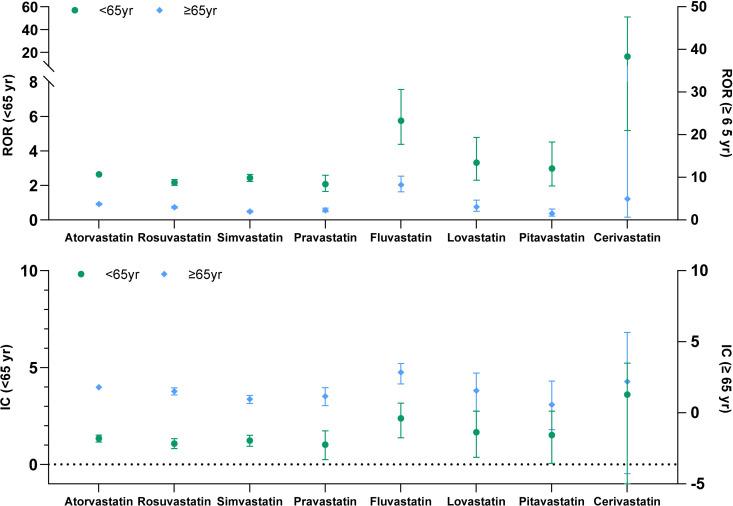
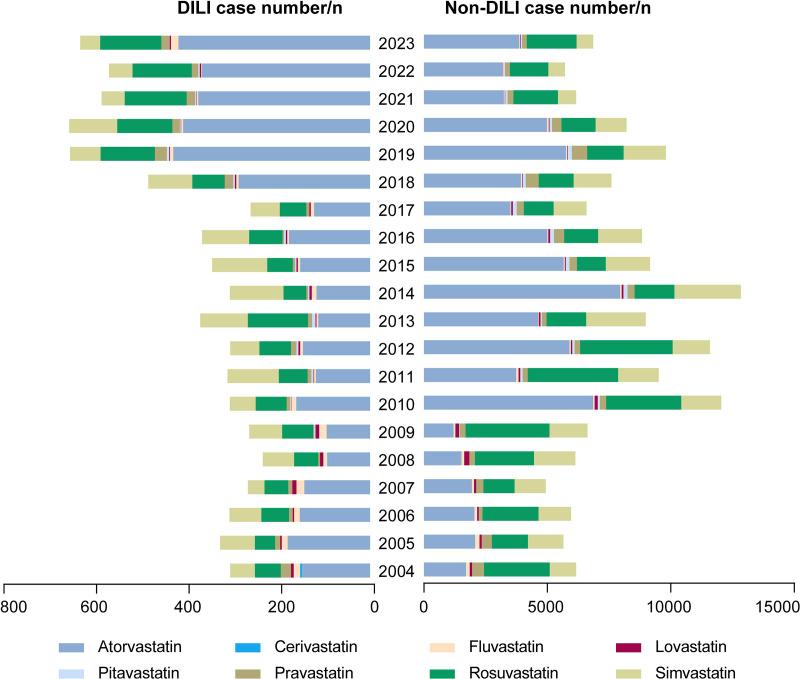
A total of 7779 statin-associated DILI cases were identified. DILI patients tended to be aged >65 years (45.43%), with more females than males (48.80% vs 43.75%), and 39.95% of DILI patients required hospitalization. Statin-induced DILI cases are most commonly reported with atorvastatin (53.48%), rosuvastatin (20.44%), and simvastatin (19.46%). The DILI signals (ROR; 95% CI) for statins were ranked as follows: fluvastatin (6.90; 5.89-8.10)> atorvastatin (3.09; 2.99-3.19)> simvastatin (2.96; 2.81-3.12)> lovastatin (2.77; 2.17-3.53)> rosuvastatin (2.27; 2.16-2.39)> pravastatin (2.07; 1.81-2.37). Age-stratified analysis showed that a stronger signal was detected in patients (aged ≥65 years) than patients (aged <65 years) for atorvastatin, simvastatin, pravastatin and fluvastatin. The onset time of DILI was significantly different among the different statins (p = 0.014), and simvastatin resulted in the highest mortality rate (12.15%).
CONCLUSION
Based on FAERS database, six statins are significantly associated with liver injury, and fluvastatin, atorvastatin, and simvastatin had the greatest risk of DILI.
背景
他汀类药物在临床实践中常用,且与药物性肝损伤(DILI)的高风险相关。本研究旨在检查他汀类药物所致肝损伤的真实世界数据,以评估用药安全性。
方法
基于美国食品药品监督管理局不良事件报告系统(FAERS)提取2004年至2023年所有以他汀类药物作为主要可疑药物报告的DILI病例。使用报告比值比(ROR)和信息成分(IC)进行不成比例分析,以评估他汀类药物与DILI之间的显著关联。
结果
共识别出7779例与他汀类药物相关的DILI病例。DILI患者倾向于年龄>65岁(45.43%),女性多于男性(48.80%对43.75%),39.95%的DILI患者需要住院治疗。他汀类药物所致DILI病例最常报告的是阿托伐他汀(53.48%)、瑞舒伐他汀(20.44%)和辛伐他汀(19.46%)。他汀类药物的DILI信号(ROR;95%CI)排名如下:氟伐他汀(6.90;5.89 - 8.10)>阿托伐他汀(3.09;2.99 - 3.19)>辛伐他汀(2.96;2.81 - 3.12)>洛伐他汀(2.77;2.17 - 3.53)>瑞舒伐他汀(2.27;2.16 - 2.39)>普伐他汀(2.07;1.81 - 2.37)。年龄分层分析显示,阿托伐他汀、辛伐他汀、普伐他汀和氟伐他汀在≥65岁患者中比<65岁患者检测到更强的信号。不同他汀类药物的DILI发病时间有显著差异(p = 0.014),辛伐他汀导致的死亡率最高(12.15%)。
结论
基于FAERS数据库,六种他汀类药物与肝损伤显著相关,氟伐他汀、阿托伐他汀和辛伐他汀发生DILI的风险最大。
 Zotero 插件