
表观遗传年龄与加速衰老表型:一种预测结直肠癌的肿瘤生物标志物。
Epigenetic age and accelerated aging phenotypes: a tumor biomarker for predicting colorectal cancer.
作者信息
Jung Su Yon, Pellegrini Matteo, Tan Xianglong, Yu Herbert
机构信息
Translational Sciences Section, School of Nursing, University of California, Los Angeles, CA 90095, USA.
Department of Epidemiology, Fielding School of Public Health, University of California, Los Angeles, CA 90095, USA.
出版信息
Aging (Albany NY). 2025 Jul 7;17(7):1624-1666. doi: 10.18632/aging.206276.
BACKGROUND
Epigenetic clocks, estimated via DNA methylation (DNAm), reflect individuals' biological aging in multiple tissues and are associated with age-related diseases, but their functional role in colorectal cancer (CRC), an age-associated disease, remains unconclusive. DNAm in tumor tissues exclusively exhibits cancerization with expansion of a stem cell pool, leading to the lowest DNAm age; this raises a question about its cancer predictability. Thus, the DNAm aging marker in pre-diagnostic peripheral blood leukocytes (PBLs) may provide key information on CRC etiology and prevention. We aim to examine pre-diagnostic epigenetic makers for aging in PBLs in association with CRC development and risk modification by lifestyles.
METHODS
Using data from a large cohort study of white postmenopausal women, we examined biological aging status in PBLs via three well-established epigenetic clocks-Horvath's, Hannum's and Levine's-and prospectively evaluated CRC development in relation to the aging markers and risk modification by lifestyle factors.
RESULTS
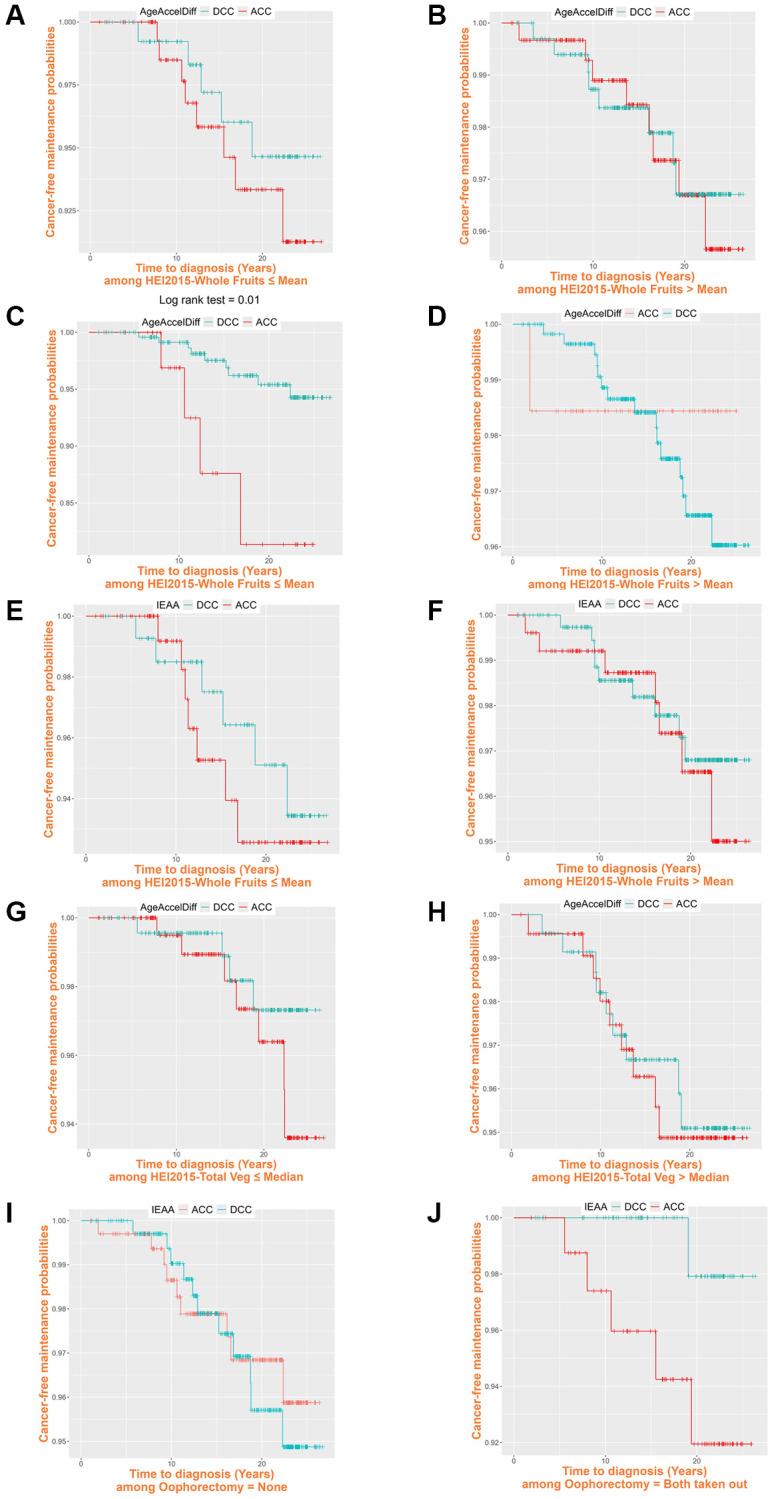
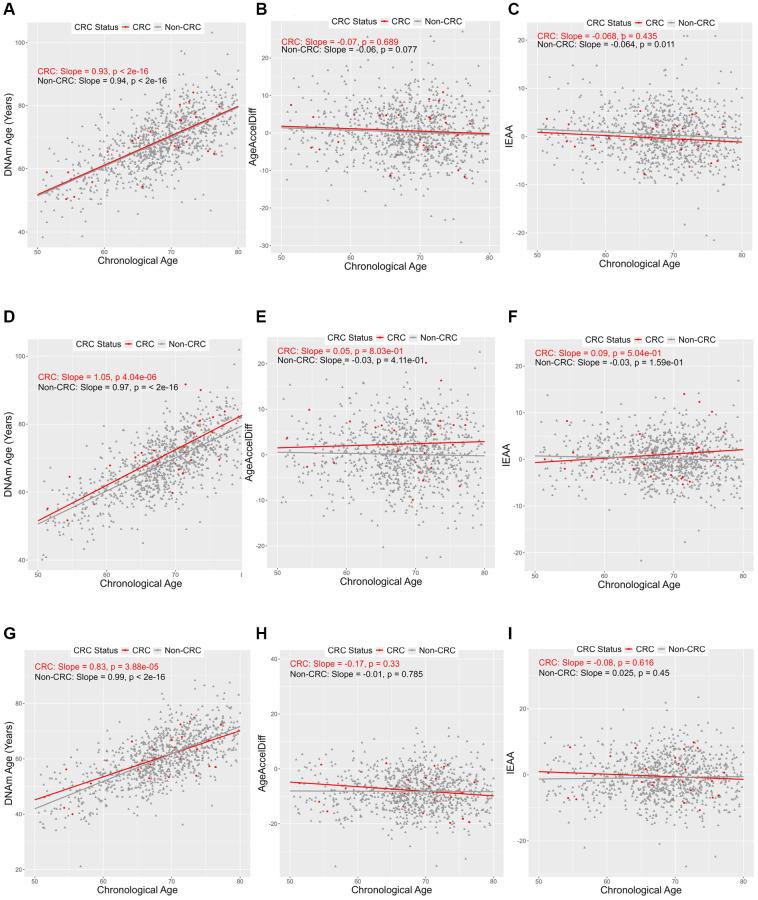
The epigenetic clocks strongly correlated with chronological age, and older DNAm age and age acceleration were significantly associated with increased risk for CRC. Women with bilateral oophorectomy before natural menopause had substantially higher risk for CRC development when they also had epigenetically accelerated aging phenotypes. Among women who maintained healthy dietary patterns, no apparently higher risk was found in those with accelerated aging compared with those with decelerated aging.
CONCLUSIONS
Our findings contribute to better understanding of the role of a pre-diagnostic epigenetic aging biomarker and its interplay with lifestyles in CRC carcinogenesis, informing risk stratification strategies for aged individuals.
背景
通过DNA甲基化(DNAm)估计的表观遗传时钟反映了个体在多个组织中的生物衰老情况,并与年龄相关疾病相关,但它们在结直肠癌(CRC)(一种与年龄相关的疾病)中的功能作用仍无定论。肿瘤组织中的DNAm仅随着干细胞池的扩大而表现出癌变,导致DNAm年龄最低;这就引发了关于其癌症预测性的问题。因此,诊断前外周血白细胞(PBLs)中的DNAm衰老标志物可能为CRC的病因和预防提供关键信息。我们旨在研究诊断前PBLs中衰老的表观遗传标志物与CRC发展以及生活方式对风险的改变之间的关系。
方法
利用一项针对绝经后白人女性的大型队列研究的数据,我们通过三种成熟的表观遗传时钟——霍瓦斯时钟、汉纳姆时钟和莱文时钟——来检查PBLs中的生物衰老状态,并前瞻性地评估CRC发展与衰老标志物以及生活方式因素对风险的改变之间的关系。
结果
表观遗传时钟与实际年龄密切相关,DNAm年龄较大和年龄加速与CRC风险增加显著相关。在自然绝经前接受双侧卵巢切除术的女性中,如果她们同时具有表观遗传加速衰老的表型,那么患CRC的风险会显著更高。在保持健康饮食模式的女性中,与衰老减速的女性相比,衰老加速的女性患CRC的风险并未明显更高。
结论
我们的研究结果有助于更好地理解诊断前表观遗传衰老生物标志物的作用及其在CRC致癌过程中与生活方式的相互作用,为老年个体的风险分层策略提供依据。
 Zotero 插件