
木犀草素通过激活沉默调节蛋白3减轻心脏骤停复苏后糖尿病心脏的坏死性凋亡。
Luteolin reduces necroptosis in the diabetic heart after cardiac arrest and resuscitation by activating sirtuin 3.
作者信息
Yang Jin-Ting, Jiang Chun-Yan, Zhang Zi-Yan, Tang Li-Hui, Lou Yang-Yun, Qian Ling-Bo
机构信息
Department of Anesthesiology, The Second Affiliated Hospital of Zhejiang University School of Medicine, Hangzhou, China.
School of Basic Medical Sciences and Forensic Medicine, Hangzhou Medical College, Hangzhou, China.
出版信息
Front Nutr. 2025 Jun 25;12:1626020. doi: 10.3389/fnut.2025.1626020. eCollection 2025.
BACKGROUNDS
Myocardial impairment resulting from cardiopulmonary resuscitation (CPR) contributes to the elevated mortality in diabetes. Luteolin, a naturally occurring polyphenolic compound abundant in vegetables, fruits, and nuts, has been shown to mitigate myocardial I/R injury in diabetes by suppressing oxidative stress. However, whether luteolin confers cardioprotection following cardiac arrest (CA) and CPR in diabetes remains unclear. Sirtuin 3 (Sirt3), a mitochondrial deacetylase, has been reported to attenuate diabetic cardiomyopathy by reducing oxidative stress and inflammation-mediated necroptosis. Recent evidence suggests that luteolin can upregulate Sirt3 and enhance mitochondrial function. Thus, we hypothesized that luteolin may alleviate post-CA/CPR myocardial injury in diabetes by inhibiting necroptosis through activation of the Sirt3 signaling pathway.
METHODS
Diabetes was induced in male Sprague-Dawley rats via a single intraperitoneal injection of streptozotocin (65 mg/kg). Rats were then treated with luteolin (100 mg/kg, i.g.) or Sirt3 inhibitor 3-TYP for 2 weeks. Subsequently, diabetic rats were subjected to 5 min of asphyxia-induced CA followed by CPR. After 6 h of resuscitation, left ventricular function, myocardial infarction, oxidative stress markers, inflammatory cytokine release, mitochondrial function, necroptosis-associated protein expression, and both Sirt3 expression and enzymatic activity were assessed.
RESULTS
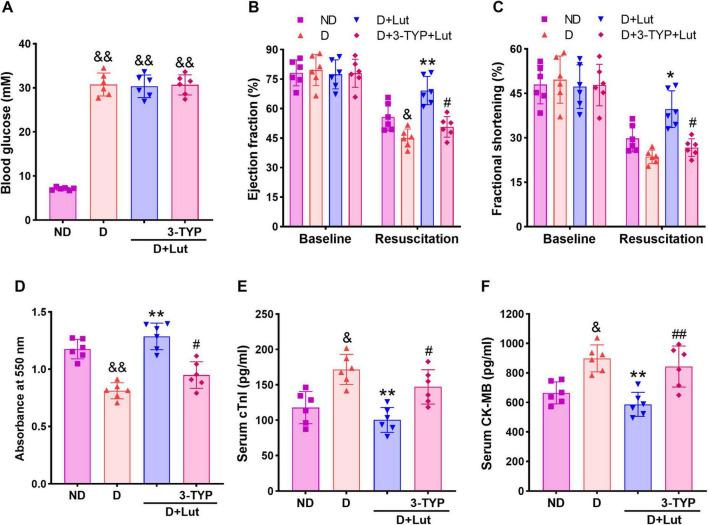
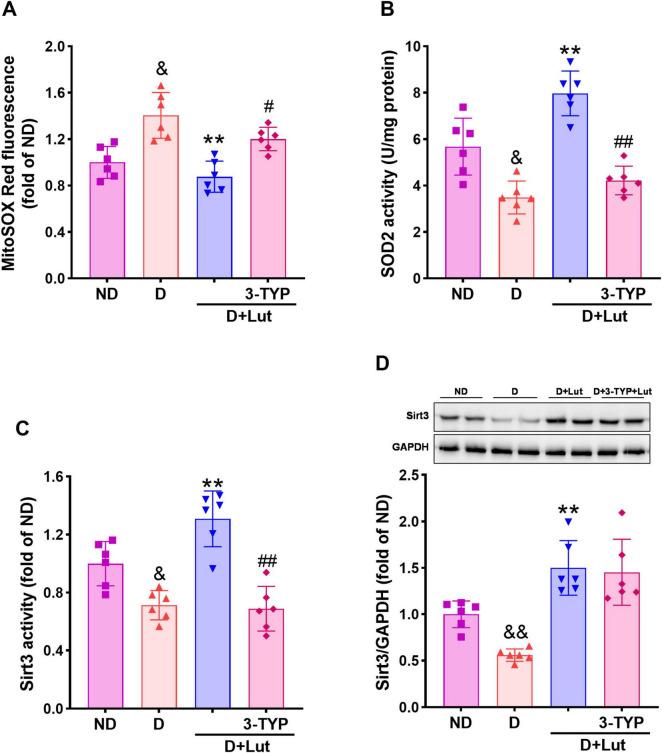
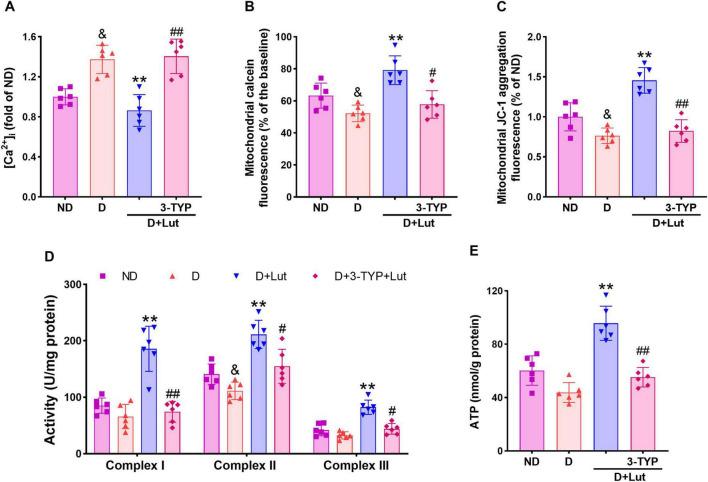
Luteolin significantly improved post-resuscitation cardiac function and reduced myocardial infarction, oxidative stress, and pro-inflammatory cytokine levels in diabetic rats. It also inhibited cytosolic Ca overload, mitochondrial permeability transition pore opening, and loss of mitochondrial membrane potential. Additionally, luteolin activated Sirt3 and superoxide dismutase 2. Importantly, luteolin increased the expression of Sirt3 and suppressed necroptosis by down-regulating phosphorylated receptor-interacting protein kinase 3 and phosphorylated mixed lineage kinase domain-like protein. The cardioprotective effects of luteolin were abrogated by co-administration of 3-TYP, indicating a critical role for Sirt3 in mediating these benefits.
CONCLUSION
Luteolin protects diabetic hearts after CA/CPR by suppressing necroptosis, primarily through activation of Sirt3, which dampens oxidative stress and inflammation, and maintains mitochondrial integrity.
背景
心肺复苏(CPR)导致的心肌损伤会使糖尿病患者的死亡率升高。木犀草素是一种天然存在的多酚类化合物,在蔬菜、水果和坚果中含量丰富,已被证明可通过抑制氧化应激减轻糖尿病患者的心肌缺血/再灌注损伤。然而,木犀草素在糖尿病患者心脏骤停(CA)和CPR后是否具有心脏保护作用仍不清楚。沉默调节蛋白3(Sirt3)是一种线粒体去乙酰化酶,据报道它可通过减少氧化应激和炎症介导的坏死性凋亡来减轻糖尿病性心肌病。最近的证据表明,木犀草素可以上调Sirt3并增强线粒体功能。因此,我们推测木犀草素可能通过激活Sirt3信号通路抑制坏死性凋亡,从而减轻糖尿病患者CA/CPR后的心肌损伤。
方法
通过单次腹腔注射链脲佐菌素(65 mg/kg)诱导雄性Sprague-Dawley大鼠患糖尿病。然后用木犀草素(100 mg/kg,灌胃)或Sirt3抑制剂3-TYP对大鼠进行2周治疗。随后,对糖尿病大鼠进行5分钟窒息诱导的CA,然后进行CPR。复苏6小时后,评估左心室功能、心肌梗死、氧化应激标志物、炎性细胞因子释放、线粒体功能、坏死性凋亡相关蛋白表达以及Sirt3表达和酶活性。
结果
木犀草素显著改善了糖尿病大鼠复苏后的心脏功能,降低了心肌梗死、氧化应激和促炎细胞因子水平。它还抑制了细胞溶质钙超载、线粒体通透性转换孔开放和线粒体膜电位丧失。此外,木犀草素激活了Sirt3和超氧化物歧化酶2。重要的是,木犀草素通过下调磷酸化受体相互作用蛋白激酶3和磷酸化混合谱系激酶结构域样蛋白的表达增加了Sirt3的表达并抑制了坏死性凋亡。联合使用3-TYP可消除木犀草素的心脏保护作用,表明Sirt3在介导这些益处中起关键作用。
结论
木犀草素通过抑制坏死性凋亡保护糖尿病心脏在CA/CPR后的功能,主要是通过激活Sirt3来减轻氧化应激和炎症,并维持线粒体完整性。


 Zotero 插件