
代谢综合征与非酒精性脂肪性肝炎患者的显著肝纤维化和脂肪变性相关。
Metabolic syndrome is associated with significant hepatic fibrosis and steatosis in patients with nonalcoholic steatohepatitis.
作者信息
Li Qian-Qian, Xiong Yu-Ting, Wang Danni, Wang Ke-Xin, Guo Chang, Fu Yi-Ming, Niu Xiao-Xia, Wang Chun-Yan, Wang Jian-Jun, Ji Dong, Bai Zhi-Fang
机构信息
Senior Department of Hepatology, The Fifth Medical Center of PLA General Hospital, Beijing 100039, China.
The PLA 307 Clinical College of Anhui Medical University, The Fifth Clinical Medical College of Anhui Medical University, Hefei 230032, China.
出版信息
ILIVER. 2024 Apr 24;3(2):100094. doi: 10.1016/j.iliver.2024.100094. eCollection 2024 Jun.
BACKGROUND AND AIMS
Nonalcoholic steatohepatitis (NASH), an inflammatory form of non-alcoholic fatty liver disease, can progress to advanced liver fibrosis, cirrhosis, and liver cancer. Metabolic syndrome (MetS) parallels the prevalence of non-alcoholic fatty liver disease/NASH and increases patients' risk of advanced liver disease. This study aimed to determine whether MetS was associated with the histological progression of NASH.
METHODS
Patients with liver biopsy-proven NASH were retrospectively screened and categorized into two groups for each histological feature: with (<2 points) or without (≥2 points) significant hepatic steatosis/inflammation/fibrosis. Multivariable logistic regression was used to explore the association between MetS and histological features.
RESULTS
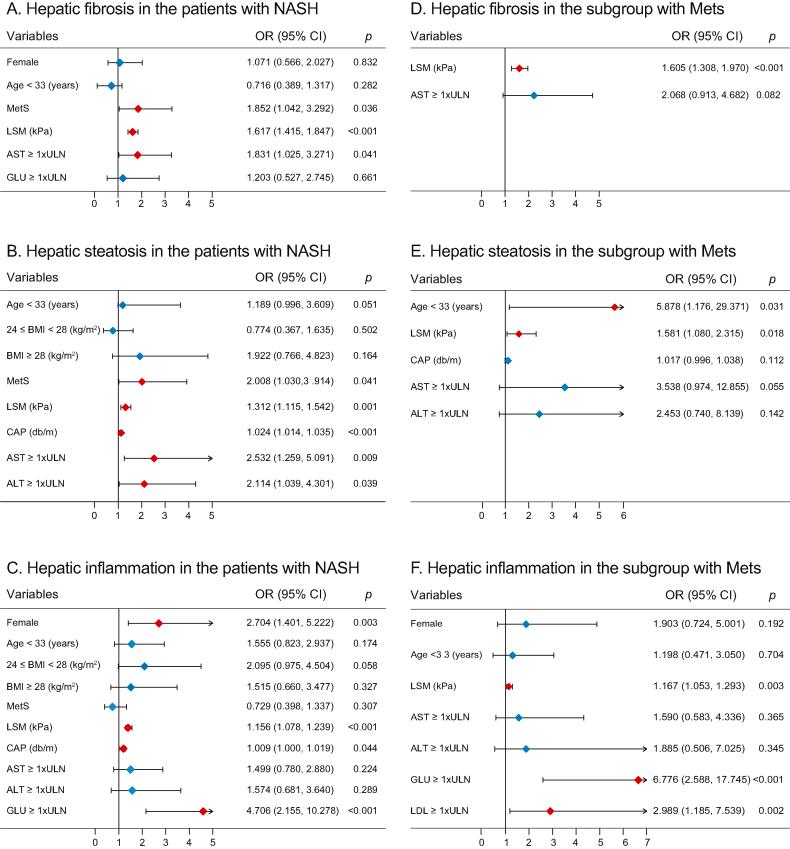
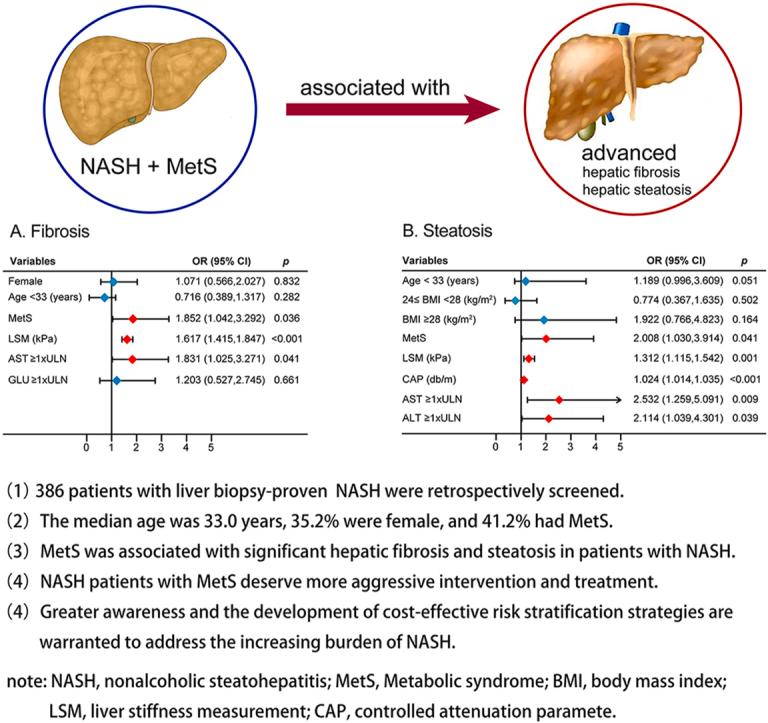
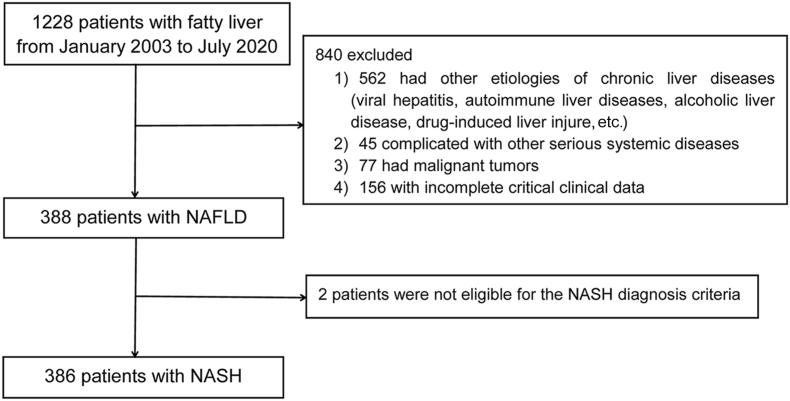
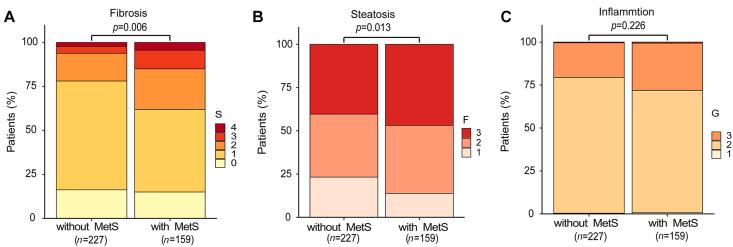
In total, 386 patients with a median age of 33.0 years were enrolled; among them, 35.2% were female, and 41.2% had MetS. The proportion of significant hepatic fibrosis and steatosis in those with MetS was significantly higher than in those without MetS ( < 0.05). Multivariable logistic regression analyses showed that MetS remained significantly associated with significant hepatic fibrosis (adjusted odds ratio: 1.852, 95% confidence interval: 1.042-3.292, = 0.036), and severe hepatic steatosis (adjusted odds ratio: 2.008, 95% confidence interval: 1.030-3.914, = 0.041).
CONCLUSION
MetS was associated with significant hepatic fibrosis and steatosis in patients with NASH. Our results suggest that NASH patients with MetS should be closely monitored and given targeted intervention and treatment, which may help to prevent disease progression and mitigate the growing burden of NASH.
背景与目的
非酒精性脂肪性肝炎(NASH)是非酒精性脂肪性肝病的一种炎症形式,可进展为晚期肝纤维化、肝硬化和肝癌。代谢综合征(MetS)与非酒精性脂肪性肝病/NASH的患病率相似,并增加患者发生晚期肝病的风险。本研究旨在确定MetS是否与NASH的组织学进展相关。
方法
对经肝活检证实为NASH的患者进行回顾性筛查,并根据每个组织学特征分为两组:有(<2分)或无(≥2分)显著肝脂肪变性/炎症/纤维化。采用多变量逻辑回归分析探讨MetS与组织学特征之间的关联。
结果
共纳入386例患者,中位年龄为33.0岁;其中,女性占35.2%,41.2%患有MetS。患有MetS的患者中显著肝纤维化和脂肪变性的比例显著高于未患有MetS的患者(P<0.05)。多变量逻辑回归分析显示,MetS仍与显著肝纤维化(调整比值比:1.852,95%置信区间:1.042 - 3.292,P = 0.036)和严重肝脂肪变性(调整比值比:2.008,95%置信区间:1.030 - 3.914,P = 0.041)显著相关。
结论
MetS与NASH患者的显著肝纤维化和脂肪变性相关。我们的结果表明,患有MetS的NASH患者应密切监测并给予针对性干预和治疗,这可能有助于预防疾病进展并减轻NASH日益加重的负担。
 Zotero 插件