
评估牛奶和乳制品中的微塑料污染情况。
Assessing microplastic contamination in milk and dairy products.
作者信息
Visentin E, Niero G, Benetti F, O'Donnell C, De Marchi M
机构信息
Department of Agronomy, Food, Natural resources, Animals and Environment, University of Padova, Legnaro, Italy.
European Center for the Sustainable Impact of Nanotechnology, EcamRicert S.r.l, Padova, Italy.
出版信息
NPJ Sci Food. 2025 Jul 10;9(1):135. doi: 10.1038/s41538-025-00506-8.
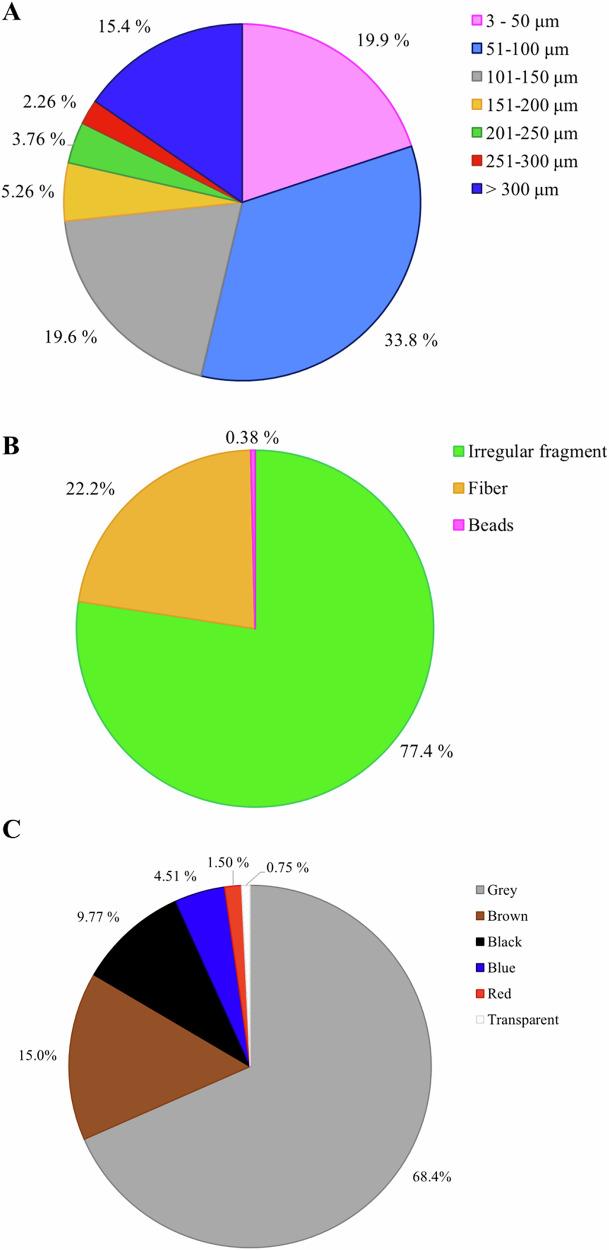
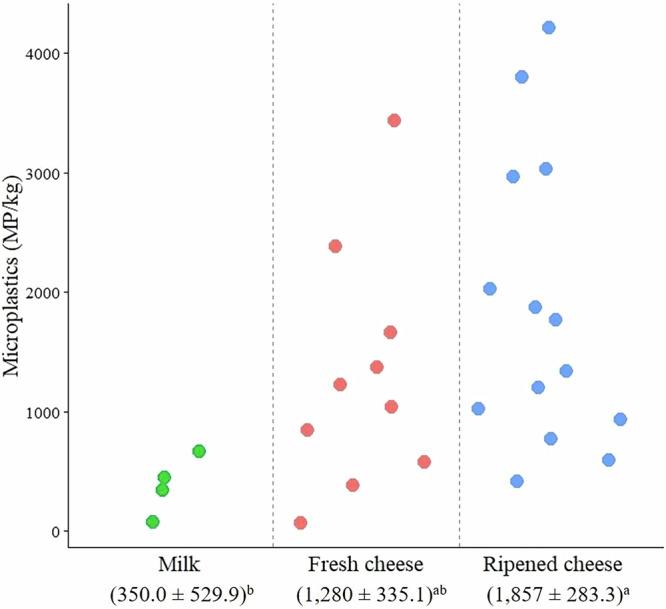
The presence of microplastics in food has raised growing concern due to potential health risks. While many studies have investigated microplastics in water and seafood, limited data are available for dairy products. This study qualitatively and quantitatively characterizes microplastics in milk, fresh cheese, and ripened cheese, assessing concentration levels and polymer composition through the analysis of 28 dairy samples using Fourier-transformed infrared micro-spectroscopy in attenuated total reflectance mode. Poly(ethylene terephthalate) was the most frequent, followed by polyethylene and polypropylene. Most microplastics were smaller than 150 μm, with 51-100 μm being the most common (33.8%). Irregular fragments (77.4%) and grey particles (68.4%) were predominant. Ripened cheese exhibited the highest microplastic concentration (1857 MP/kg), followed by fresh cheese (1280 MP/kg) and milk (350.0 MP/kg). Results confirm widespread microplastic contamination in dairy products and highlight the importance of further research into contamination pathways and strategies to reduce microplastic exposure in the dairy chain.
由于存在潜在健康风险,食品中微塑料的存在引发了越来越多的关注。虽然许多研究调查了水和海鲜中的微塑料,但关于乳制品的可用数据有限。本研究对牛奶、新鲜奶酪和成熟奶酪中的微塑料进行了定性和定量表征,通过使用衰减全反射模式的傅里叶变换红外显微光谱分析28个乳制品样品,评估了浓度水平和聚合物组成。聚对苯二甲酸乙二酯最为常见,其次是聚乙烯和聚丙烯。大多数微塑料小于150μm,其中51-100μm最为常见(33.8%)。不规则碎片(77.4%)和灰色颗粒(68.4%)占主导地位。成熟奶酪的微塑料浓度最高(1857个微塑料/千克),其次是新鲜奶酪(1280个微塑料/千克)和牛奶(350.0个微塑料/千克)。结果证实了乳制品中广泛存在微塑料污染,并强调了进一步研究污染途径以及减少乳制品链中微塑料暴露策略的重要性。

 Zotero 插件