
具有特定突变的小鼠细胞系可模拟上皮性卵巢癌的不同组织学亚型。
Murine cell lines with defined mutations model different histological subtypes of epithelial ovarian cancer.
作者信息
Zhang Lixin, Fang Yusi, Uygun Ibrahim, Li Danyang, Strange Mary, Zaidi Syed K, Wang Wenjia, Knight Julia, Radolec Mackenzy, Elishaev Esther, Brozick Joan F, Edwards Allison, Tseng George, Cascio Sandra, Buckanovich Ronald, Edwards Robert P, Vlad Anda M
机构信息
University of Pittsburgh School of Medicine, Department of Obstetrics, Gynecology and Reproductive Sciences, Pittsburgh, PA 15261, USA.
Magee-Womens Research Institute, Pittsburgh, PA 15213, USA.
出版信息
Dis Model Mech. 2025 Jul 1;18(7). doi: 10.1242/dmm.052177. Epub 2025 Jul 28.
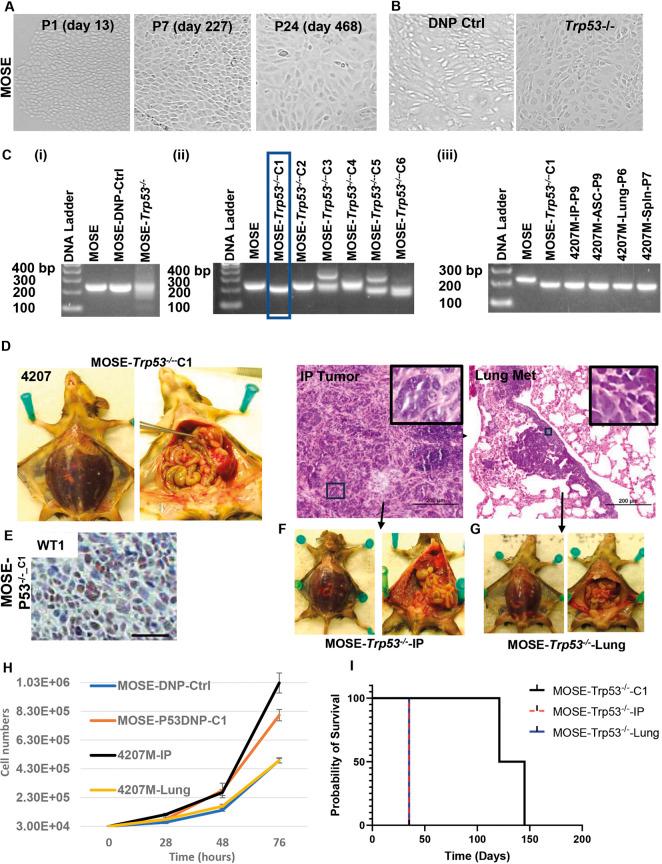
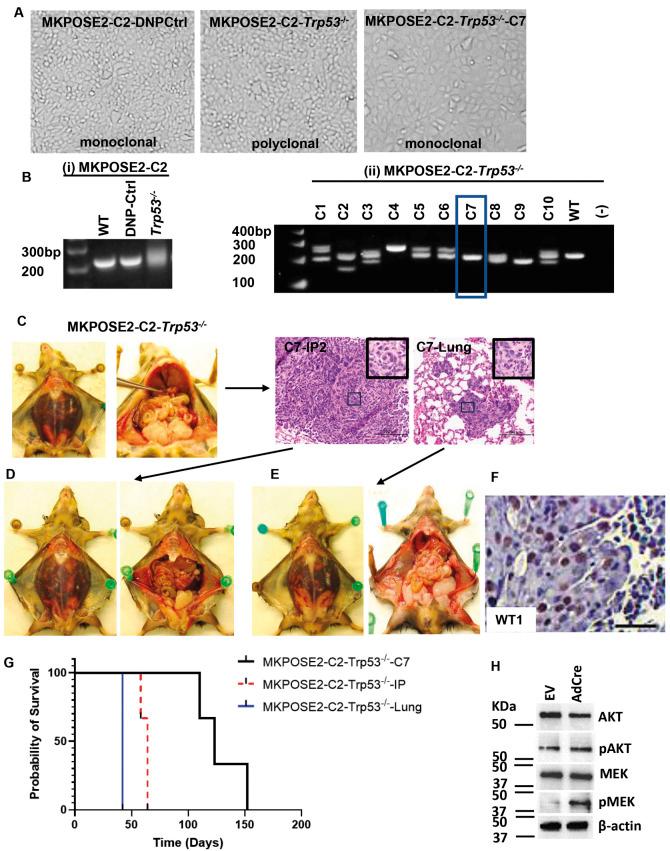
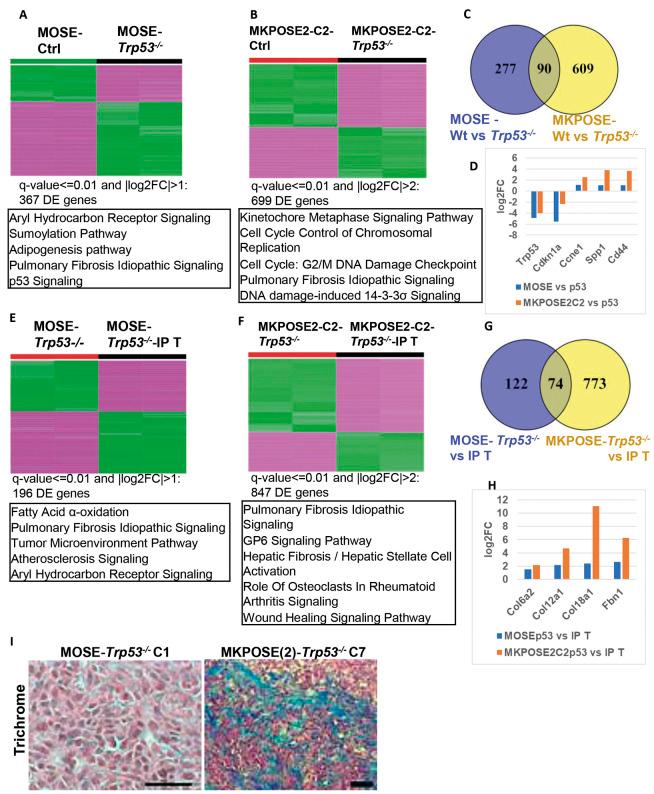
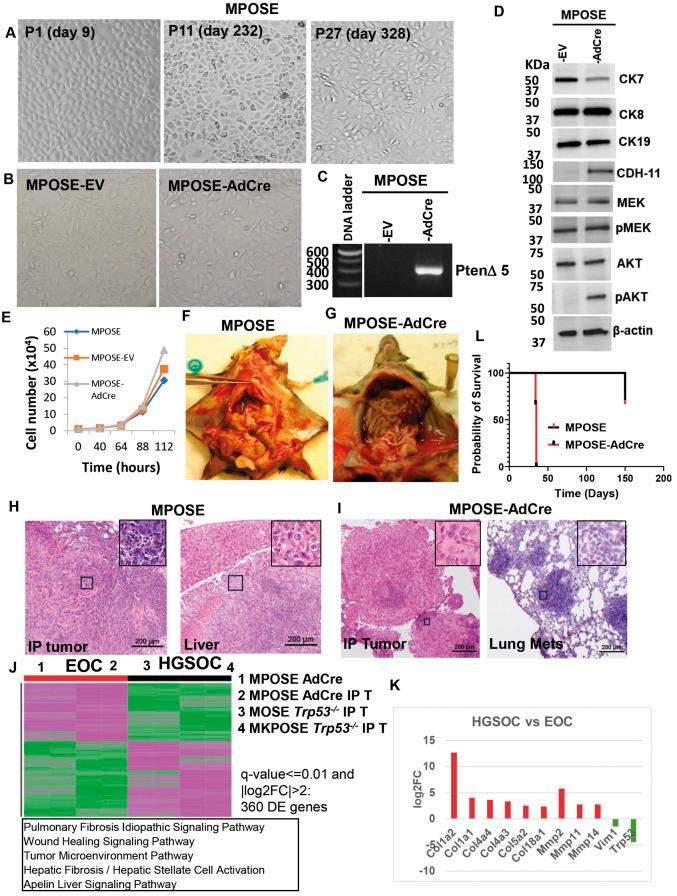
Preclinical modeling of epithelial ovarian cancer in immune-competent mice progressing to orthotopic, spontaneous tumors is challenging, requiring multiple genetic modifications in the host. Transplantable models using cell lines are easier to implement than spontaneous animal models, given that they reproduce the key disease characteristics. To create new in vivo ovarian tumor models, we generated 28 murine ovarian cancer cell lines with distinct genetic traits, such as deletion of Trp53, activation of KrasG12D, or deletion of Pten or KrasG12D/Pten-/- combination. Two distinct Trp53 null cell lines recapitulate high-grade serous histology when orthotopically injected into immune-competent, syngeneic hosts. Cells with Pten deletion trigger high-grade endometrioid tumors, and cells with dual KrasG12D activation and Pten deletion model carcinosarcoma. The cells express different tumor antigens, secrete varying levels of cytokines and chemokines, and trigger tumors with diverse inflammation profiles and various intratumoral T- and B-lymphocyte infiltration patterns. RNA-sequencing data from 16 cell lines reveal the gene expression profile across distinct models with different histotypes. This versatile collection of murine cell lines supports translationally relevant studies in ovarian cancer.
在具有免疫活性的小鼠中建立上皮性卵巢癌原位自发肿瘤的临床前模型具有挑战性,需要对宿主进行多种基因改造。鉴于可移植模型利用细胞系能够重现关键疾病特征,因此比自发动物模型更容易实施。为创建新的体内卵巢肿瘤模型,我们生成了28种具有不同遗传特征的小鼠卵巢癌细胞系,例如Trp53缺失、KrasG12D激活、Pten缺失或KrasG12D/Pten-/-组合缺失。当将两种不同的Trp53缺失细胞系原位注射到具有免疫活性的同基因宿主中时,可重现高级别浆液性组织学特征。Pten缺失的细胞会引发高级别子宫内膜样肿瘤,而同时具有KrasG12D激活和Pten缺失的细胞则可模拟癌肉瘤。这些细胞表达不同肿瘤抗原,分泌不同水平的细胞因子和趋化因子,并引发具有不同炎症特征和不同肿瘤内T淋巴细胞及B淋巴细胞浸润模式的肿瘤。来自16种细胞系的RNA测序数据揭示了不同组织学类型的不同模型的基因表达谱。这种多样化的小鼠细胞系集合为卵巢癌的转化相关研究提供了支持。


 Zotero 插件